Influencer Outreach Emails That Get Answers (Without Overpromising)
Influencer outreach email templates for brands: cite the public InfScore link, model id, and coverage, ask clear questions, and skip the overpromising.
This versioned composite uses only available public signals. Missing factors stay unavailable and their weight is rebalanced across observed factors. It is not a percentile, price estimate, or guarantee of campaign results. Model 2026-08-18.1.
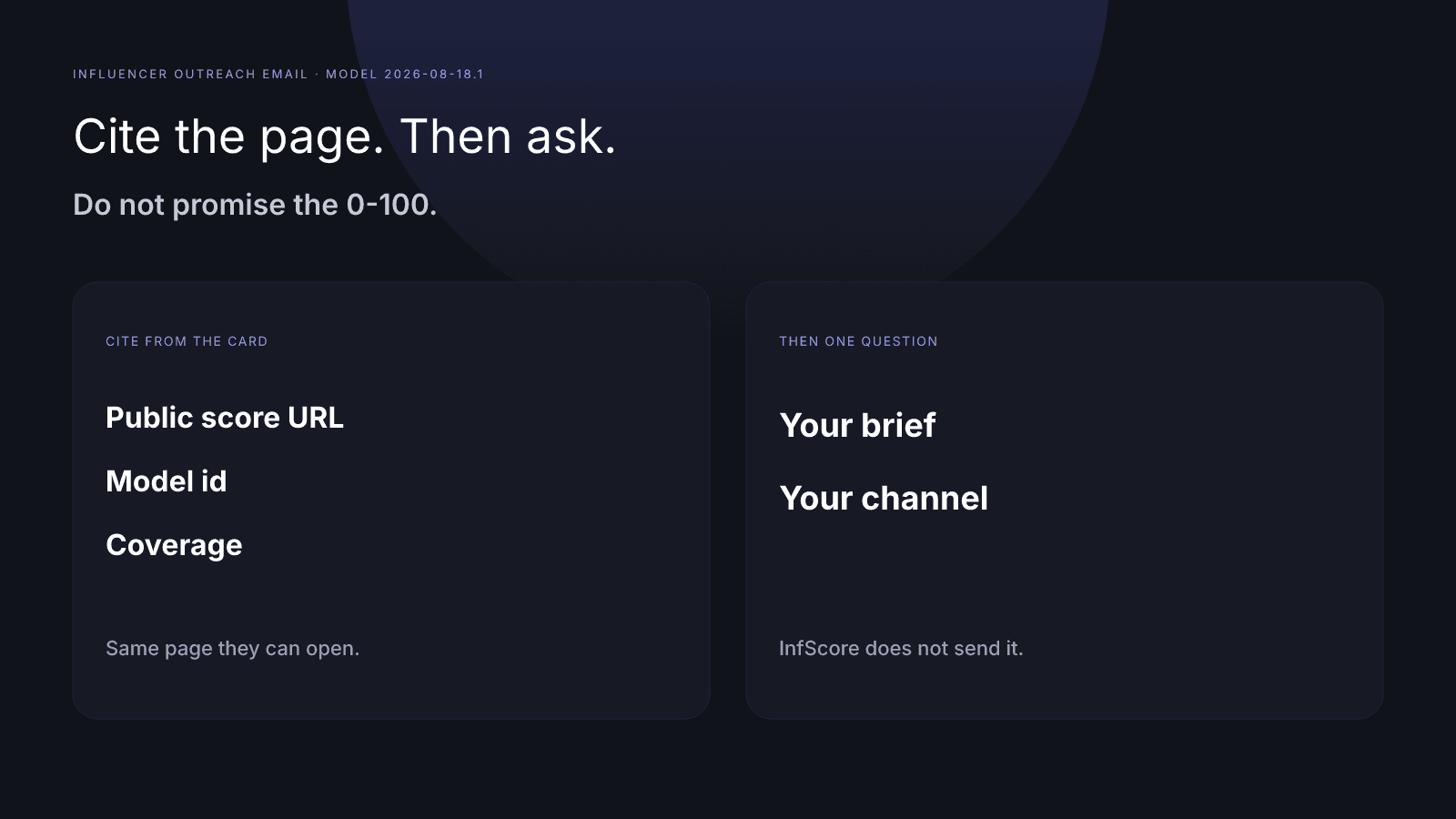
A good influencer outreach email is specific: it names the public card (the /score/{handle}?platform=… URL, model 2026-08-18.1, and the scoring-coverage line), asks one real question, and promises nothing the card can't back. InfScore doesn't find creator contacts or send outreach for you; you write the email and send it from your own channel. Vetting comes first, in How to Vet an Influencer Before You Pay Them, and this page starts after it.
On model 2026-08-18.1 the weights are audience quality 32%, engagement strength 27%, reach and momentum 23%, and platform strength 18%, counted only for rows that came back. A dash is missing data, not a zero, and its weight is held out. The methodology publishes those weights, and How to Measure Influencer Performance walks through the four factors.
What an influencer outreach email needs before you hit send
Three things: a channel that didn't come from InfScore, a citation the creator can open, and one question.
The channel comes first because InfScore can't supply it. It might be a media kit they sent, a form they published, a reply already in your inbox, or an introduction from someone on your team. If you don't have one, stop here. The score page is something you cite, not a place to find an address.
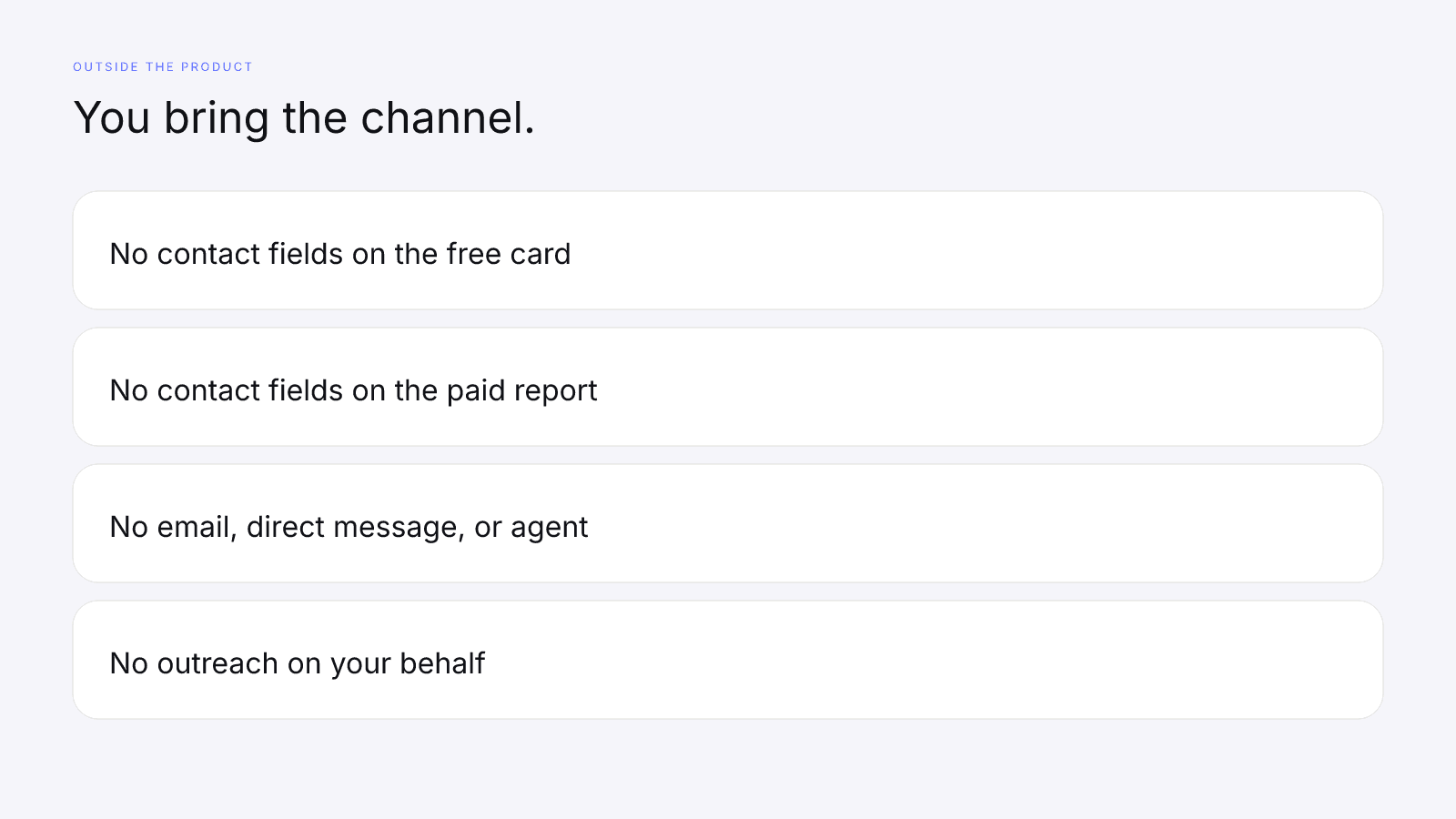
InfScore doesn't find creator contacts or send outreach on a brand's behalf. Contact fields are stripped from the free card and from the paid report. InfScore doesn't look up an email, a direct message, or an agent, and it doesn't send outreach for you, including this note or a follow-up. A public bio, when the card shows one, is text the creator already published. Don't mine it for an address, and don't tell the creator InfScore introduced you.
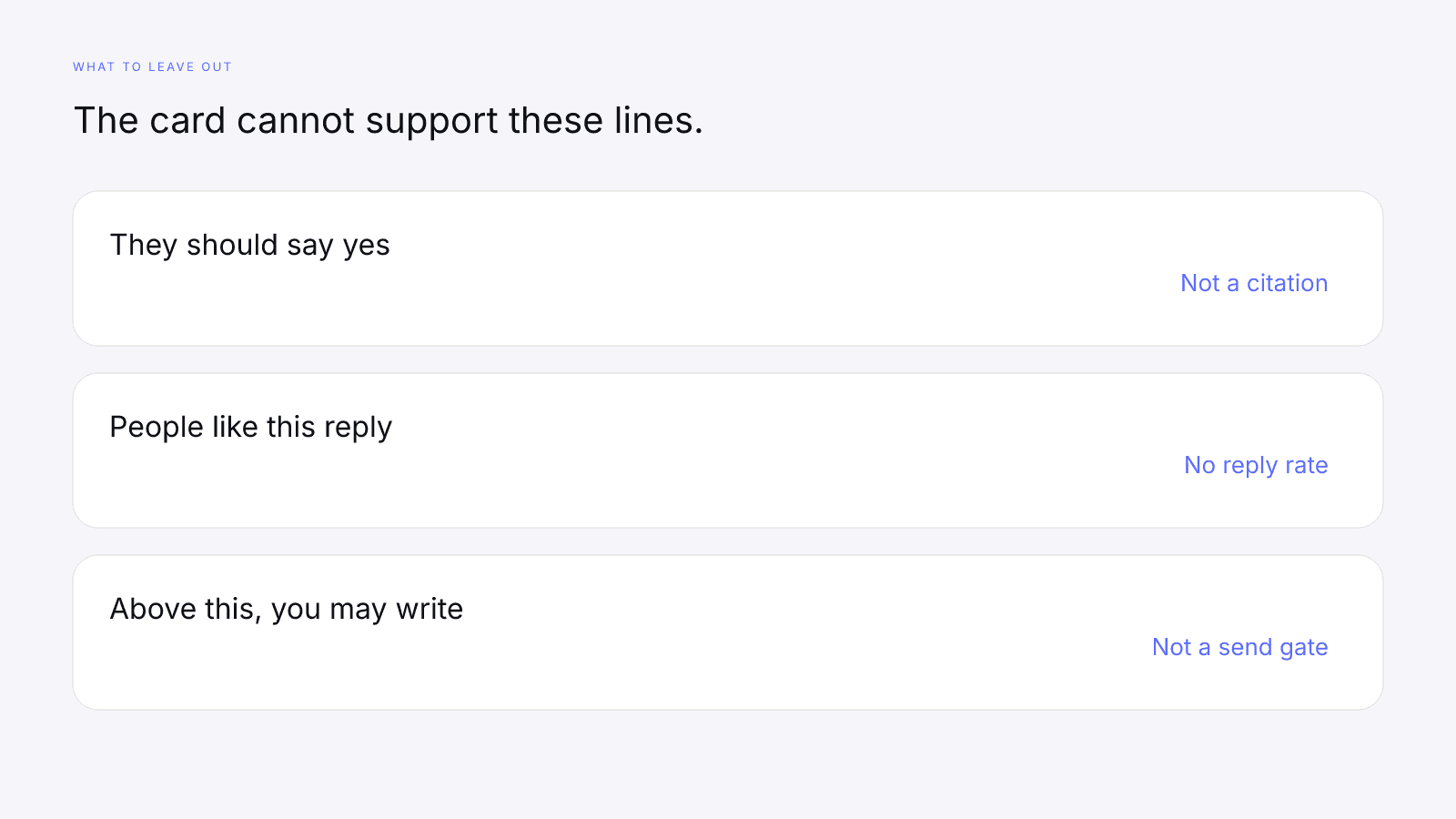
The overpromise is the other thing to clear out before sending. It's any sentence the card can't support: the score means they should say yes, people like them tend to reply, or the number forecasts the campaign or sets the fee. InfScore publishes none of those. The card is a versioned read of provider-reported public signals, with a model id and a coverage line. Your email can cite that page. It can't turn the headline into a booking.
Read the draft aloud once. Delete any sentence that would turn out false if the creator opened the URL and compared it with your words.
Cite the public card, not a screenshot
A cropped screenshot can drop the model id or the coverage line, and whoever reads it can't tell what's missing. The URL opens the full card, so paste the address.
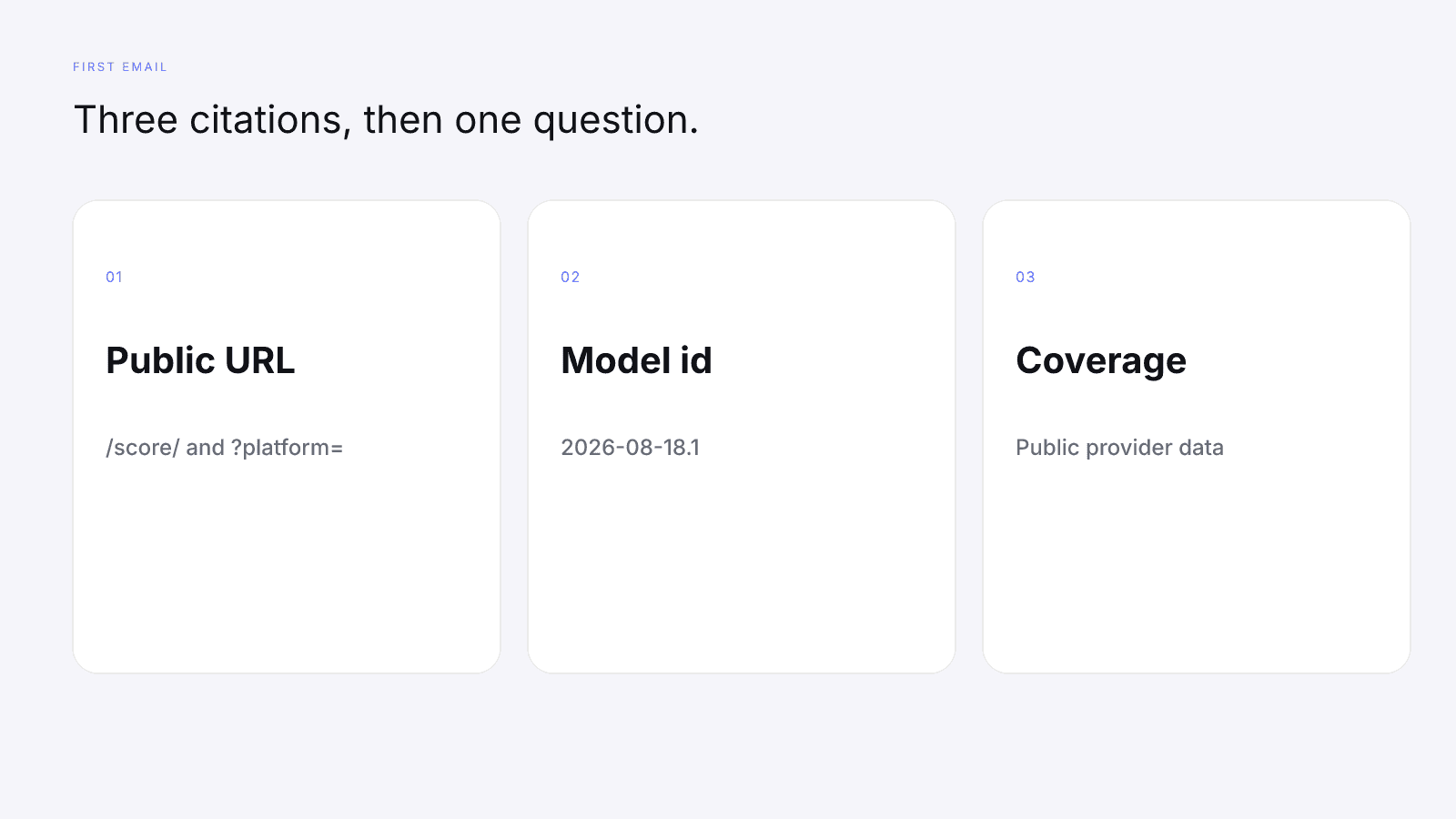
Copy these from the page, in this order:
- The public score URL for one platform:
/score/{handle}?platform=instagram,/score/{handle}?platform=tiktok, or/score/{handle}?platform=youtube. Search the handle, pick the platform, and copy the address bar. - The model id from the how-to-read line. This guide expects
2026-08-18.1. If the card prints a different id, don't quote any weights. Comparing InfScore Across Model Versions explains why a different id is a different formula. - The scoring-coverage line, including the words Public provider data, plus the name of every dash. How to Read an Influencer Scorecard Without Getting Fooled defines coverage and dashes.
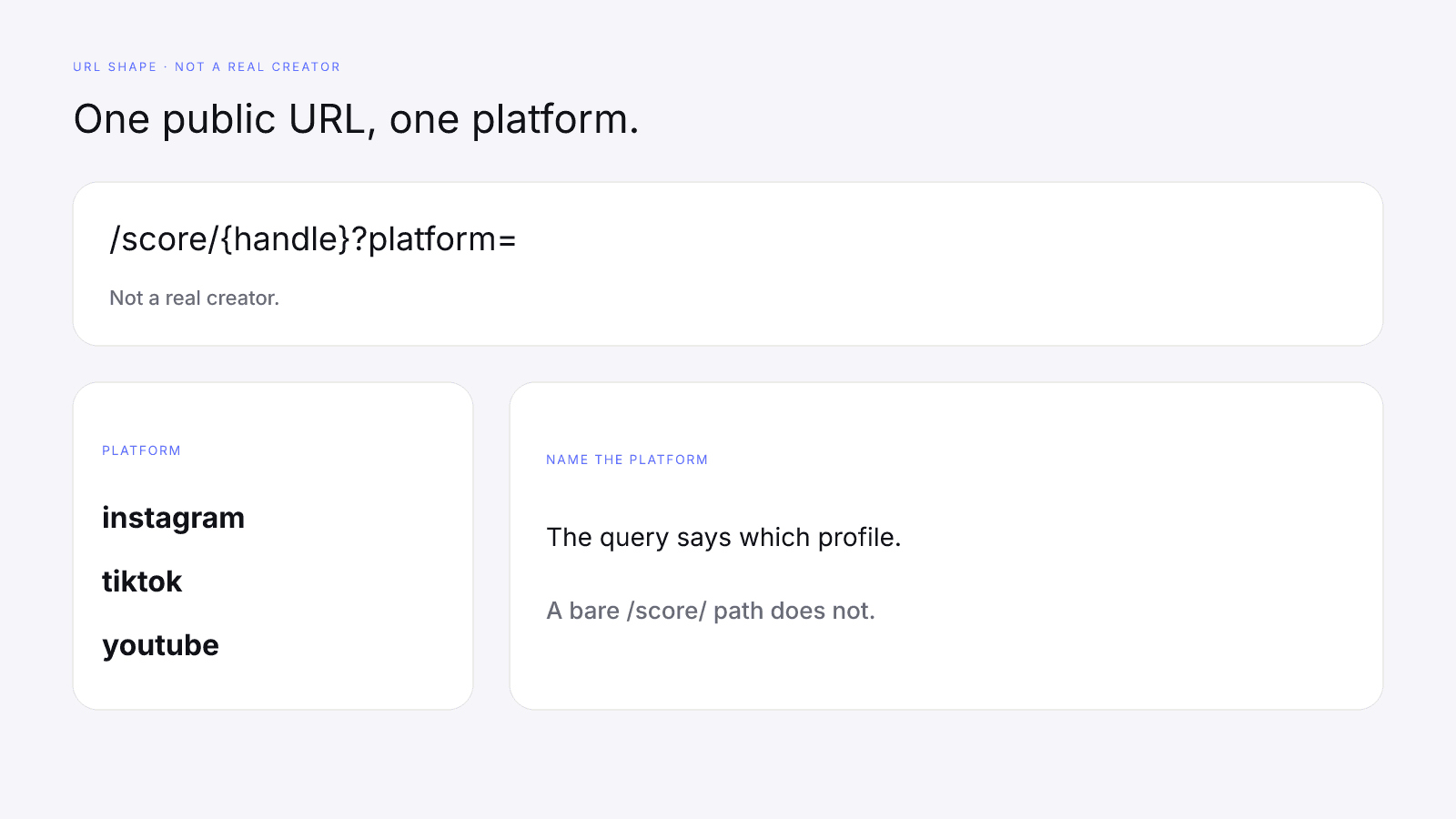
One URL covers one platform. If the brief is for Instagram, cite the Instagram URL; a YouTube card for the same handle is a different page. A link that stops at /score/{handle} doesn't say which profile you read.
To practice, open MrBeast on YouTube and find the URL, the model id, and the coverage line. This page doesn't quote that card.
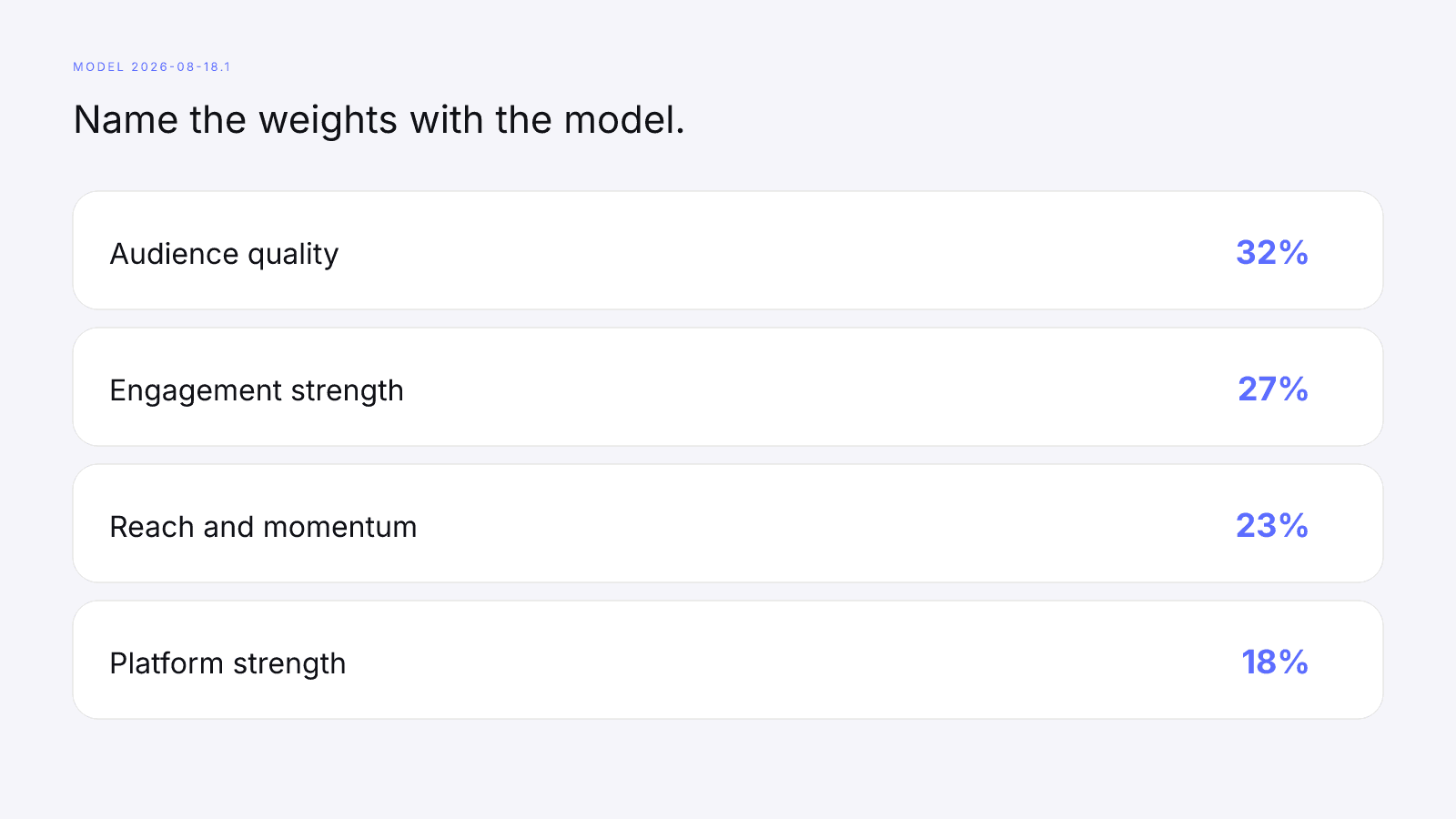
If you mention the weights, name the model in the same sentence. Copy the coverage percentage from the card rather than estimating one. Write the date you opened the card next to the model id in your own note too. The free card doesn't print that date, and a later visit can come back with a different dash pattern.
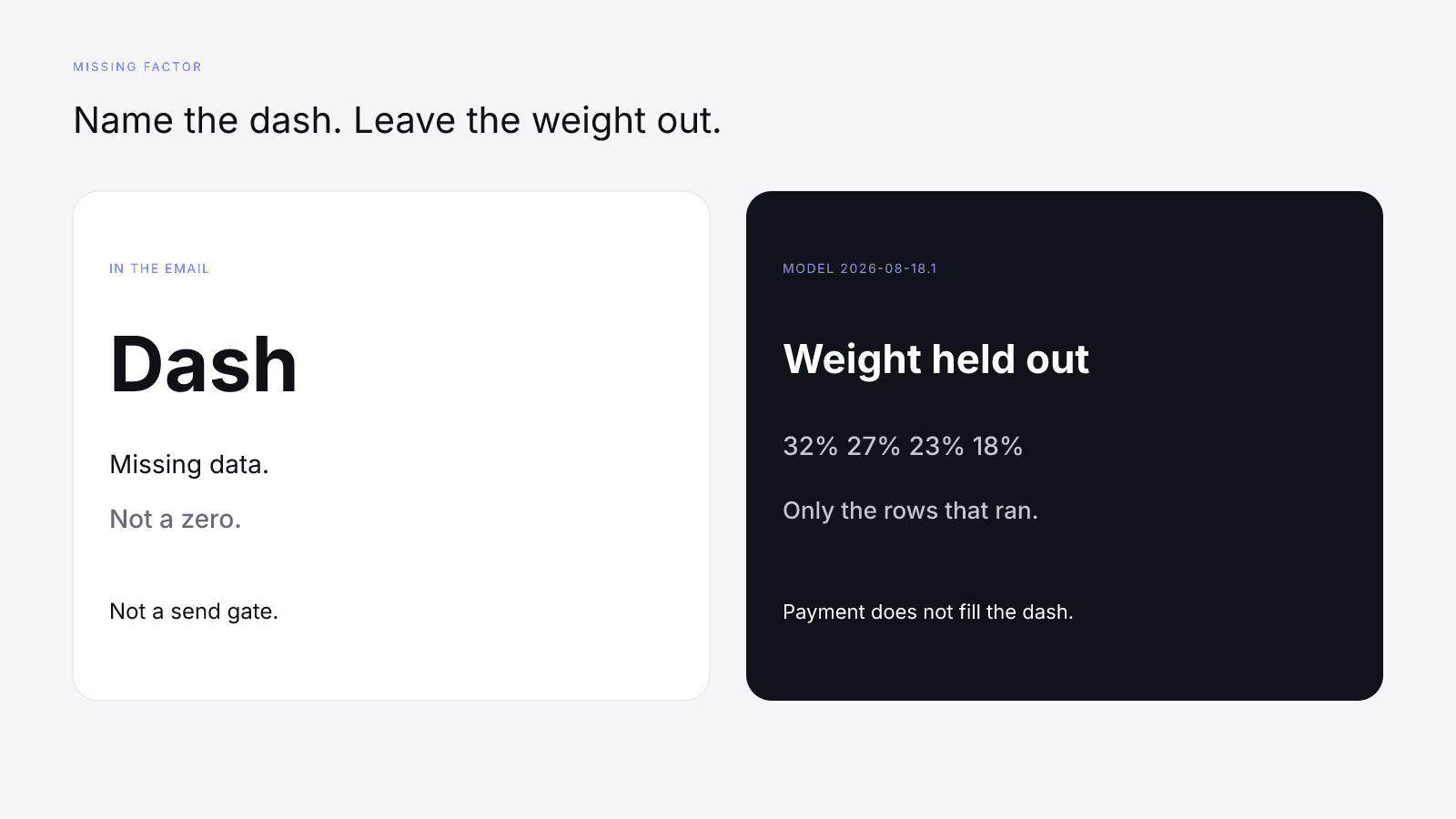
A dash is missing data, not a zero, and its weight is held out. Name the row in the email rather than typing a zero.
For what to quote from the card, What Brands Should Read First on an InfScore Card has the reading order.
Template 1: first contact
The first note cites the card, says who you are in one line, and asks one question. Replace {handle}, {brand}, {product}, and {date you opened the card} with your own facts, and swap in the coverage line from the page you actually opened.
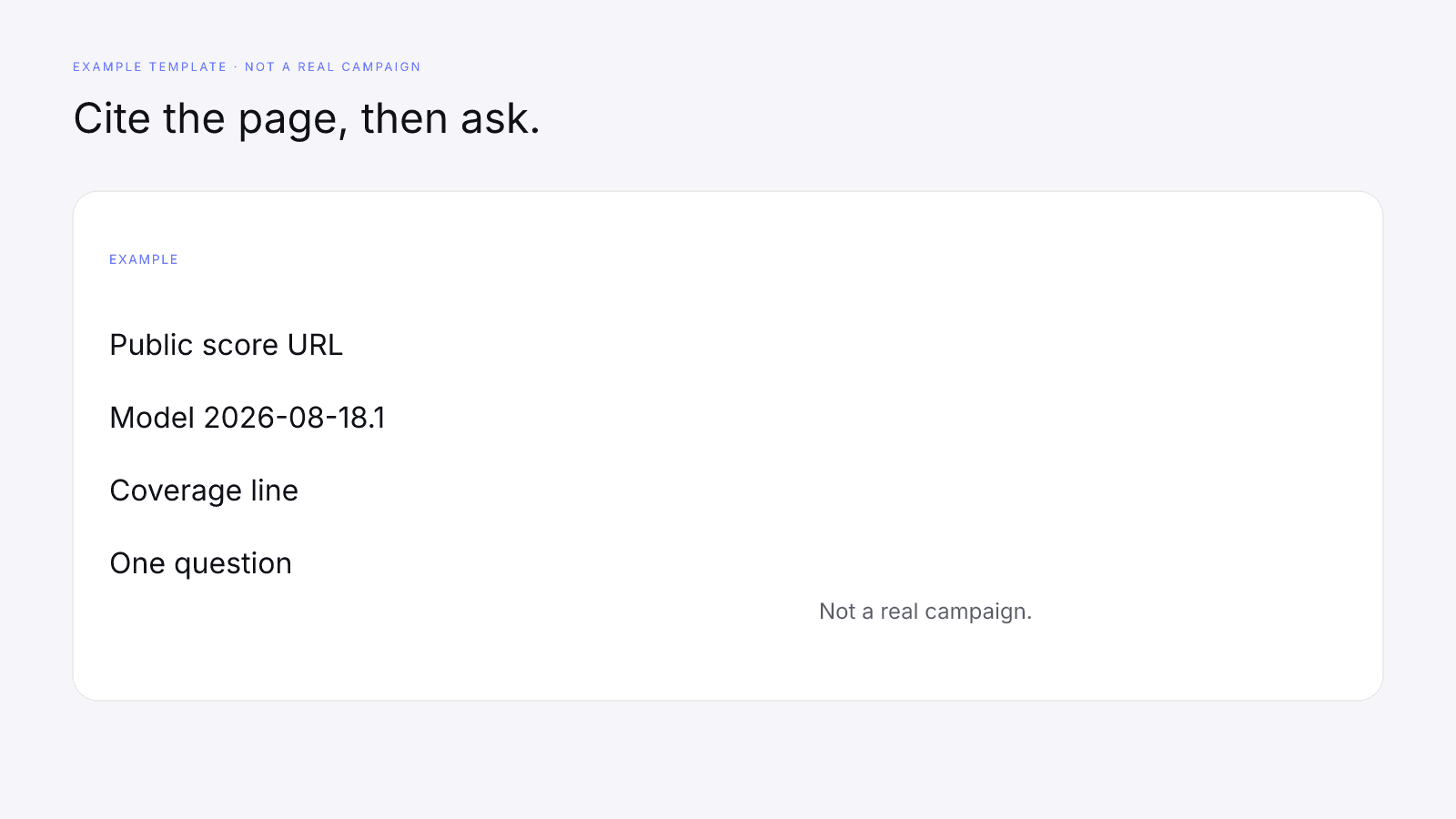
Example template. Not a real campaign and not a real creator.
Subject: Public card for @{handle} on Instagram
Hello. We're {brand}, and we're thinking about a post for {product}. We looked up the public InfScore for this profile:
/score/{handle}?platform=instagram
It shows model 2026-08-18.1. We copied the scoring-coverage line, including Public provider data, on {date you opened the card}. We aren't reading the 0–100 as a yes or a no.
Would you tell us, in your own words, who you think watches this account?
The example doesn't say where the address came from, because InfScore didn't supply it. Use it as a pattern, not as text to paste over a real name.
Template 2: asking about audience and past work
When the creator has already sent a kit, the channel exists. Reply to it, cite the same public URL, and ask about their audience and earlier work rather than assuming.
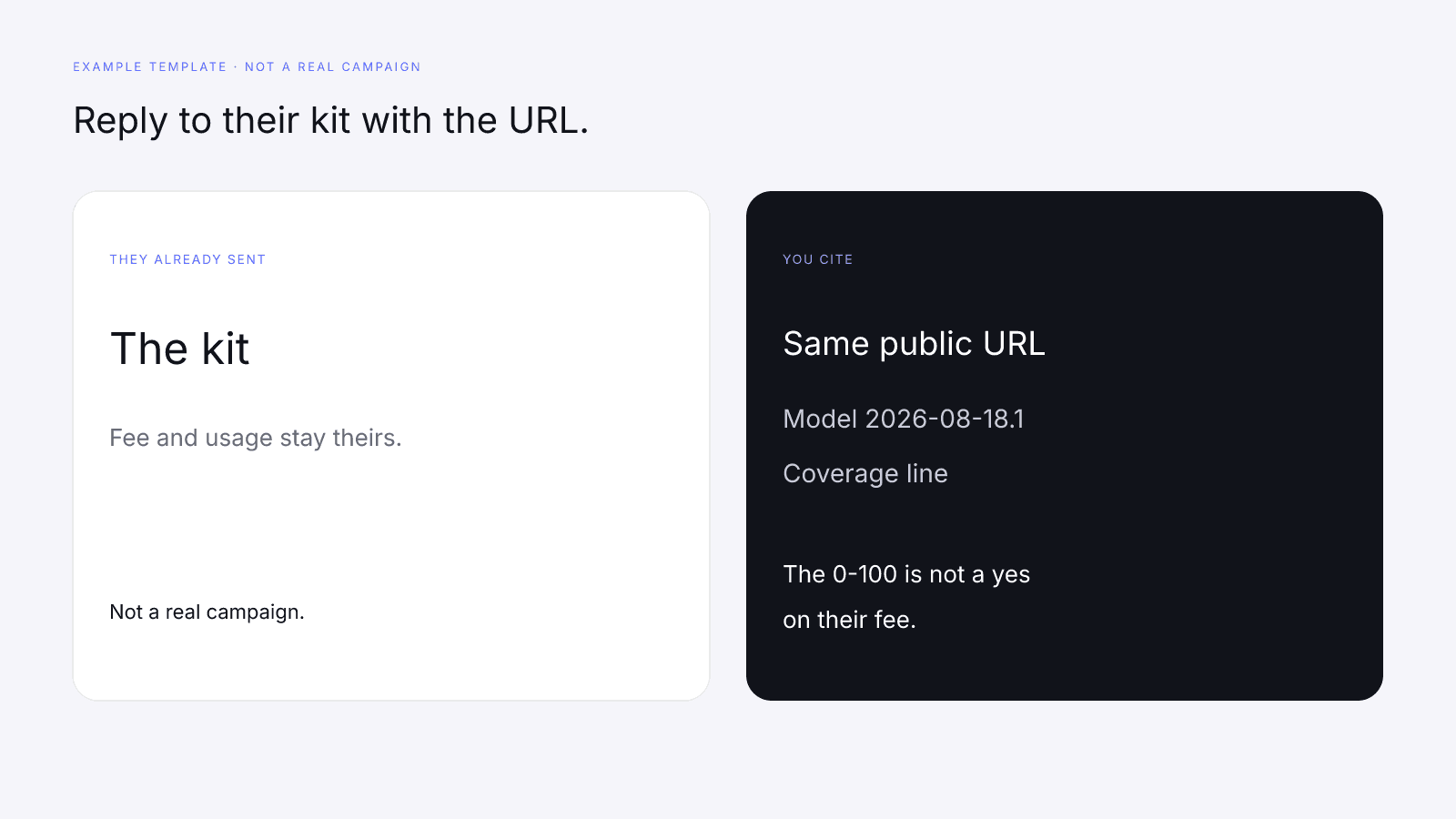
Example template. Not a real campaign and not a real creator.
Subject: Re: kit for @{handle}
Hello. Thanks for the kit. We opened the public page beside it:
/score/{handle}?platform=youtube
It shows model 2026-08-18.1. We copied the scoring-coverage line, including Public provider data, on {date you opened the card}, and we named any dash as missing data. We aren't treating the 0–100 as a yes on the fee or the usage terms in the kit. Those stay your lines.
One question, whenever you have a minute: who do you think watches this account, and which past work shows it best?
If audience quality is the row you care about, How to Check for Fake Followers Without Accusing Anyone covers that read. What to Put in an Influencer Media Kit in 2026 is the creator-side view of the same public URL.
Template 3: follow-up after no reply
A follow-up repeats the citation and the question from the same channel. It adds no pressure and no new claim.
Example template. Not a real campaign and not a real creator.
Subject: Following up: public card for @{handle}
Hello again. We wrote on {date of first email} about {product} and cited this page: /score/{handle}?platform=instagram, model 2026-08-18.1, with the coverage line we copied. No pressure to reply. If the timing isn't right, a one-line "not now" helps us too. If you're open to it, the question still stands: who do you think watches this account?
You write the second note yourself; nothing in it should say InfScore will chase the thread. If it goes unanswered, leave it there.
What not to write
Some sentences sound specific and still can't be backed by the card:
- A score boast, or any line that treats the number as a pass the creator earned.
- A minimum score, or a line suggesting the composite decided whether you could send.
- Any claim that InfScore approved the creator or found a problem with their audience.
- A fee or rate anchored to the 0–100.
- A sentence saying InfScore introduced you or found the address.
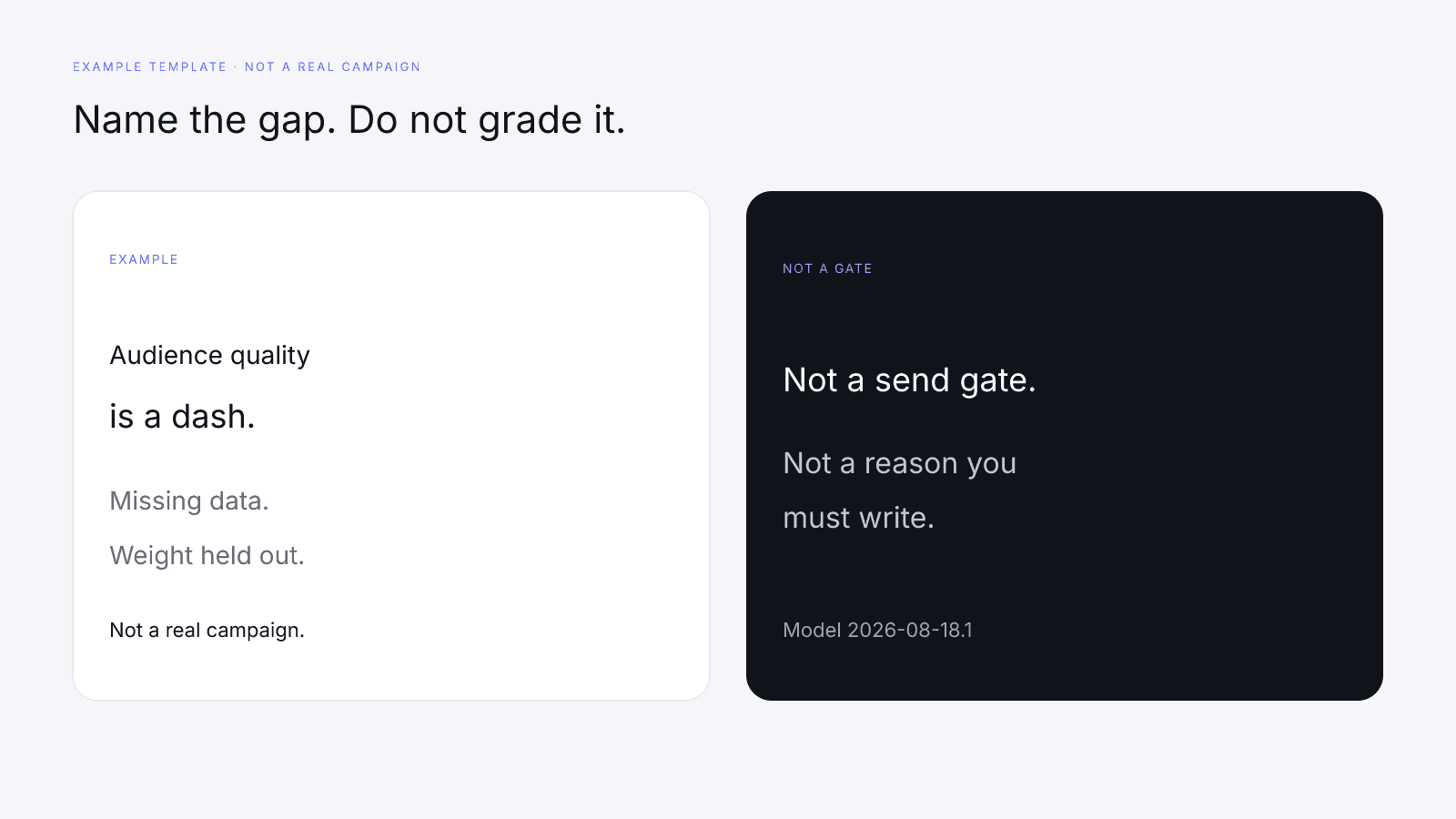
A dash deserves its own line. If audience quality is a dash, say so in plain words: the data is missing, not zero, and its weight is held out. On model 2026-08-18.1 the weights are audience quality 32%, engagement strength 27%, reach and momentum 23%, and platform strength 18% when those rows exist, so a dashed row means the composite ran on fewer factors. Don't treat the dash as a send gate or as the reason you're writing.
Tone matters as well. A note that praises the composite, or warns the creator about it, is still using the 0–100 as a verdict. If the model id on the card isn't 2026-08-18.1, take the weights out of the draft and cite only the id the page prints.
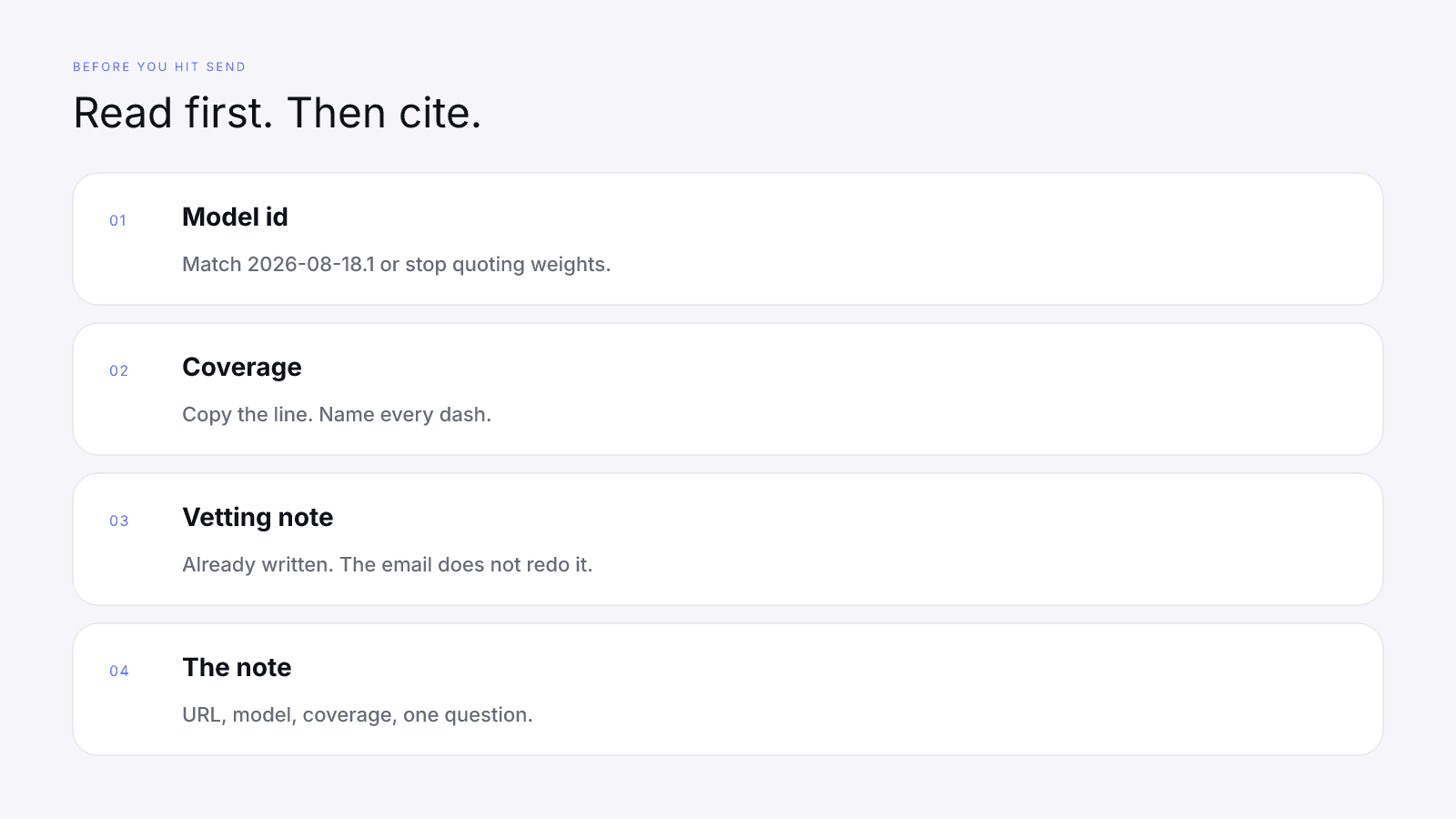
Your vetting note stays in your file. An email can ask about a gap in that note, but it can't close the gap or approve a payment. If you need to check what a different stamp means, Comparing InfScore Across Model Versions covers it. If a factor is a dash, keep the definition from How to Read an Influencer Scorecard Without Getting Fooled: missing data, weight held out.
An outreach checklist
These are questions, not cutoffs. There's no score cutoff in this workflow.
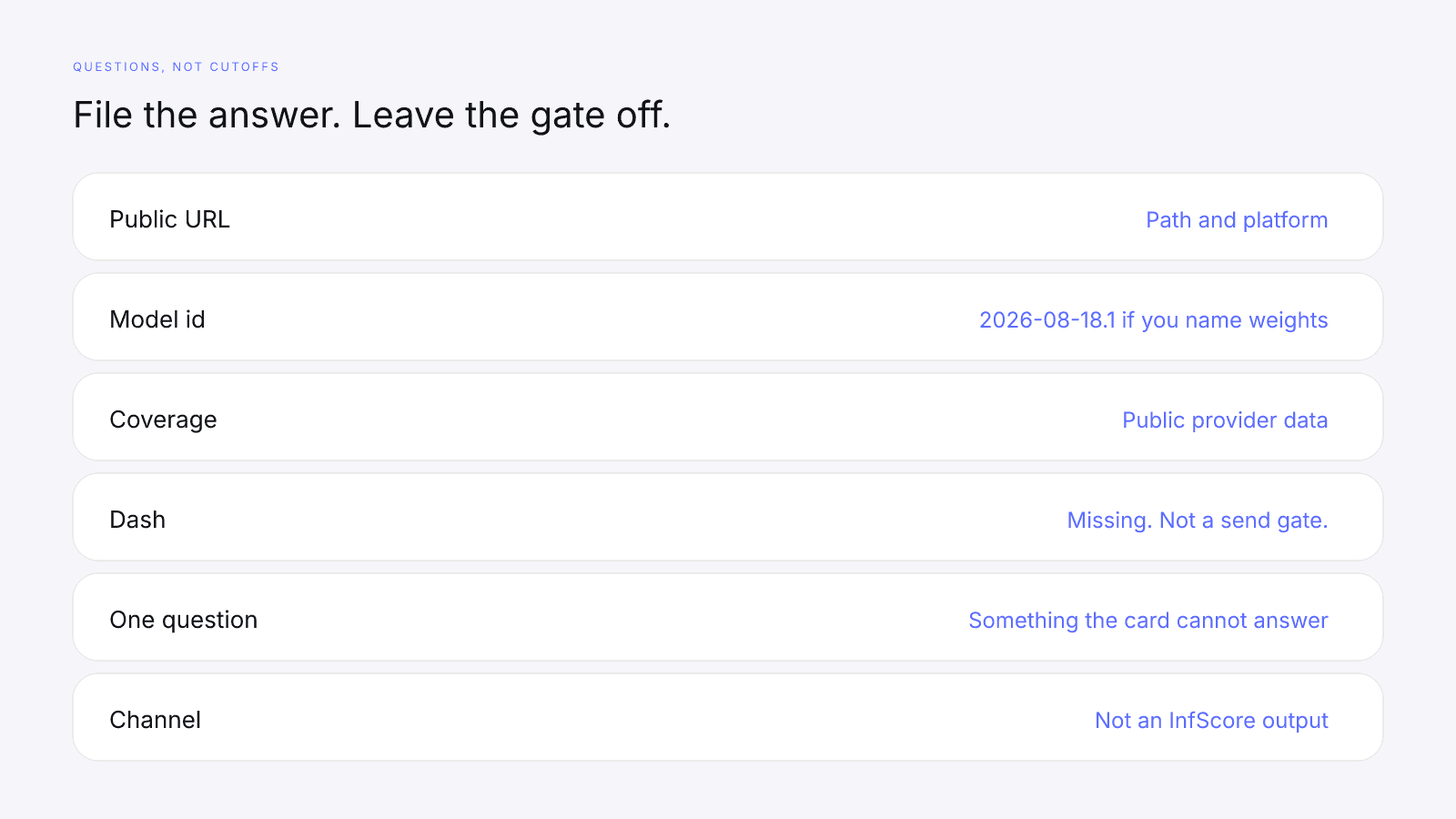
- Which public URL will you paste, and does it include
/score/and?platform=? - Does that platform match the profile you mean to write about?
- Which model id is on the page? If you named weights, did you name model
2026-08-18.1in that sentence? - What does the scoring-coverage line say, including Public provider data, and which rows are dashes?
- What's the single question in the note?
- Does any sentence treat the 0–100 as a reply promise, a campaign result, or a send gate? Take it out.
- Where did the address come from, and can you name that source without mentioning InfScore?
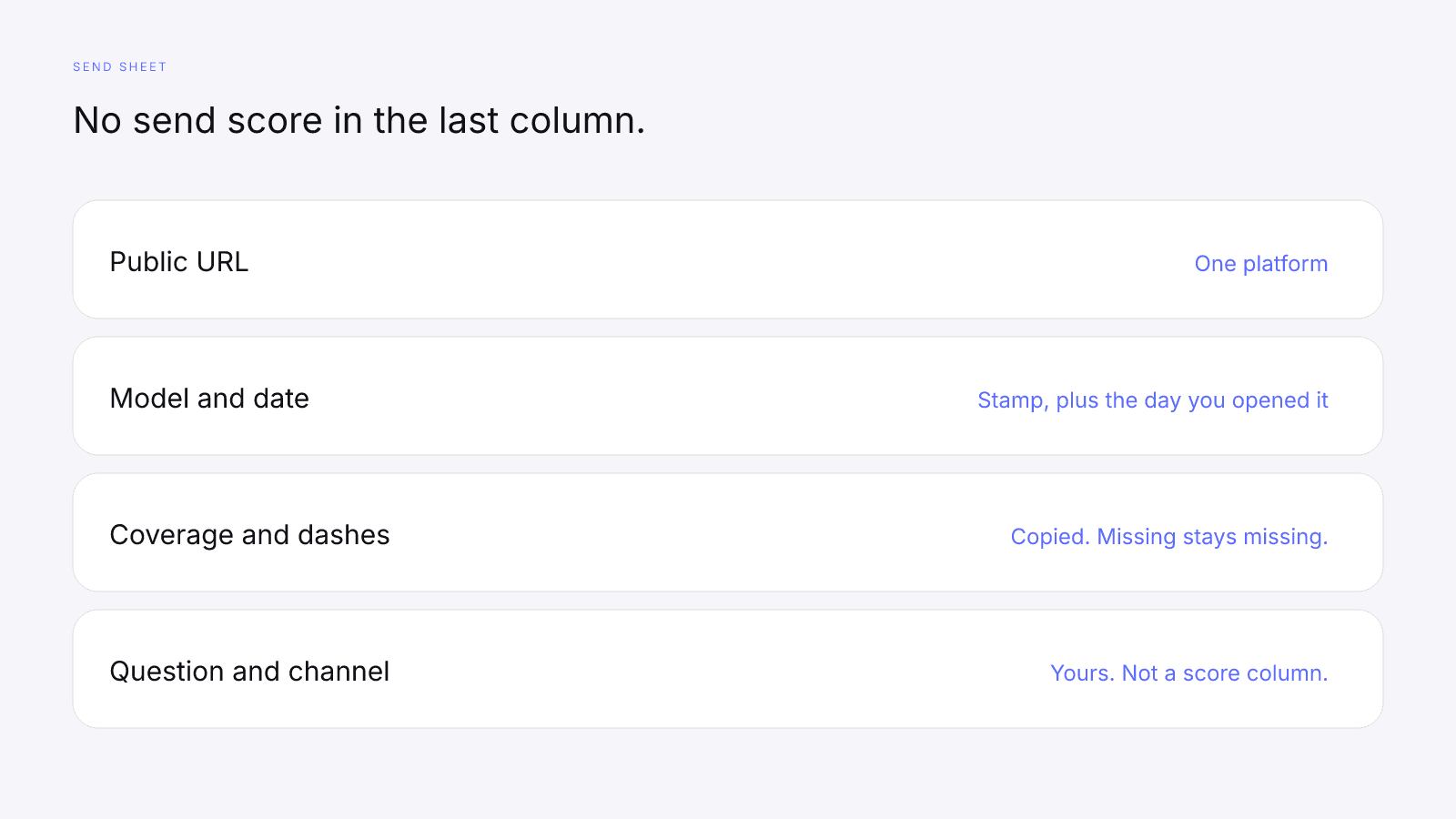
| Field | What to write |
|---|---|
| Handle and platform | The profile you opened, and the platform on the URL |
| Public URL | /score/{handle}?platform= with instagram, tiktok, or youtube |
| Model id | The stamp on the card. This guide expects 2026-08-18.1 |
| Date you opened it | The day you viewed the card. The free card doesn't print it |
| Scoring coverage | The coverage line, copied, including Public provider data |
| Dashes | Each missing row named. Missing data. Weight held out. Not a zero |
| One question | The single question in the email |
| Channel | Where the address came from. Not an InfScore output |
| Left out | No reply promise, no campaign result, no score cutoff |
If a teammate wants a "send score" column, leave it off. A homemade grade brings back the cutoff this checklist avoids.
The free InfScore needs no signup. Search a public Instagram, TikTok, or YouTube profile on infscore.com and copy the model id and coverage line before you draft.
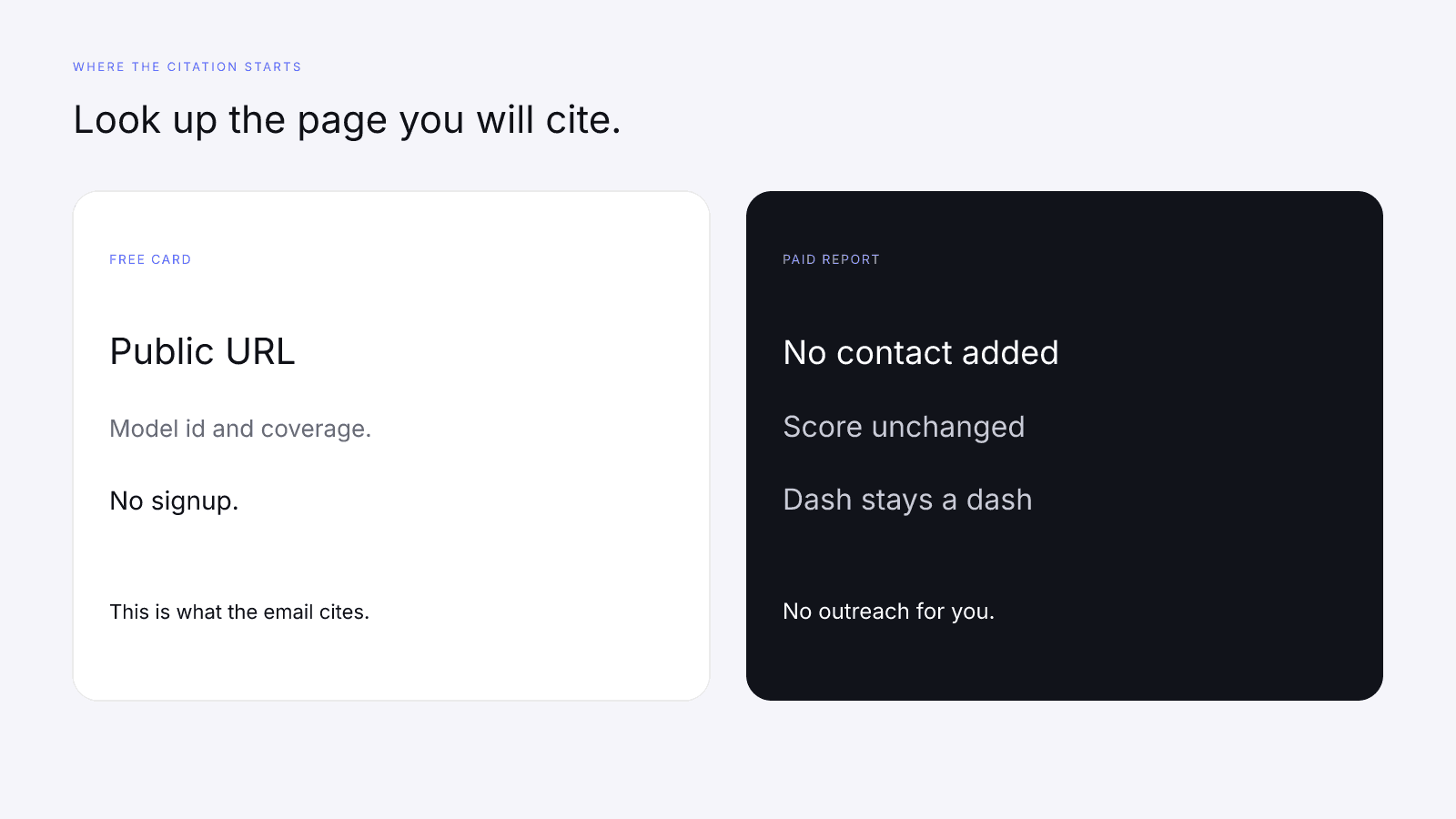
The $0.99 report is a one-time purchase, not a subscription; see Pricing. It's the full creator report, with audience, growth, and platform deep dives when they exist. Paying doesn't change the 32/27/23/18 weights on model 2026-08-18.1, fill a dash, or raise a score. Contact fields stay stripped from the paid report. InfScore still doesn't send outreach on a brand's behalf.
FAQ
How do you write an influencer outreach email?
Cite the public InfScore URL for one platform, the model id (2026-08-18.1 on current cards) and the scoring-coverage line, then ask one real question. Promise nothing the card can't back, and send it from your own channel.
What should a first outreach email to an influencer include?
Who you are and what the product is, the public URL with the model id and coverage, any dash named as missing data, and one question the card can't answer.
Should I mention a creator's InfScore in outreach?
Yes, as the public URL plus the model id and coverage. Don't boast about the 0–100 and don't use it as a gate; it's a citation, not a verdict.
Does InfScore give creator emails or send outreach?
No. InfScore doesn't find creator contacts or send outreach on a brand's behalf. Contact fields are stripped from the free card and the paid report, so you need a channel you already have.
How do I follow up if an influencer doesn't reply?
Send one short, polite note on the same channel. Restate the page you cited and the one question, and make "not now" an easy answer. This guide makes no timing or reply-rate claims.
What should I avoid saying in influencer outreach?
Avoid score boasts, "your score qualifies you", accusations about the audience, fees anchored on the 0–100, and any promise of a reply or a result.
What if the creator's card shows a dash?
A dash is missing data, not a red flag or a zero, and its weight is held out. Name the row and ask the creator about it rather than assuming.