What to Put in an Influencer Brief (With a Template)
Influencer brief template for brands: goals, deliverables, timeline, approvals, usage rights, and a score section with the InfScore link and model id.
This versioned composite uses only available public signals. Missing factors stay unavailable and their weight is rebalanced across observed factors. It is not a percentile, price estimate, or guarantee of campaign results. Model 2026-08-18.1.
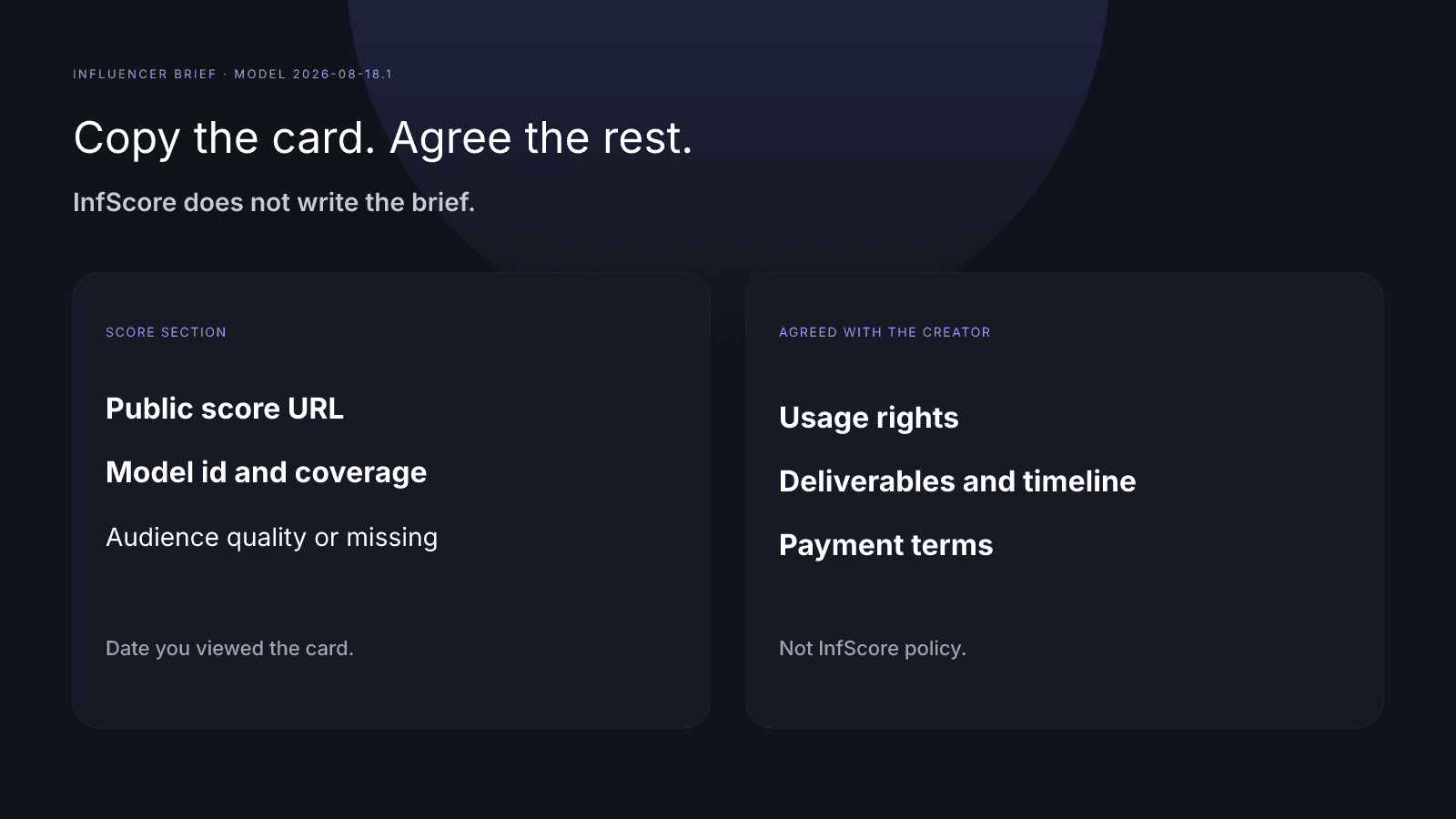
An influencer brief template records what you and the creator agreed, plus a short score section copied from the public card: the /score/{handle}?platform=… URL, model 2026-08-18.1, the coverage line, and audience quality as the number on the card or the word "missing", never a guess. InfScore doesn't set goals, fees, rights, or terms; those come from the brand and the creator. This page starts after vetting and the first outreach email.
On model 2026-08-18.1 the weights are audience quality 32%, engagement strength 27%, reach and momentum 23%, and platform strength 18%, counted only for rows that came back. A dash is missing data, not a zero, and its weight is held out. The methodology publishes those weights, and How to Measure Influencer Performance walks through the four factors. This page doesn't re-teach that read. It covers which lines from the card belong in the brief, and which lines the card can't write.
Influencer brief template: what goes in it
A brief is a shared note with two blocks. The brand writes what the work is for. The creator says what they will make, on what schedule, and on what terms. The score section sits beside those lines so anyone who opens the file can open the same public card.
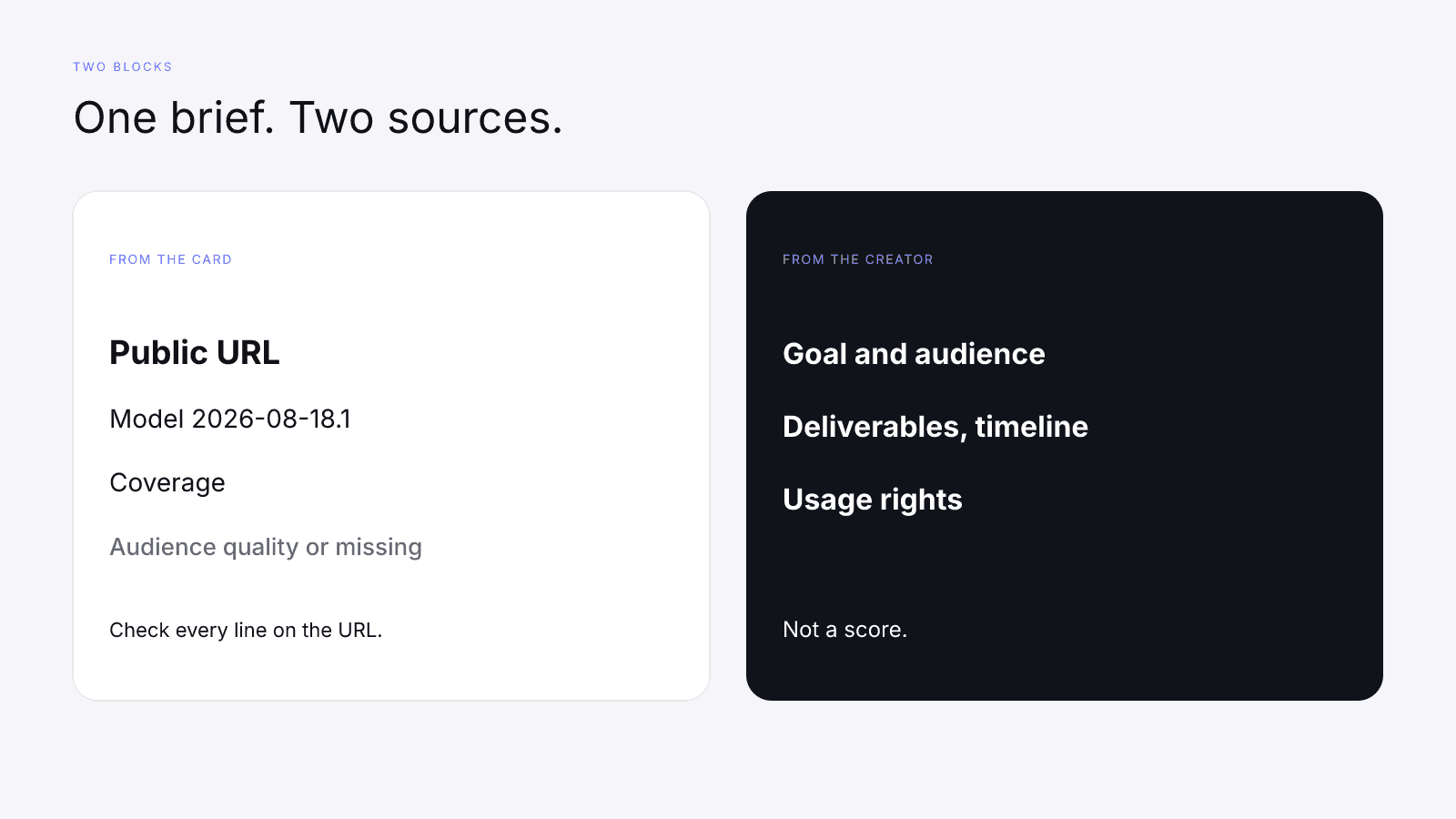
The brief is not a verdict. The 0–100 is not a reason to send the brief, and it is not a reason for the creator to accept it. InfScore publishes a versioned read of provider-reported public signals, with a model id and a coverage line. Your brief can record that page. It can't turn the headline number into a booking, a fee, or a forecast of what the post will do.
InfScore doesn't find creator contacts or send outreach for you, and it doesn't send the brief for you. Contact fields are stripped from the free card and from the paid report. InfScore also doesn't look up an email, a direct message, or an agent. You already have a channel from the outreach step. If you don't, go back to the outreach guide before you write the brief, and don't tell the creator InfScore introduced you.
Before the brief goes out, read it once with the card open. Delete any sentence that would turn out false if the creator opened the URL and compared it with your words. The score section should hold only lines you can check against the public URL, and the agreement only lines you can check against what the creator said.
Campaign goals and the audience you're after
The rest of the influencer brief template isn't on the card. InfScore doesn't draft it, and the 0–100 doesn't imply it. Write these fields in the words you and the creator actually use.
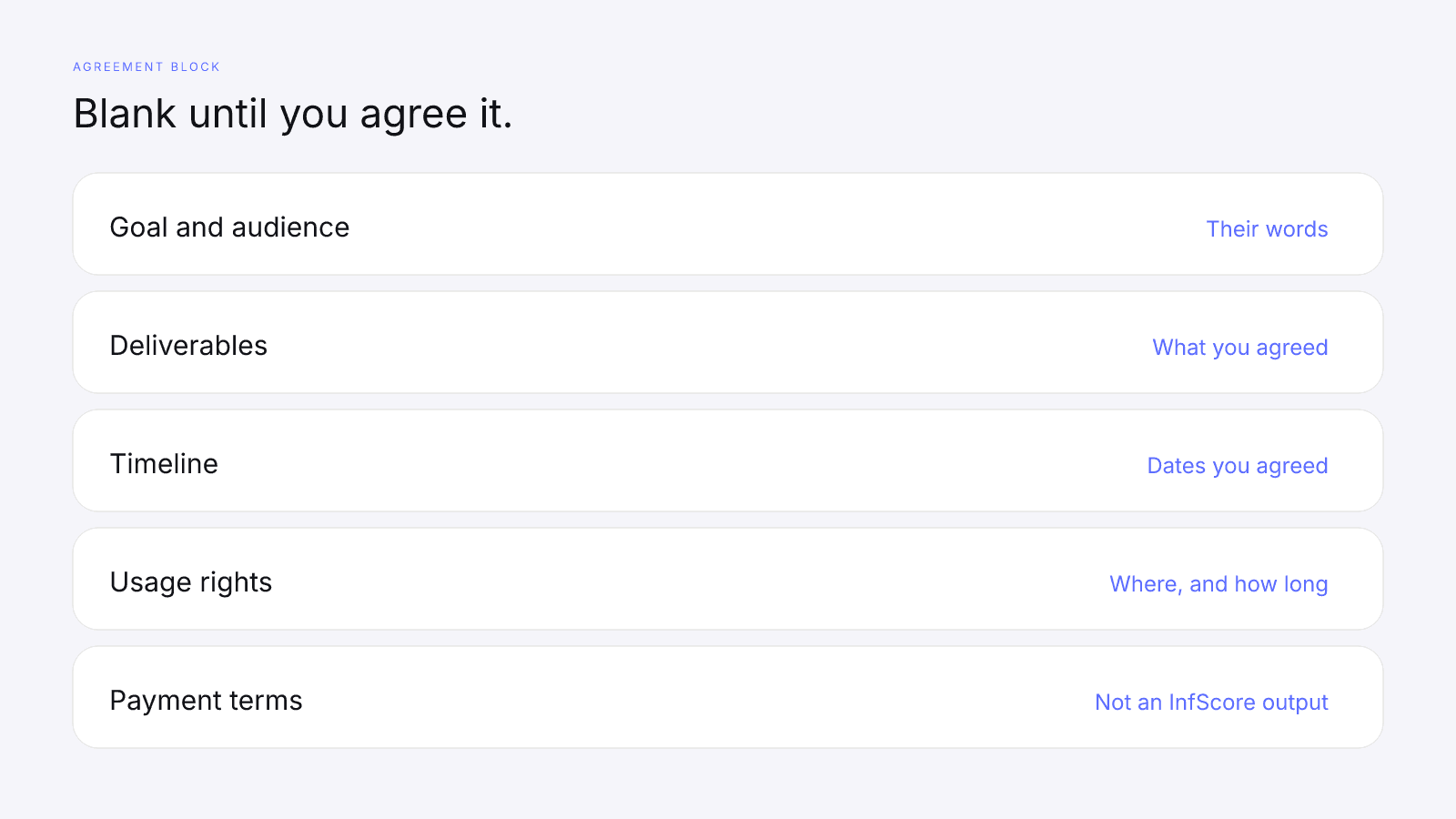
The goal is what the post is for, in the brand's words. The card doesn't know the job, so this line comes from you.
The audience line is who the creator says watches, in their words. The audience quality number is not that sentence. It sits in the score section, and if that row is missing on the card, the score section still says missing. Don't let one field fill in for the other.
Deliverables, timeline, and approvals
Deliverables are what the creator will post, and on which platform. That platform should match the public URL in the score section. InfScore doesn't list the pieces.
The timeline is when drafts are due and when the post goes up. Those dates come from the conversation. They are not the date you viewed the card, and the card doesn't suggest them.
Approvals say who reviews the draft, and what happens if the work changes after that review. Write the names or roles you agreed, not a process you expect the creator to guess.
These fields stay blank until someone agrees them. A blank is more honest than a line filled in from the score.
Usage rights and payment terms
Usage rights say where the finished work can run, and for how long. Agree this with the creator. It is not InfScore policy, and it is not legal advice.
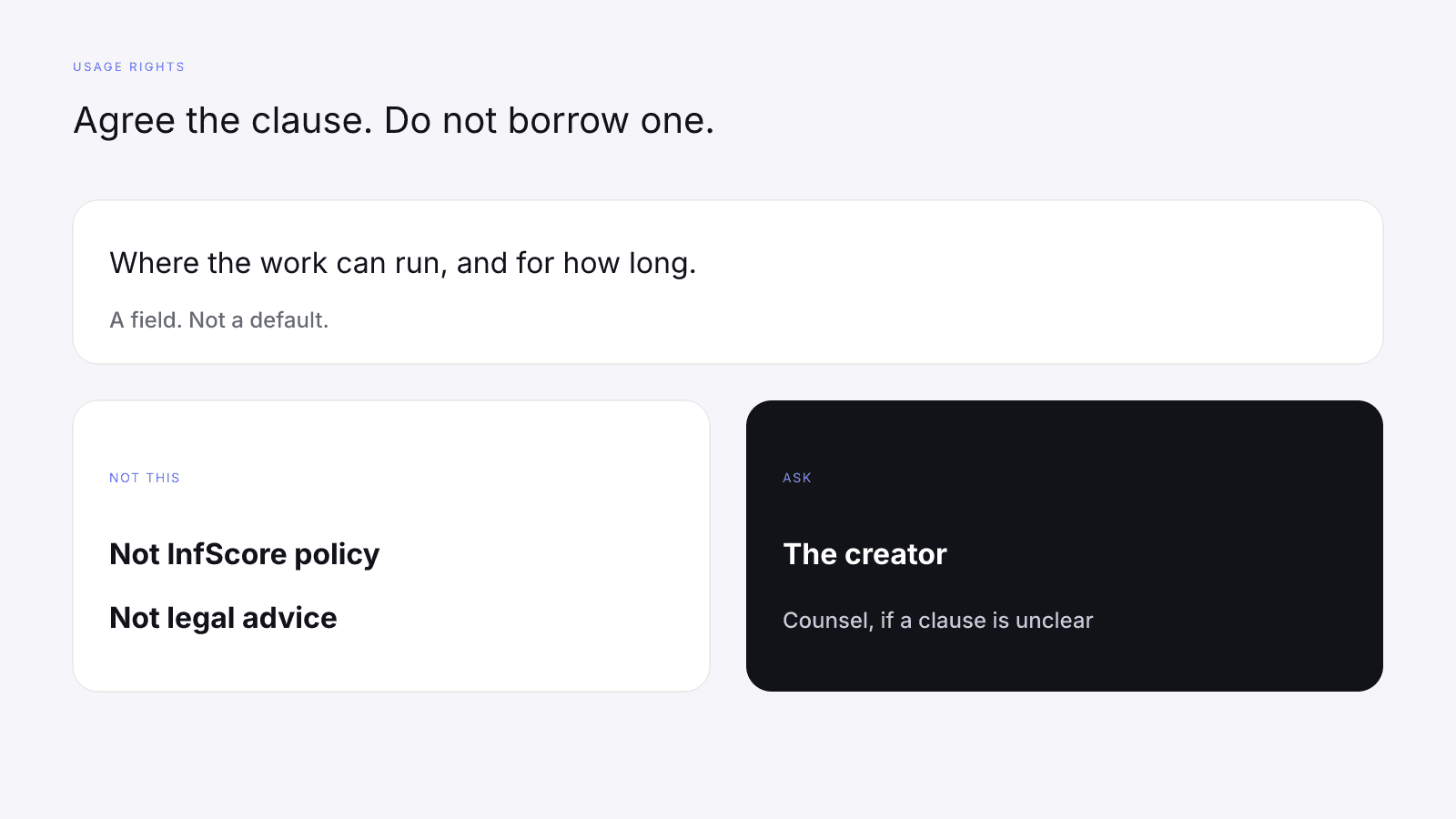
Write the rights in a plain sentence both sides can read: where the work can appear, and for how long. If a clause is unclear, ask the creator what they mean, and ask counsel before you rely on it. Platform rules can limit reuse, so check them where they apply. InfScore doesn't draft the clause. A chat line can sit in the file, but keep the agreed terms in writing from the creator as well.
Payment terms are what you agreed to pay, and when. The free card doesn't quote a fee, and you shouldn't derive one from the 0–100 or from follower count. This page states no prices for creator work. Name the place, the window, and the payment in words you would still accept if the creator read them back. The brief is the work order. For the terms both sides settle and write down before money moves, see what to agree in writing with an influencer.
The score section
The score section is a copy of the card, not a summary. A cropped screenshot can drop the model id or the coverage line, and whoever reads it later can't tell what was cut. The URL opens the full card, so the brief stores the address.
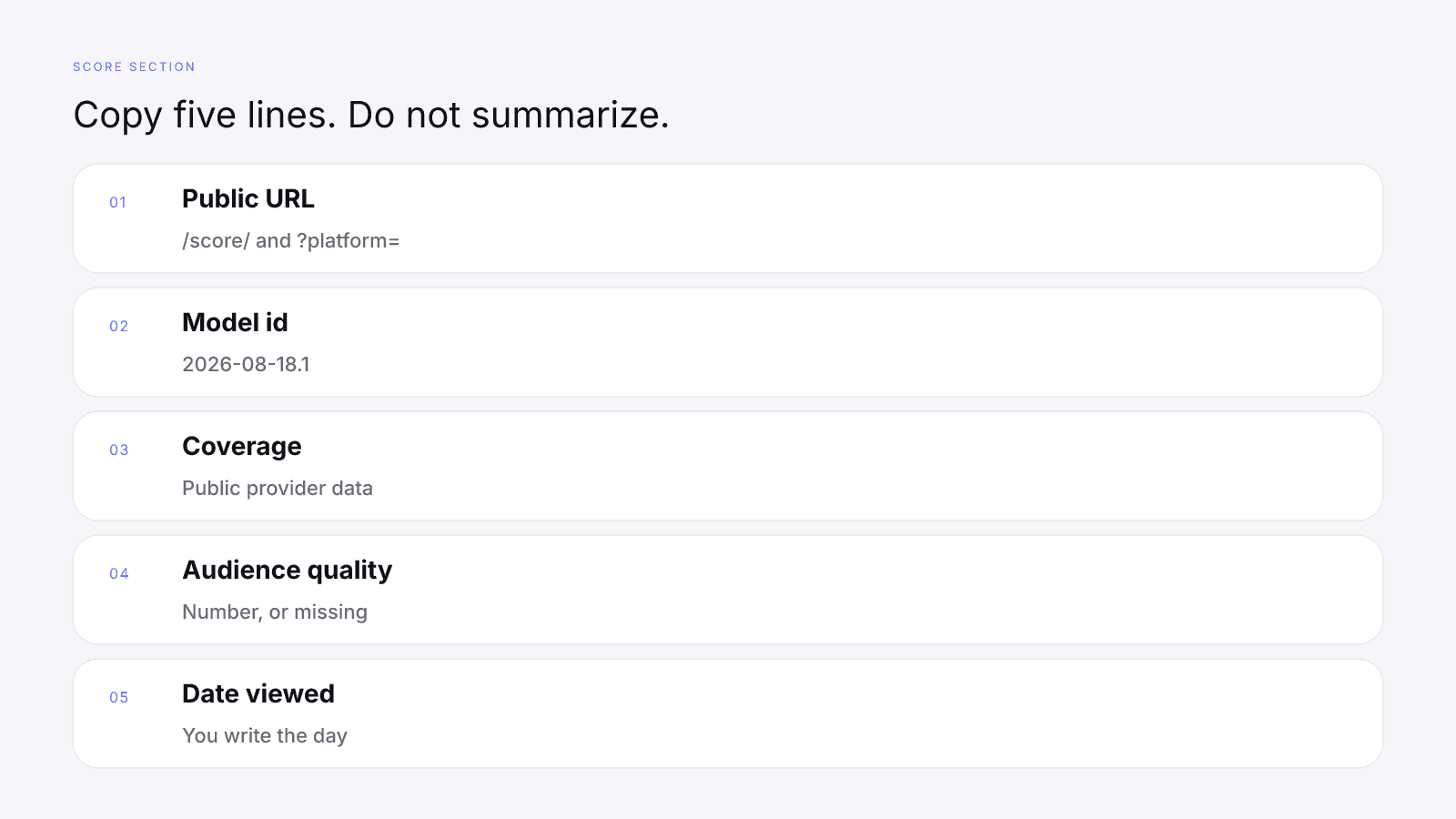
Copy these from the page, in this order:
- The public score URL for one platform:
/score/{handle}?platform=instagram,/score/{handle}?platform=tiktok, or/score/{handle}?platform=youtube. Search the handle, pick the platform, and copy the address bar. - The model id from the how-to-read line. This guide expects
2026-08-18.1. If the card prints a different id, copy that id and leave the weights out. Comparing InfScore Across Model Versions explains why a different id is a different formula. - The scoring-coverage line, including the words Public provider data, plus the name of every dash. What Brands Should Read First on an InfScore Card has the reading order, so this page skips it.
- Audience quality as the number on that row, or the word missing when the row is a dash.
- The date you viewed the card. The free card shows no date, so you write the day yourself.
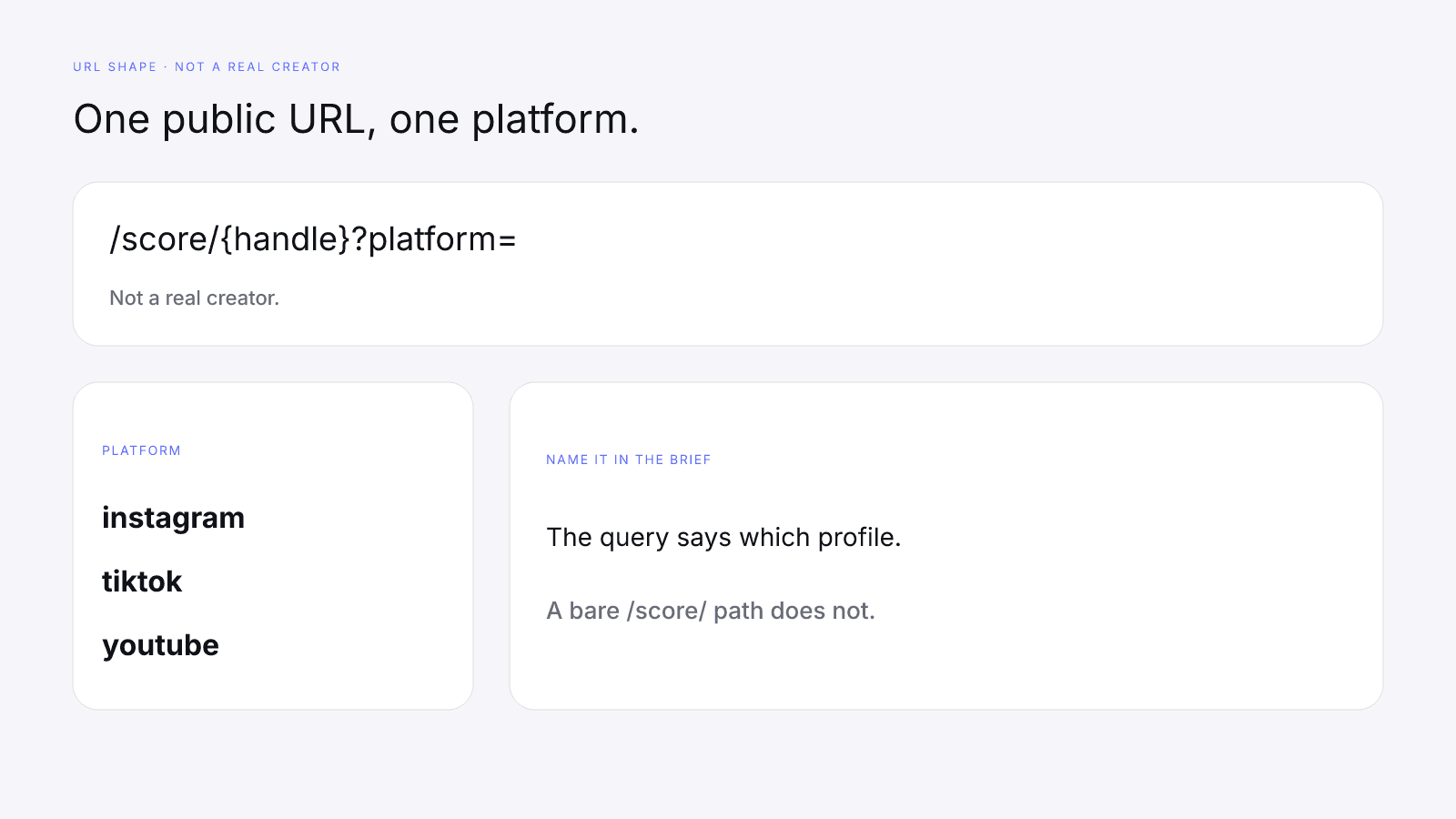
One URL covers one platform. If the brief is for Instagram, record the Instagram URL. A YouTube card for the same handle is a different page, with its own coverage line and its own dashes, and a link that stops at /score/{handle} doesn't say which profile you read.
To practice the copy, open MrBeast on YouTube and find the URL, the model id, and the coverage line. This page doesn't quote that card, and numbers from a practice profile don't belong in a brief for someone else.
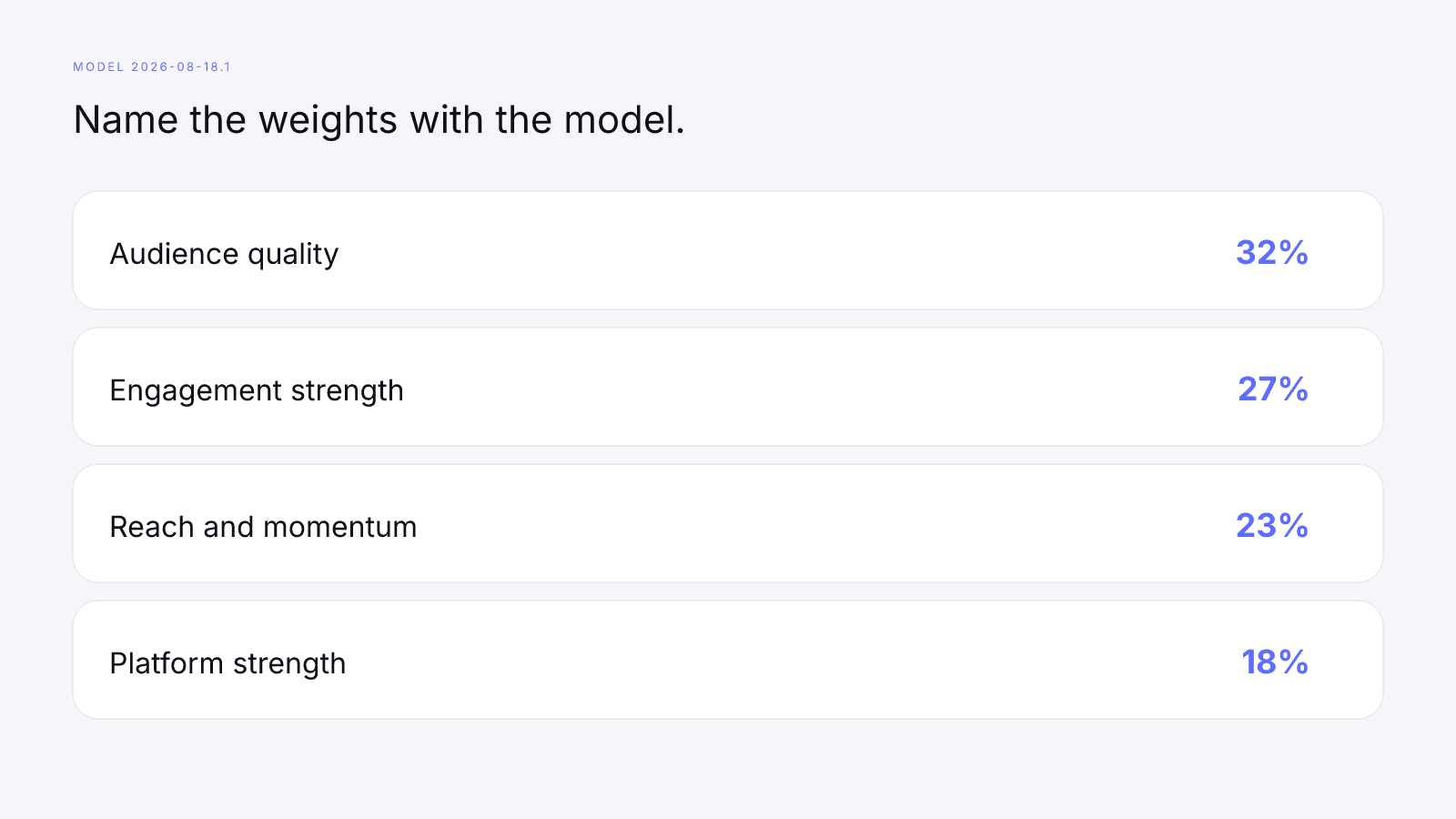
If you mention the weights in the brief, name the model in the same sentence. On model 2026-08-18.1 the weights are audience quality 32%, engagement strength 27%, reach and momentum 23%, and platform strength 18%. Copy the coverage line from the card rather than estimating one, and keep the words Public provider data in it. A later visit can come back with a different dash pattern, which is why the date you viewed the card sits next to the model id.
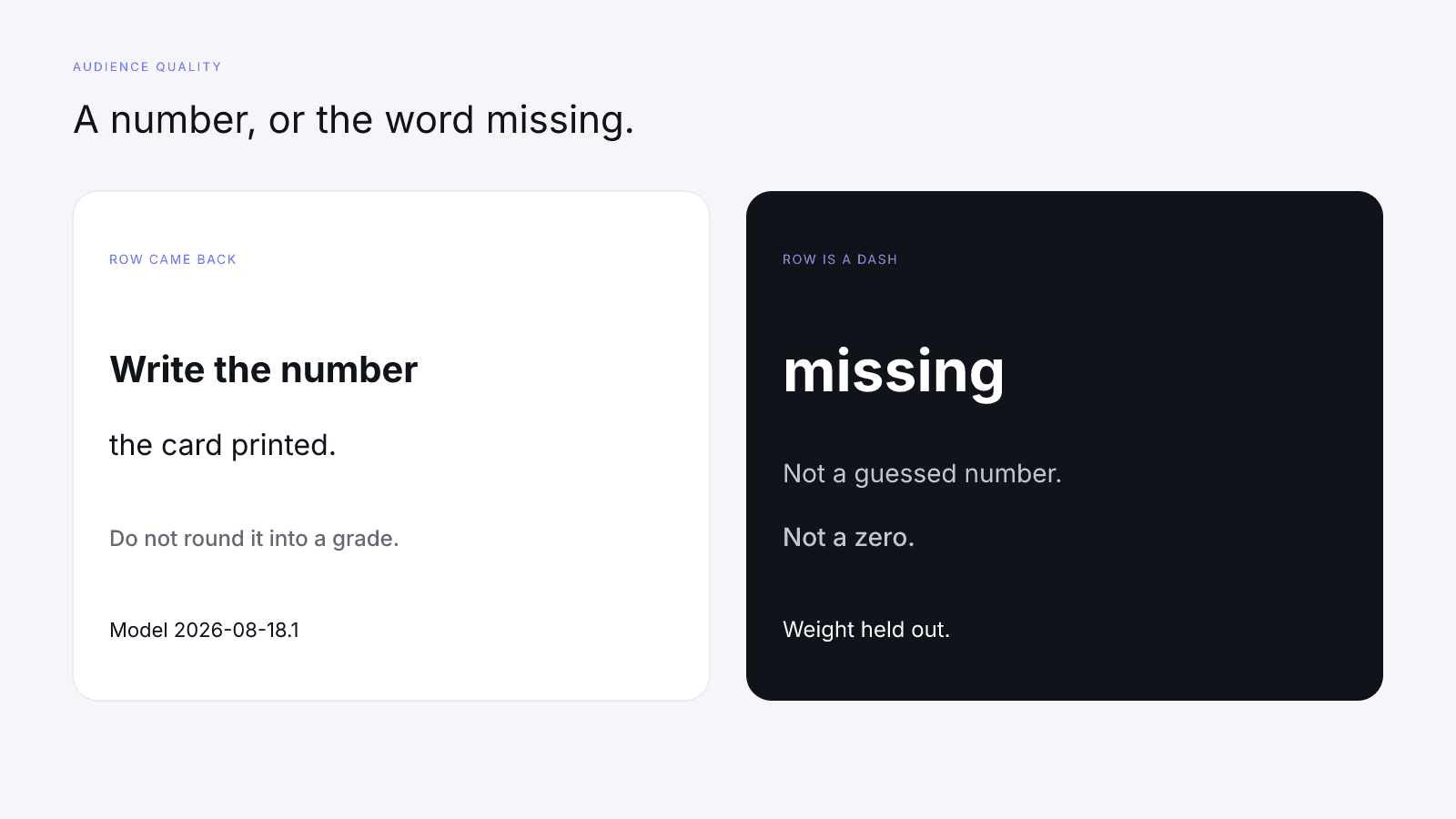
Audience quality is one row on the card. If it shows a number, write that number. If it shows a dash, write the word missing. Don't type a zero, and don't type a number you wish the row had shown. A dash is missing data, not a zero, and its weight is held out. Missing Data on Creator Metrics: Why Dashes Beat Fake Zeros has the full rule. The brief only needs the word and the name of the row.
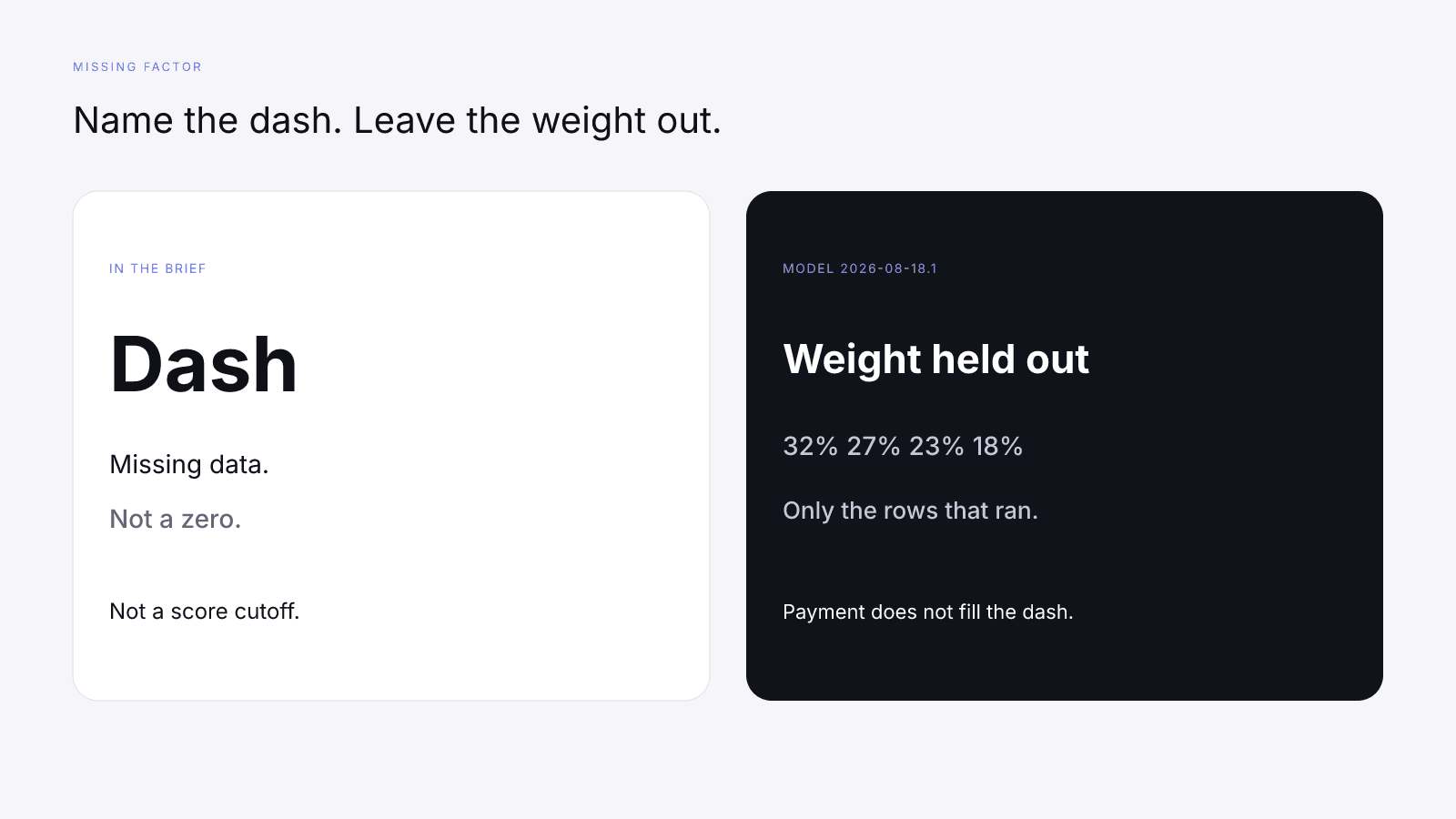
A dashed row means the composite ran on fewer factors, and the brief records that fact. It isn't a reason to drop the creator, and a printed number isn't a reason to skip the other fields. There is no score cutoff in this template. If your team wants the other three rows in the file too, copy them the same way: the number where the card printed one, the word missing where it printed a dash. Don't average them into a second score. A blank cell invites the next person to invent a number, while the word missing tells them the card left it empty.
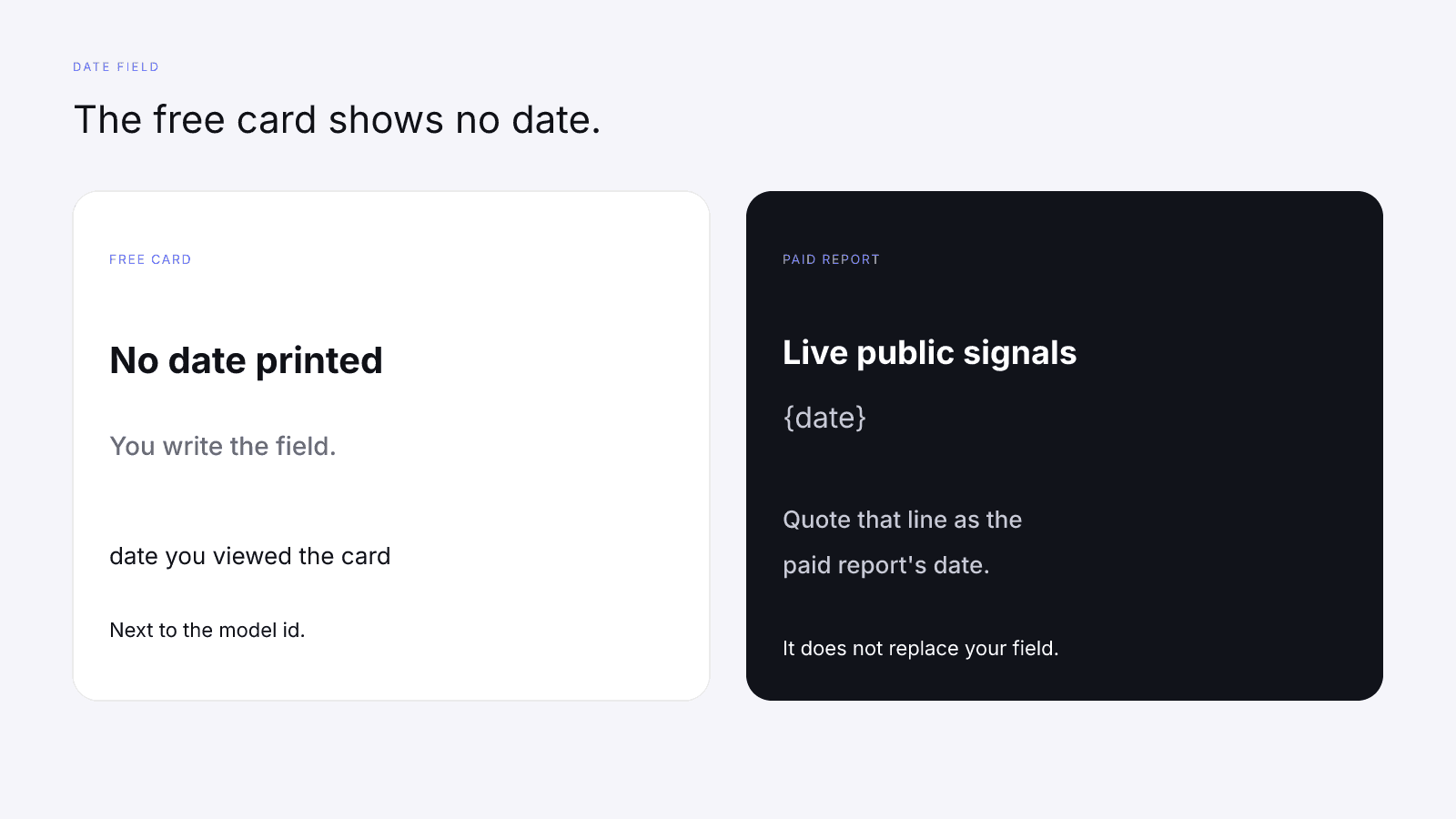
The last field is "date you viewed the card", written by you, next to the model id and the coverage line you copied that day. A later lookup can change which rows came back, so the date tells a teammate which visit the score section describes. If you open the card again and the coverage line differs, update the date and the copied lines together.
The paid report shows a date line the free card doesn't: "Live public signals · {date}". You can quote it as the paid report's date, and you still write "date you viewed the card" for your visit. Free InfScore vs the $0.99 Report covers what the paid page adds. It doesn't add a date to the free card, and the paid line doesn't stand in for the model id or the coverage line.
The $0.99 report is the full creator report, with audience, growth, and platform deep dives when they exist. Paying doesn't change the 32/27/23/18 weights on model 2026-08-18.1, fill a dash, or raise a score. If audience quality was a dash on the free card, paying doesn't fill that row on the card, so the score section still says missing.
An influencer brief template you can copy
The block below is a pattern. Replace every brace with a fact from the card you opened or from the conversation you had. Don't paste it over a real name, and don't read the braces as sample results.
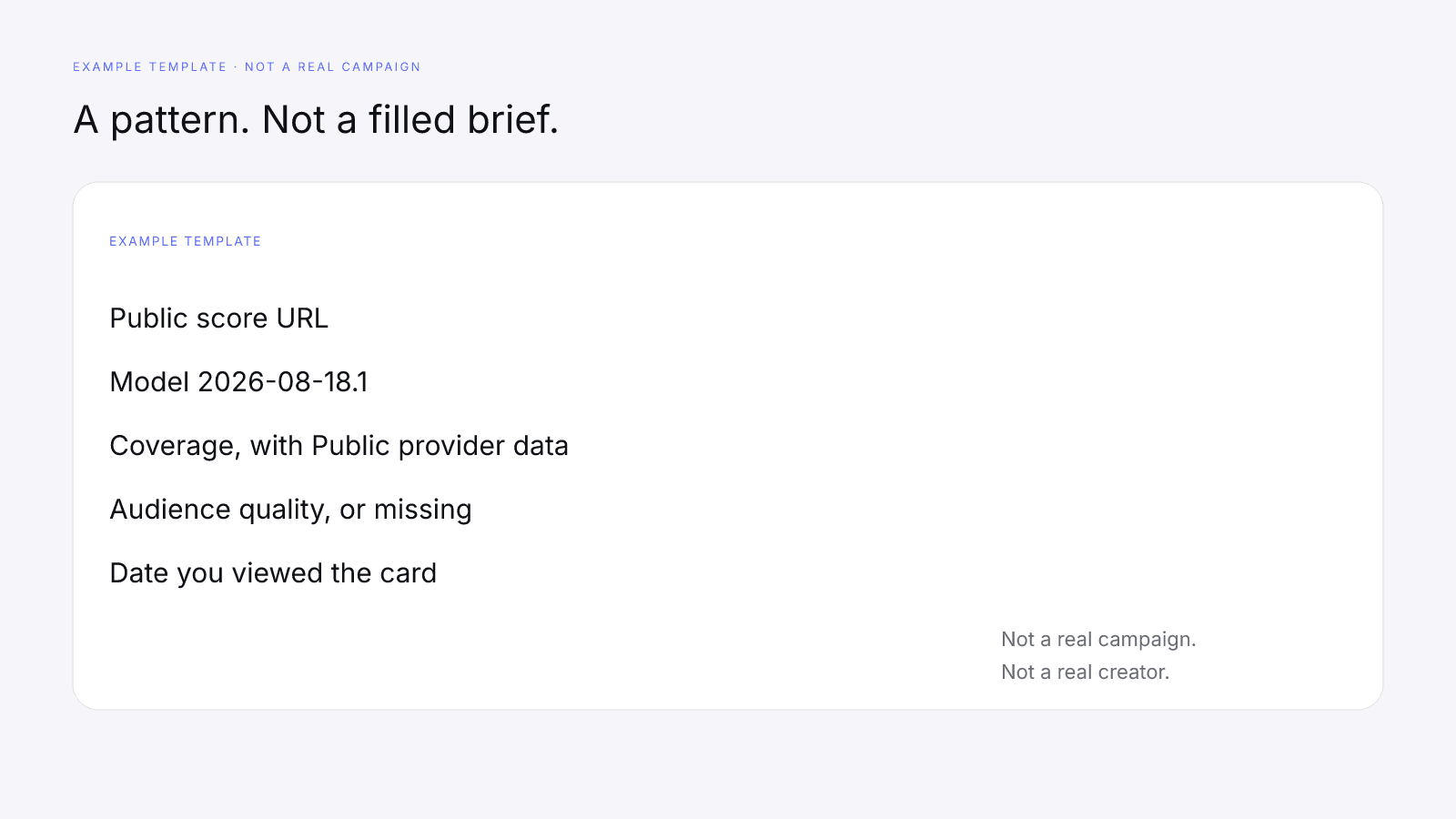
Example template. Not a real campaign and not a real creator.
Influencer brief for {brand} and @{handle}
Score section, copied from the public card
Public score URL: /score/{handle}?platform=instagram
Model id: 2026-08-18.1
Scoring coverage: {the coverage line, including Public provider data}
Audience quality: {the number on the card, or the word missing}
Date you viewed the card: {the day you opened the card}
Agreed with the creator
Goal: {what the post is for}
Audience: {who the creator says watches}
Deliverables: {what you agreed they will post}
Timeline: {the dates you agreed}
Approvals: {who reviews the draft}
Usage rights: {where the work can run, and for how long, as agreed. Not InfScore policy. Not legal advice.}
Payment terms: {what you agreed to pay, and when. Not an InfScore output.}
When audience quality is a dash, the score section names it. The agreement block stays the same and doesn't become a place to invent the missing number.
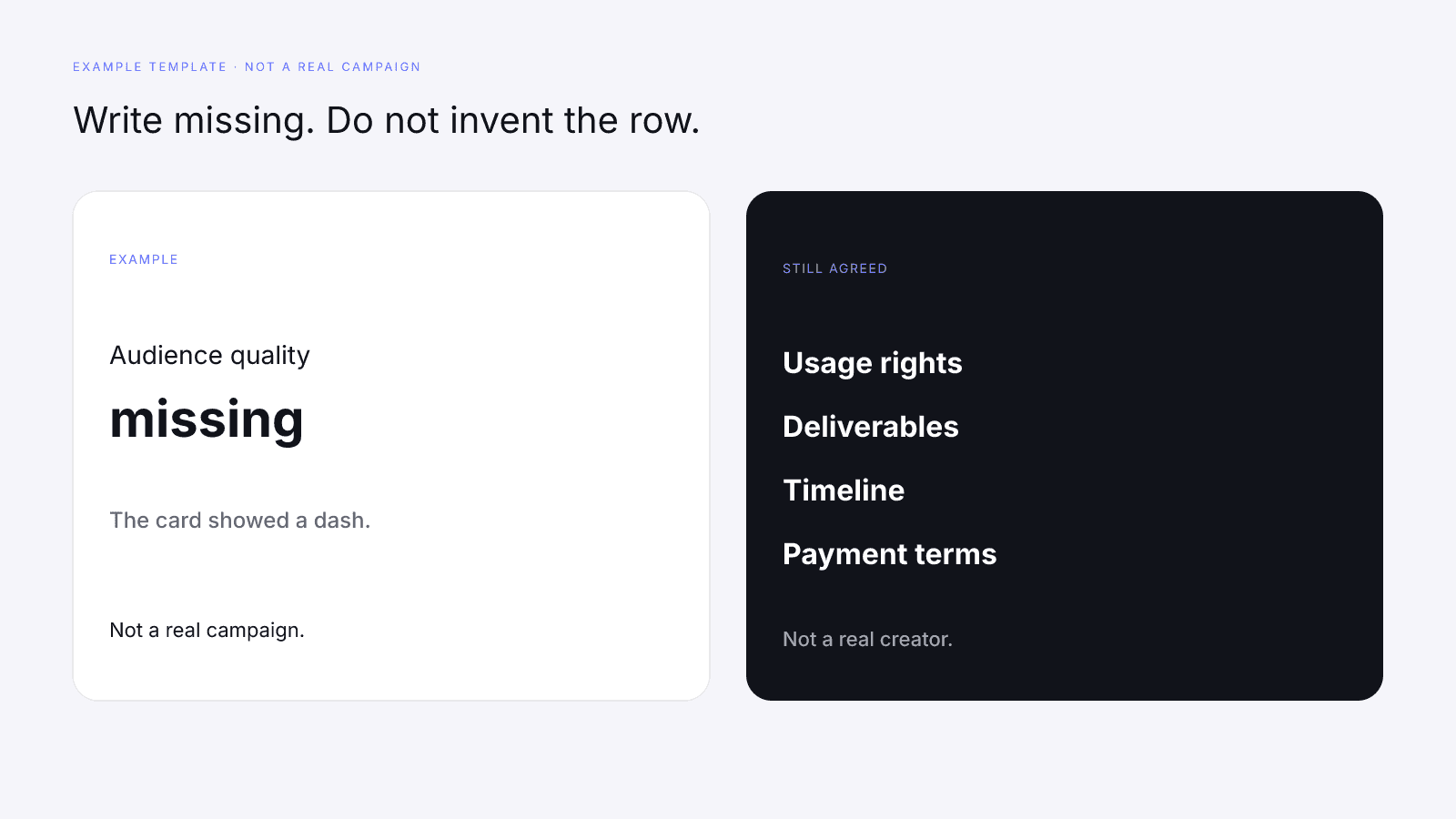
Example template. Not a real campaign and not a real creator.
Public score URL: /score/{handle}?platform=tiktok
Model id: 2026-08-18.1
Scoring coverage: {the coverage line, including Public provider data}
Audience quality: missing
Date you viewed the card: {the day you opened the card}
The card showed a dash on audience quality. That is missing data, not a zero. On model 2026-08-18.1 that weight is held out. We are not guessing a number. Usage rights, deliverables, timeline, and payment terms stay lines we agree with the creator.
Neither example says where the creator's address came from, because InfScore didn't supply it, and neither includes a fee figure. Payment terms stay blank until you fill them from the agreement.
| Field | What to write | Where it comes from |
|---|---|---|
| Public /score/ URL | /score/{handle}?platform= with instagram, tiktok, or youtube | The address bar on the card you opened |
| Model id | The stamp on the card. This guide expects 2026-08-18.1 | The how-to-read line |
| Coverage | The coverage line, copied, including Public provider data | The card. Not a summary |
| Audience quality | The number on the row, or the word missing | The card. Never a guess |
| Date you viewed the card | The day you opened it. The free card shows no date | Your own note |
| Goal, audience, deliverables, timeline, approvals | The words you agreed | Brand and creator |
| Usage rights | Where the work can run, and for how long | Agreed with the creator. Not InfScore policy. Not legal advice. |
| Payment terms | What you agreed to pay, and when | Agreed with the creator. Not an InfScore output. |
If the model id on the card isn't 2026-08-18.1, leave the weights out and cite only the id the page prints. Quoting 32%, 27%, 23%, and 18% next to a different stamp would describe a model you didn't open.
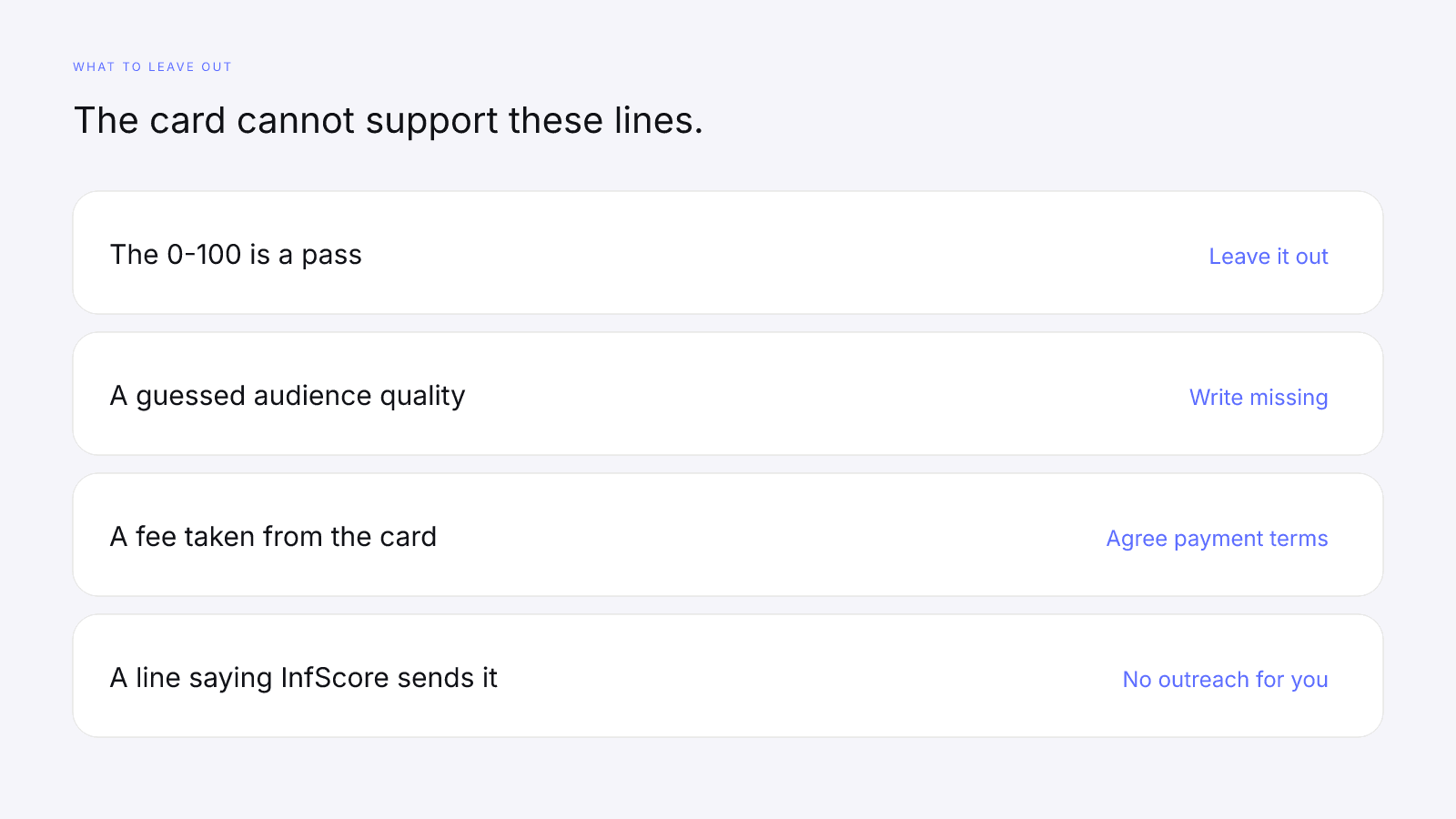
Some lines sound specific and still can't be backed by the card, so leave them out of the copy:
- a score boast, or any line that treats the 0–100 as a pass the creator earned
- a minimum score, or a line that treats the composite as the reason the brief could go out
- any claim that InfScore approved the creator, found a problem with their audience, or set the usage rights
- a fee written as if the card had priced the work
- a sentence saying InfScore introduced you, found the address, or will send the brief
- a guessed audience quality number where the card showed a dash
- a date written as if the free card had shown one
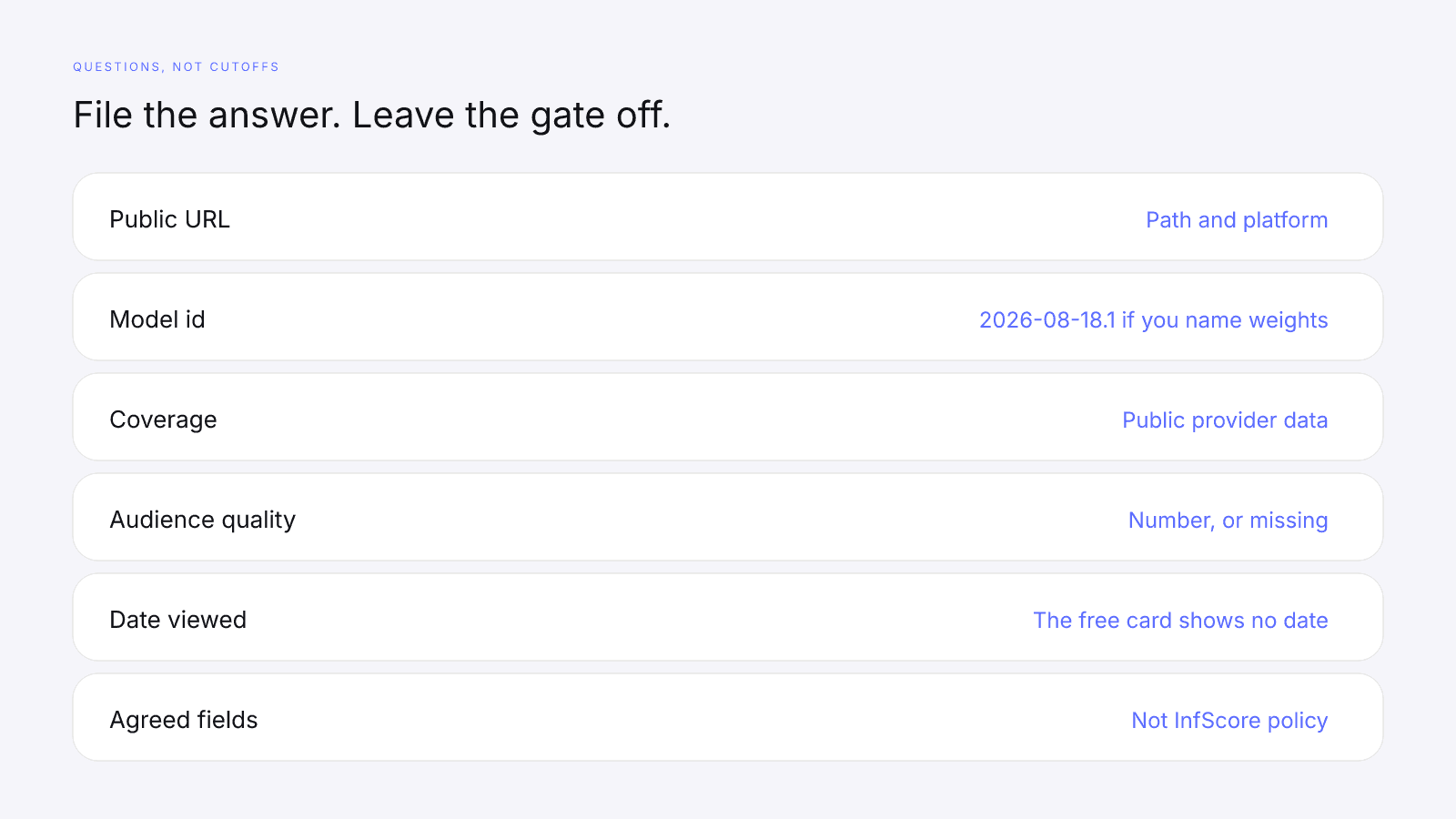
Then run through these questions. They are fields to check, and there is no number here that a creator must clear.
- Does the public URL include
/score/and?platform=, and does that platform match the profile the deliverables name? - Which model id is on the page? If you named the weights, did you name model
2026-08-18.1in that sentence? - What does the scoring-coverage line say, including Public provider data, and which rows are dashes?
- Is audience quality the number on the card, or the word missing? If you wrote a number the card didn't print, take it out.
- What is the date you viewed the card? The free card shows no date, so the brief has to carry it.
- Are usage rights, deliverables, timeline, and payment terms written as agreements with the creator, with no fee copied from InfScore?
- Does any sentence treat the 0–100 as a booking, a price, or a reason to send? Take it out.
- Where did the address come from, and can you name that source without saying InfScore found it?
If a teammate asks for a "brief score" column, leave it off. A homemade grade brings back a cutoff this checklist doesn't have. An empty payment cell is a question for the creator, while an audience quality number the card didn't print is a mistake.
After the campaign
InfScore measures nothing after the campaign. It doesn't track the post once it runs and doesn't publish campaign results, so measuring what the work did sits outside this template. How to Measure Influencer Performance covers how the score is built, not results from your campaign. The brief records the card you viewed before the work, and it doesn't forecast the work.
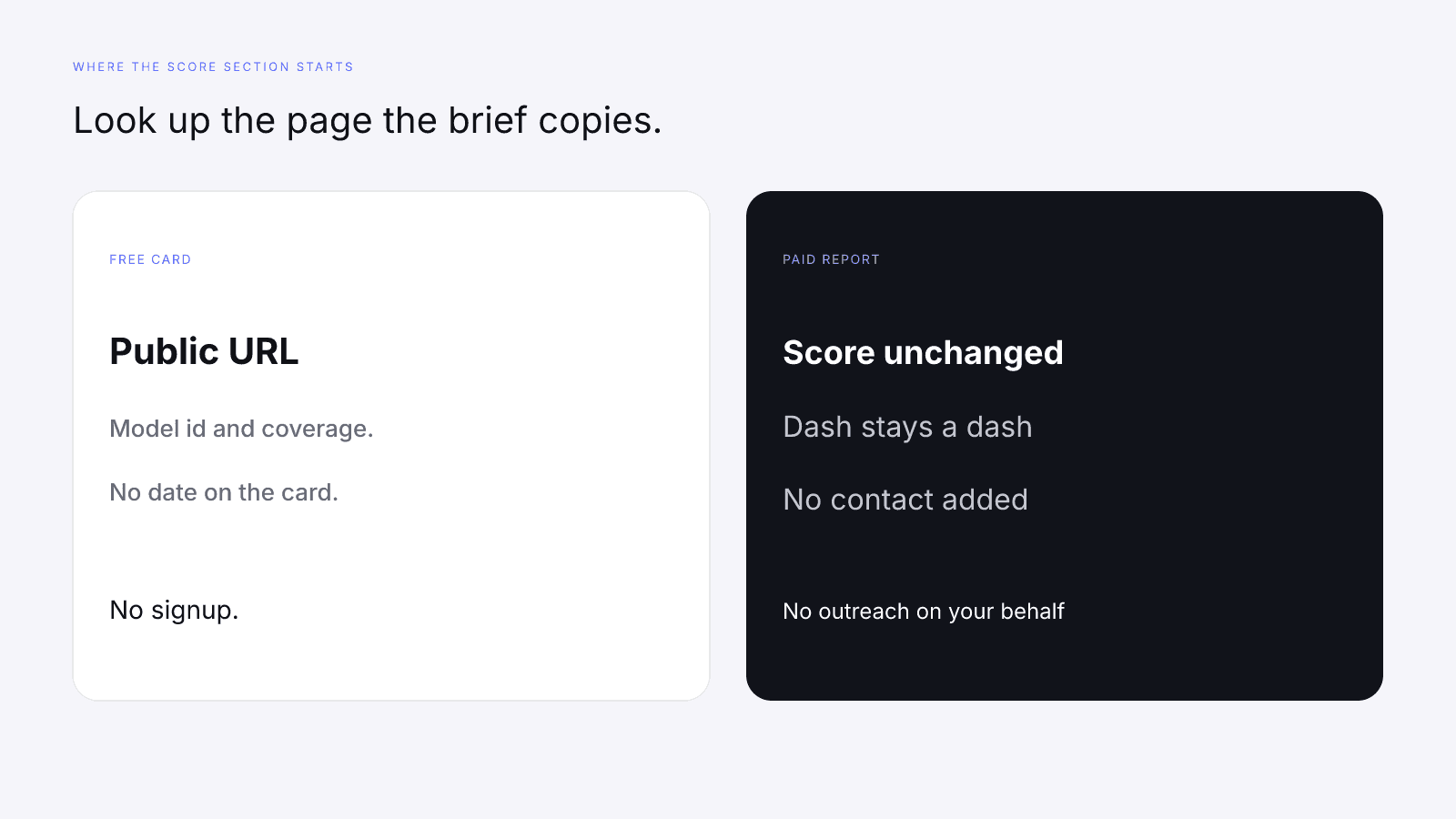
The free InfScore needs no signup. Search a public Instagram, TikTok, or YouTube profile on infscore.com and copy the model id, the coverage line, and the audience quality row before you fill the score section.
The $0.99 report is a one-time purchase, not a subscription; see Pricing. Contact fields stay stripped from the paid report, and InfScore still doesn't send outreach for you or send the brief for you.
FAQ
What should an influencer brief include?
The goal, the audience in the creator's words, deliverables, timeline, approvals, usage rights, and payment terms agreed with the creator, plus a score section: the public /score/ URL, the model id, the coverage line, audience quality or the word missing, and the date you viewed the card.
Is there an influencer brief template I can copy?
Yes. The example template on this page is a labelled pattern, not a real campaign or a real creator. Replace each brace with a fact from the card or from your agreement with the creator.
How do I add an InfScore to a campaign brief?
Copy the public URL for one platform, the model id (2026-08-18.1 when that is the stamp on the card), the scoring-coverage line including Public provider data, and audience quality or missing. Then write the date you viewed the card.
What if audience quality shows a dash?
Write "missing", not 0. A dash is missing data, and its weight is held out. Don't guess a number to fill the cell.
Why record the model id and the date I viewed the card?
The free card shows no date, so the brief carries the day you copied it. A new model id re-scores cards, so the id tells a teammate which formula the score section describes.
Who decides usage rights and fees in an influencer brief?
The brand and the creator agree them. They are not InfScore policy, and this page is not legal advice. Ask counsel, and check the platform's rules, before relying on a clause.
Does InfScore measure campaign results?
No. InfScore scores public signals on the card; it doesn't measure what a post did after the campaign.