Influencer Ambassador vs a One-Off Sponsored Post
Influencer ambassador vs a sponsored post: how one paid post and a longer arrangement differ, and why you file a fresh card before you pay again.
This versioned composite uses only available public signals. Missing factors stay unavailable and their weight is rebalanced across observed factors. It is not a percentile, price estimate, or guarantee of campaign results. Model 2026-08-18.1.
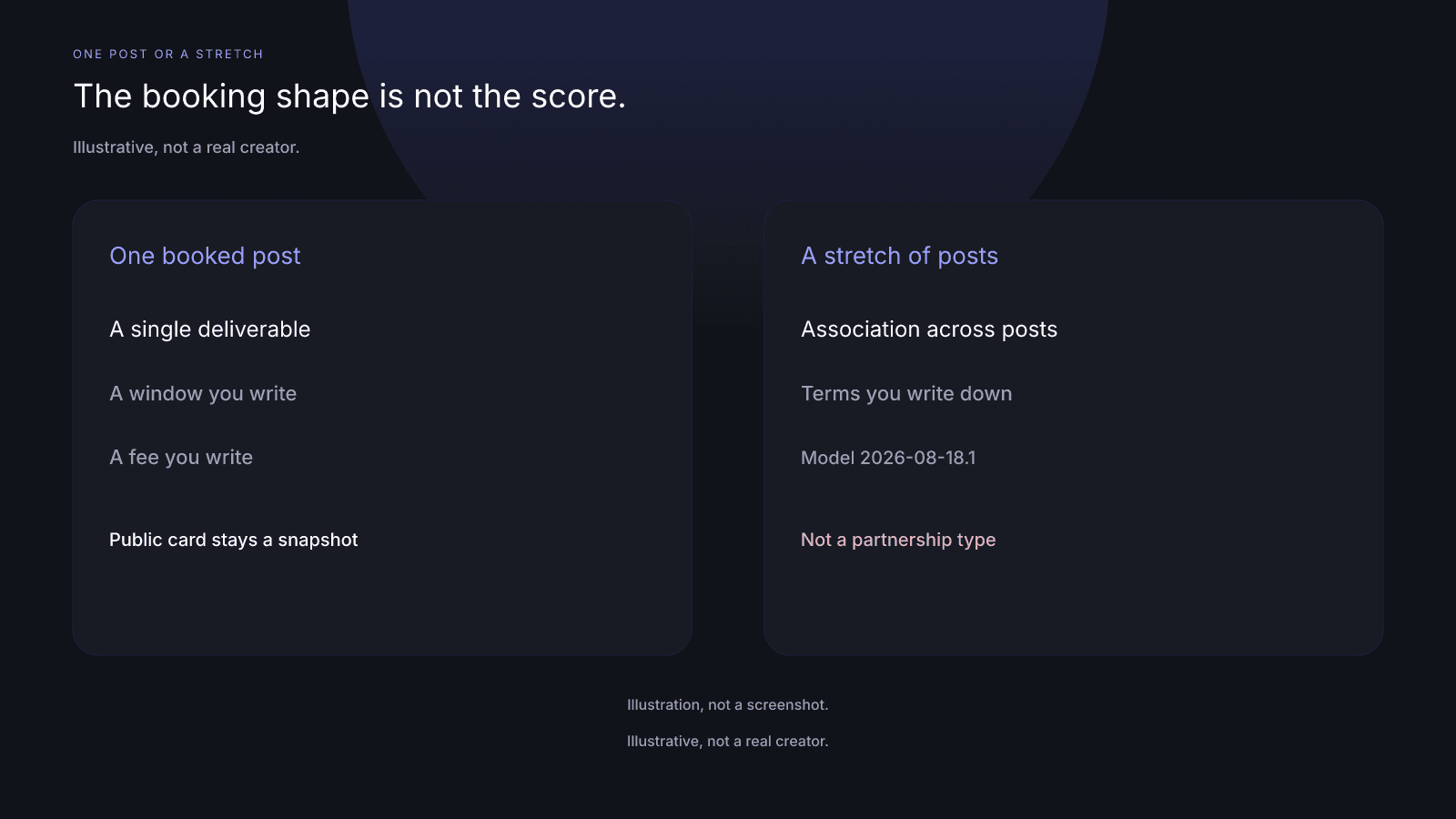
An influencer ambassador vs a sponsored post is a choice about the booking, not about the score. A one-off is a single booked post. An ambassador arrangement is a run of posts under written terms. Either way the public card is a snapshot of the day you file it, so file a fresh card before a repeat payment.
What each arrangement usually means
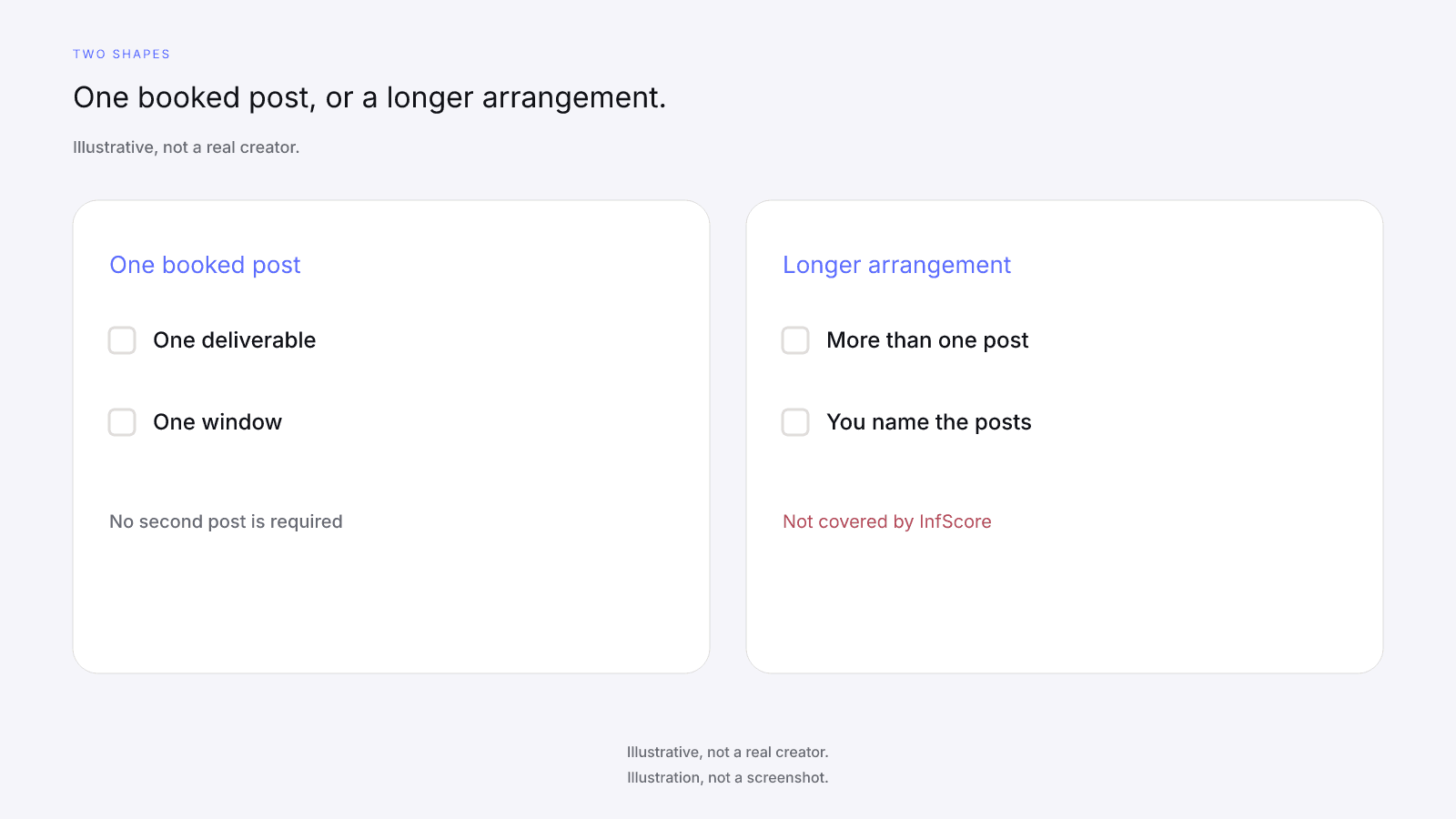
A one-off sponsored post is a single booked post. You and the creator agree on the app, the deliverable, the window, and the fee, and nothing about the name asks for a second post.
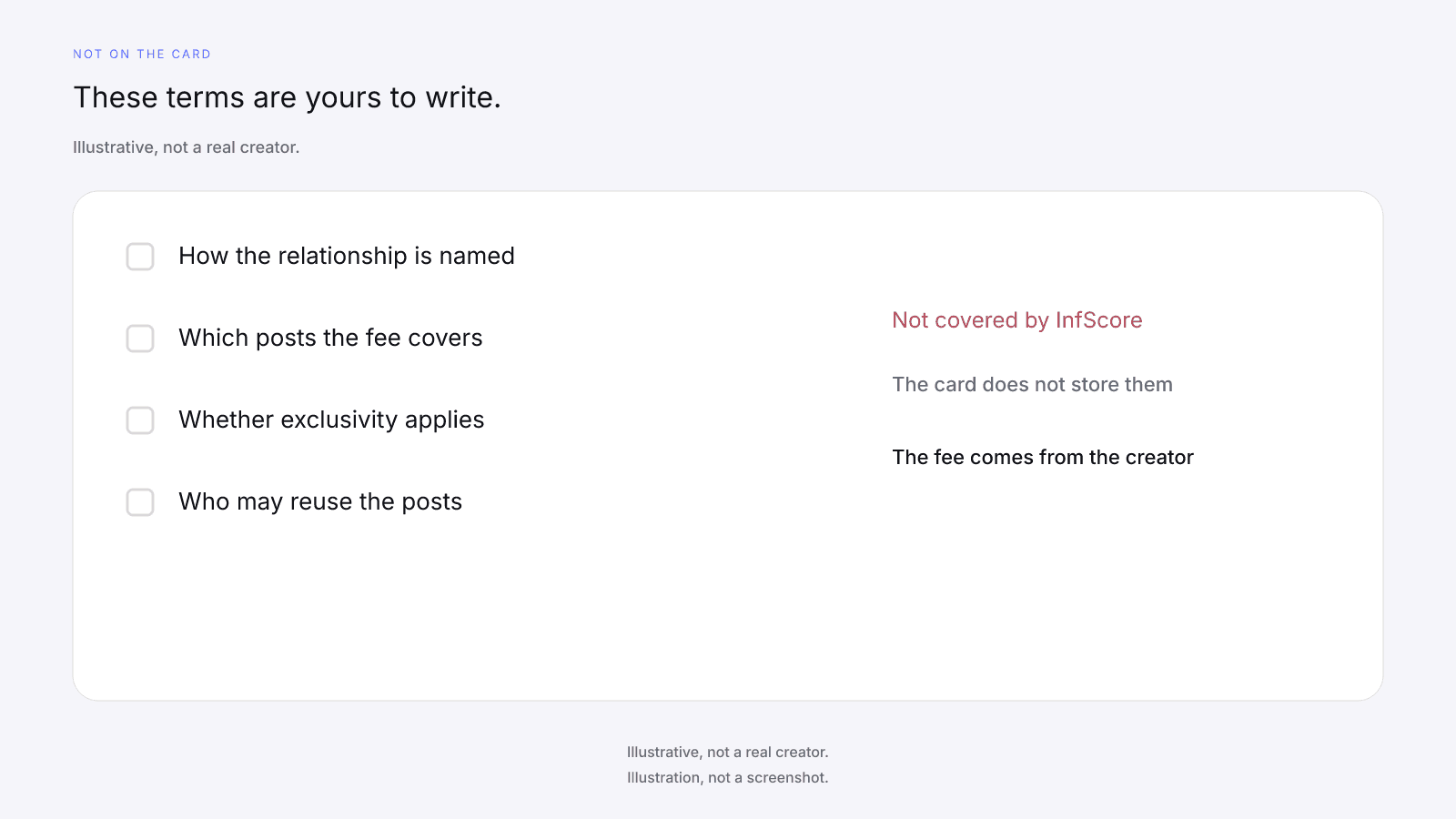
An ambassador arrangement is the longer shape. The creator is associated with the brand across more than one post, and you write that association down. The label is yours. Your note should say how the relationship is named, which posts it covers, whether exclusivity applies, and what the fee covers. Those are commercial terms, and none of them is a row on a scorecard.
Ambassador tooling, retainer tooling, and a relationship-type feature are not covered by InfScore. The score doesn't classify a booking as a one-off or as an ambassador arrangement, and it doesn't store the contract, the exclusivity line, or the fee. You write those terms with the creator. InfScore won't draft them, and it won't check whether you wrote them.
Keep each shape in its own note, and list the posts in the note that matches the brief. The composite is a reading of public signals for one handle on one app, not a partnership type.
A one-off and a run of posts are different packages, and the quote is a negotiation: how much to pay an influencer covers how a quoted fee is set. The public card is not a price.
What the public card can tell you either way
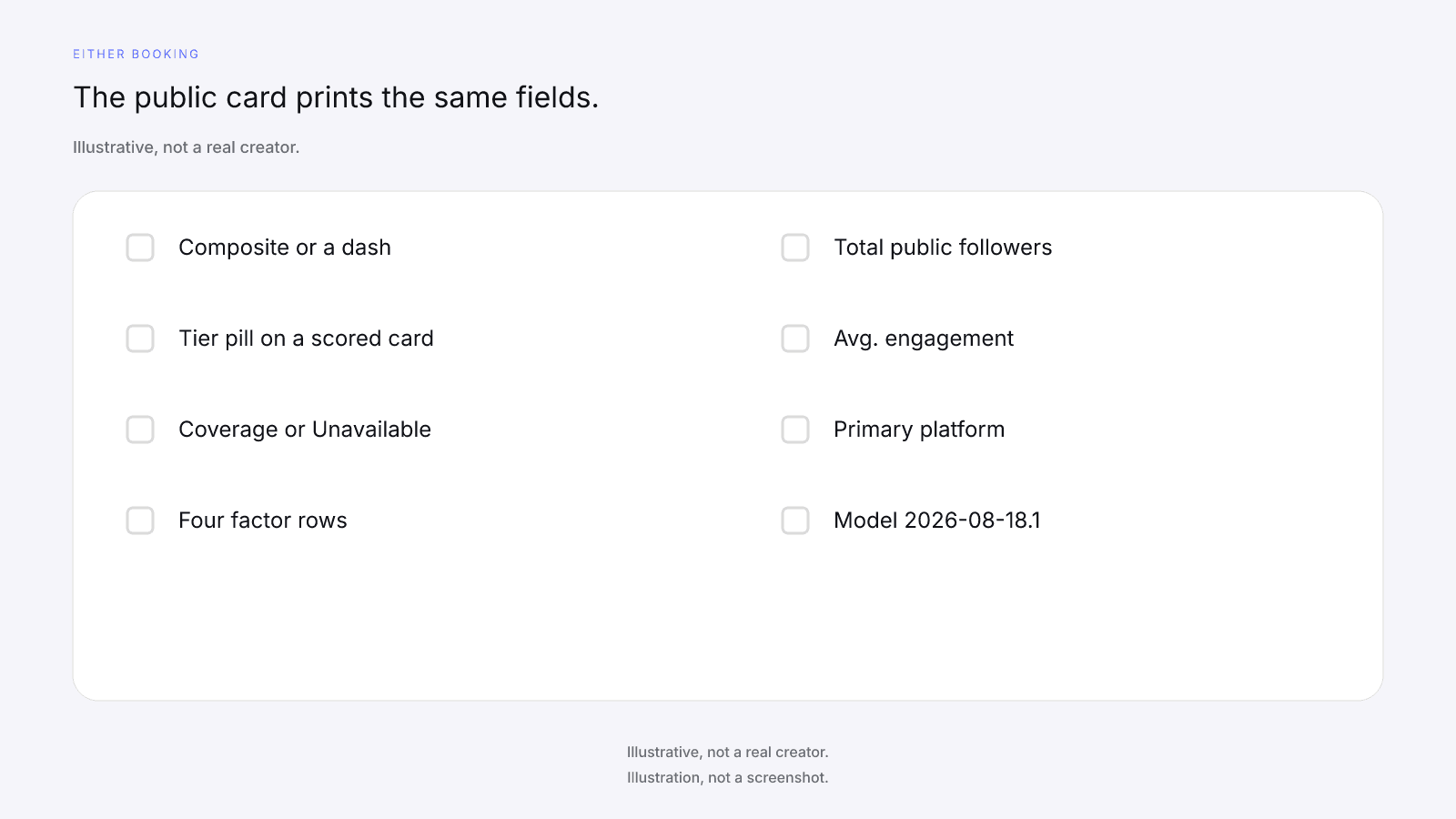
The public card reads the same whether you're weighing one post or several. A free card needs no sign-up, and it shows the composite ring or a dash, the tier pill when the card is scored, scoring coverage or Unavailable, the four factor rows, Total public followers, Avg. engagement, Primary platform, and the model id.
On model 2026-08-18.1 the weights are Audience quality 32%, Engagement 27%, Reach & momentum 23%, and Platform strength 18%. Scoring coverage is the share of model weight that had data. The 0 to 100 is a weighted sum over the factors that had data, renormalized over those factors. It is not a percentile, price estimate, or guarantee of campaign results. Tiers are card labels only. A composite of 90 or higher is Elite, 80 or higher is Rising, 65 or higher is Emerging, and a lower composite is Developing.
Total public followers is the follower total across Instagram, TikTok, and YouTube. Avg. engagement is the public engagement rate the card prints. Engagement strength is InfScore's 0 to 100 mapping of that rate, and it's a different number from the rate. Reach & momentum uses total followers and the 12-month follower growth figure. It does not read a posting schedule. Primary platform is whichever app the card marks as primary, so write the app next to the handle.
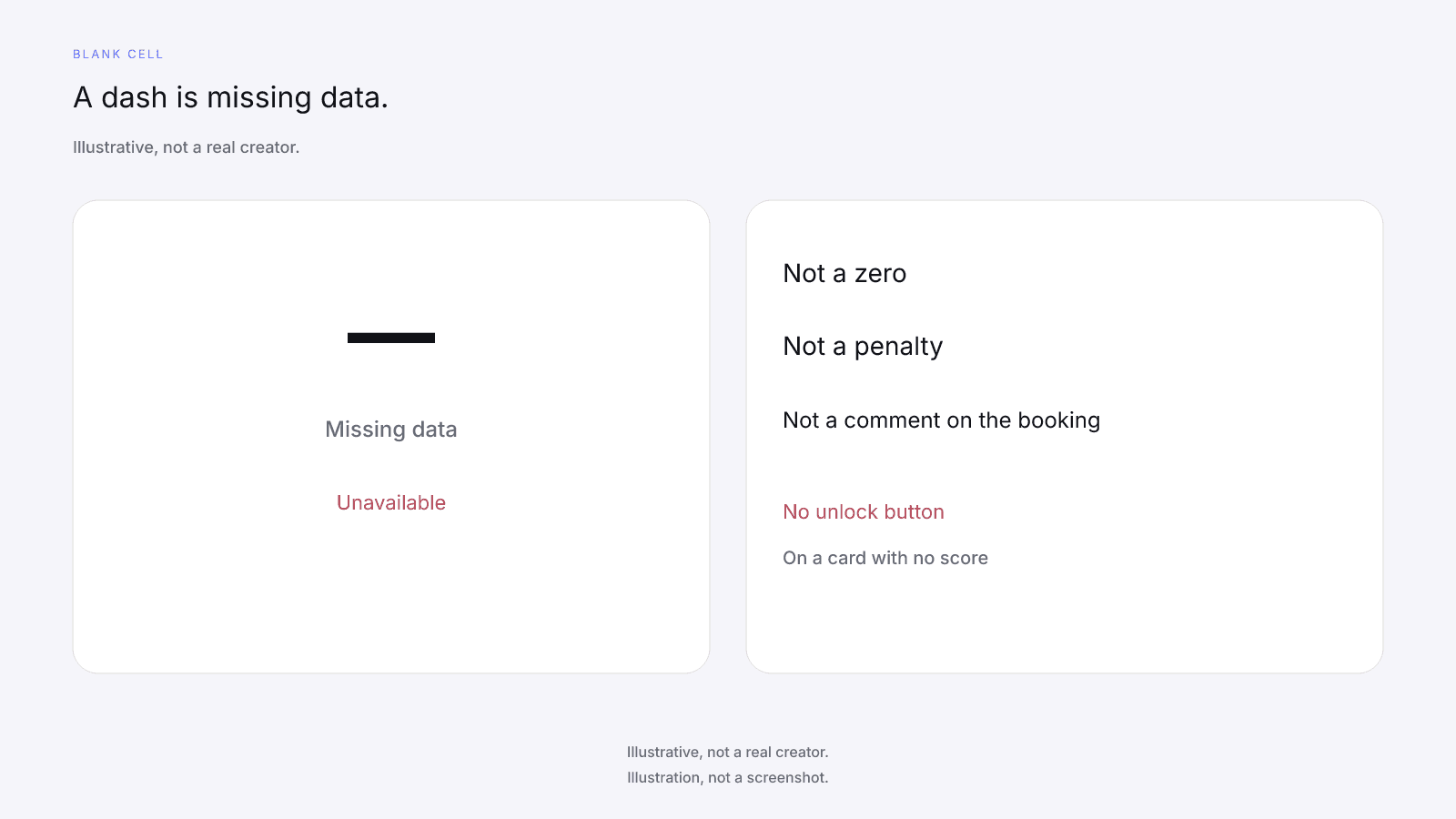
A dash or Unavailable is never 0, never a penalty, and never a discount. On a card with no score, the ring and the factor rows show a dash, and Total public followers and Avg. engagement show Unavailable. There's no unlock button on that card. Typing a 0 into the blank so a sheet will sort turns missing data into a figure the card didn't print. Do not invent a cause for the blank.
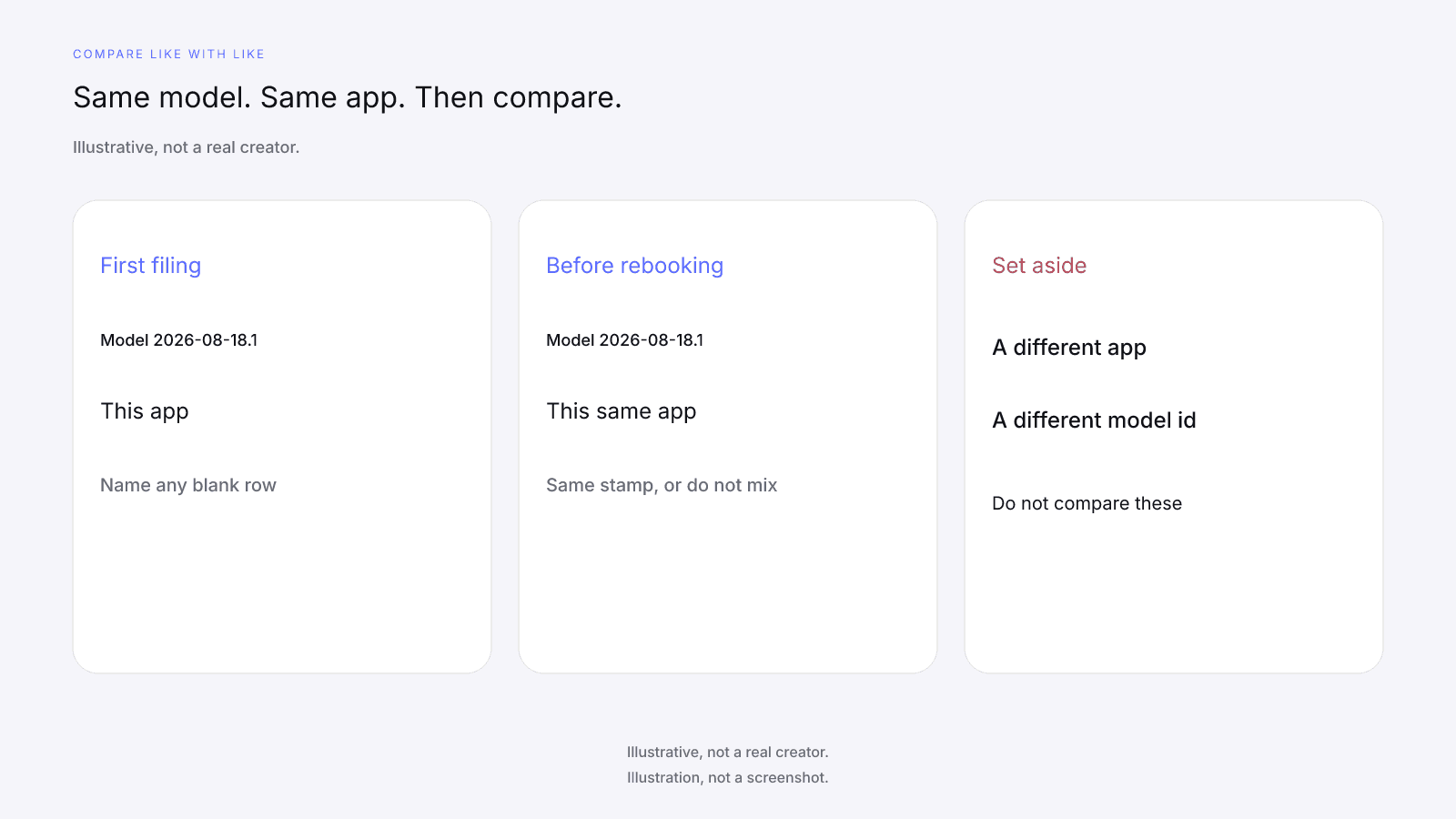
Compare two cards only when they share this model id and the same app. A stored score is per handle and per app. If two filed cards carry different model ids, they are two stamps, not a trend: do not subtract or compare the composites, and do not read the gap as growth, decline, or an effect of the arrangement. A new model id ends the comparison.
The $0.99 unlock button only appears on a scored card. That dollar is the product price for one report, not a creator fee. The optional purchase is the full creator report, with audience, growth, and platform deep dives when they exist. It is one-time, per creator, not a subscription. Paying does not fill a dash. No field is guaranteed after paying. Paid Total reach may include X.
The split between the free card and the paid report has its own side-by-side. Neither surface tells you whether to book this creator once or across several posts.
The public card never prints a creator fee, rate, CPM, or income estimate. A quoted fee comes from the creator, and the composite doesn't stand in for it.
When a one-off is the safer first step
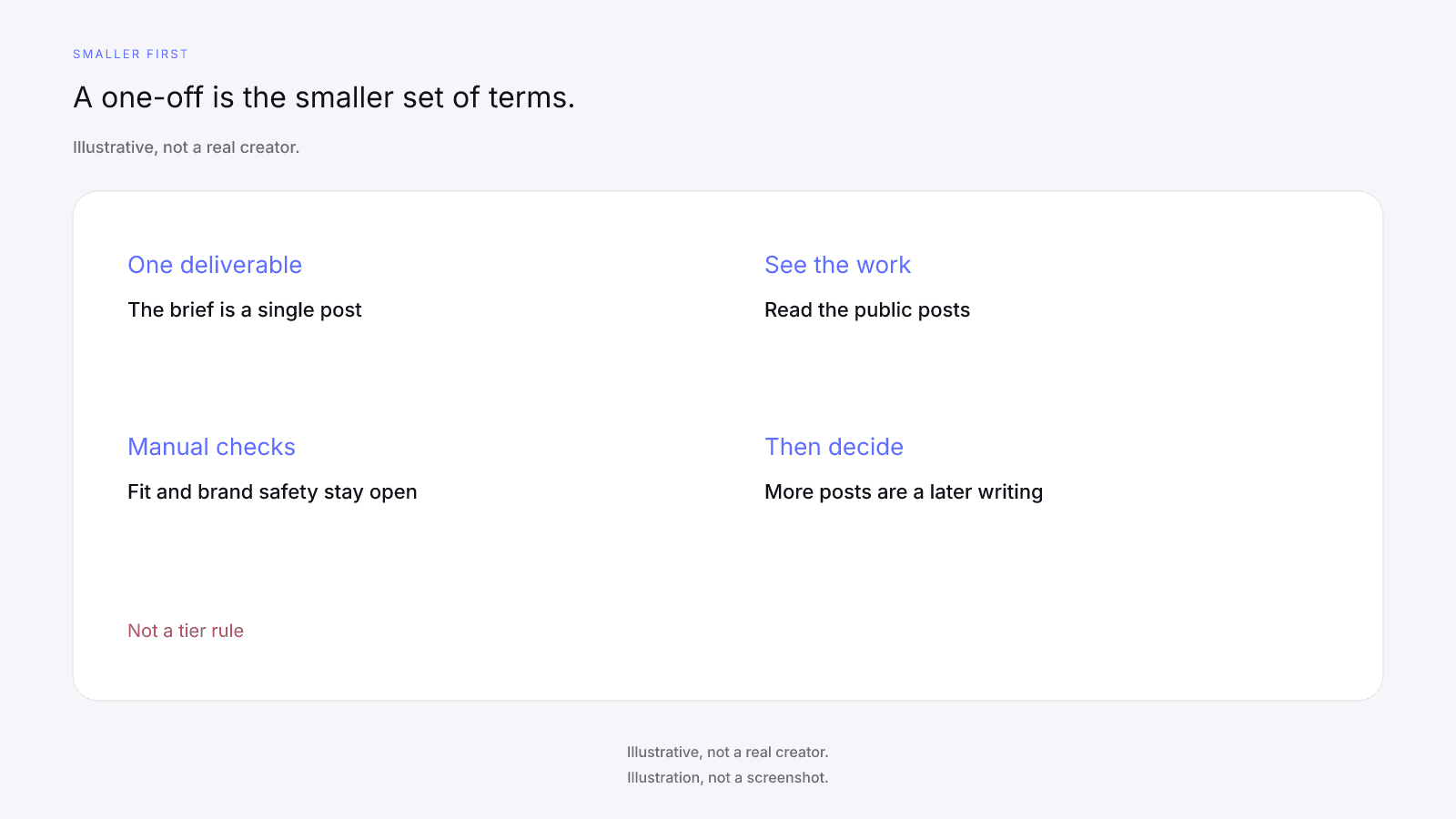
A one-off asks you to write less. You name one post, one app, one window, and one fee, and the deliverable is done when that post runs. That smaller set of terms is why a single booked post is the safer first step when you haven't worked with this creator on this brief before. "Safer" refers to the terms. It has nothing to do with a higher composite or a tier rule.
A one-off also fits when the brief itself is one deliverable.
It fits, too, when you still need to see the work. Fit, brand safety, and past work are manual checks that sit outside the score. You do them by reading the public posts and talking with the creator before you agree to more posts. InfScore doesn't check brand safety, review fit, or grade past work. Fraud detection, rates, contracts, and outreach are not covered by InfScore either.
How to Vet an Influencer Before You Pay Them puts those manual checks in order. Finish your card note first, then work through them. Choosing a shorter booking doesn't close any of them.
Tier labels don't decide this step either. A dash does not require the smaller booking, and a higher 0 to 100 doesn't mean you should skip the one-off on a first booking.
When a longer arrangement makes sense
A longer ambassador arrangement makes sense when the brief asks for the creator to be associated with the brand across more than one post. Write down the posts, the window, and the fee so each one is explicit. The longer name fits the brief, but it doesn't replace it.
It can also make sense when you've already booked this creator, the deliverable matched what you wrote, and you want the association to continue. The earlier booking isn't a score input. InfScore doesn't store that booking or turn it into a relationship type.
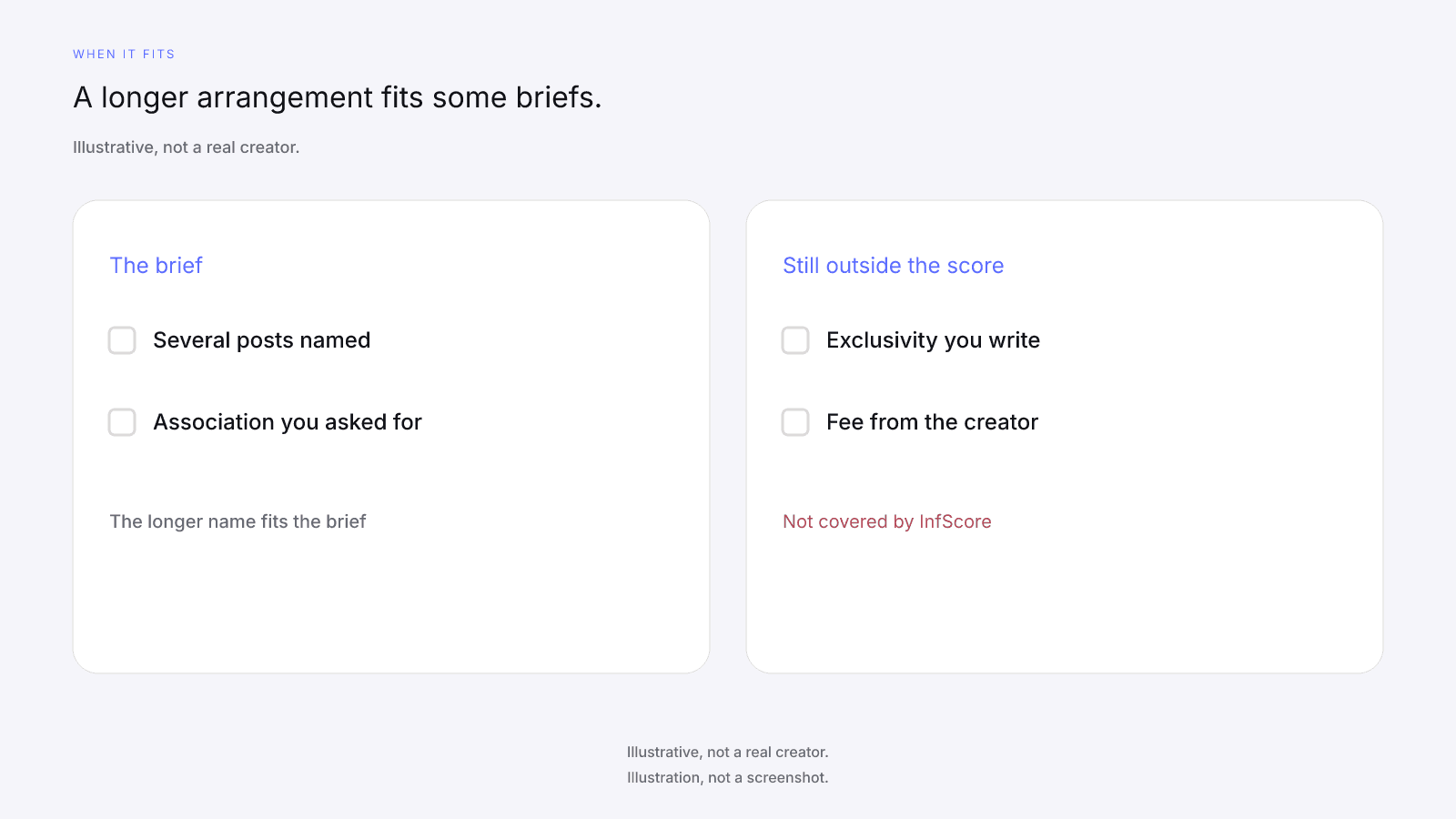
Put those terms in writing; the influencer marketing checklist is where Gate 4 sits. Name the posts the fee covers, whether exclusivity applies and in which category, who may reuse the posts, and the window for that reuse. Record the fee as a quote you received from the creator. If the quote is missing, ask the creator instead of reading a composite as a stand-in for the fee.
Contracts, exclusivity, rates and fees, brand safety, fit review, past results, and relationship tracking are not covered by InfScore. Campaign monitoring and re-score alerts are not covered either.
A longer arrangement doesn't need a higher 0 to 100 or a particular tier. It needs a brief that calls for more than one post, and a creator who agrees to the terms you wrote. Several posts won't turn the card into a running record; it stays a snapshot of public signals from the filing.
File a fresh card before you book again
The public card is a snapshot each time you file it, so file a fresh card before a repeat payment. Look the handle up on the app you mean to use and save that card's score URL and figures in your own sheet or notes, next to the copy you saved last time, with the date viewed written by you. The public card prints no date. "Fresh" means a new lookup you file before this payment; it is not a claim that InfScore re-fetched, updated, or changed anything, and the figures may match the earlier filing. InfScore does not store filings, keep score history, compare two cards, re-score on a schedule, or alert anyone.
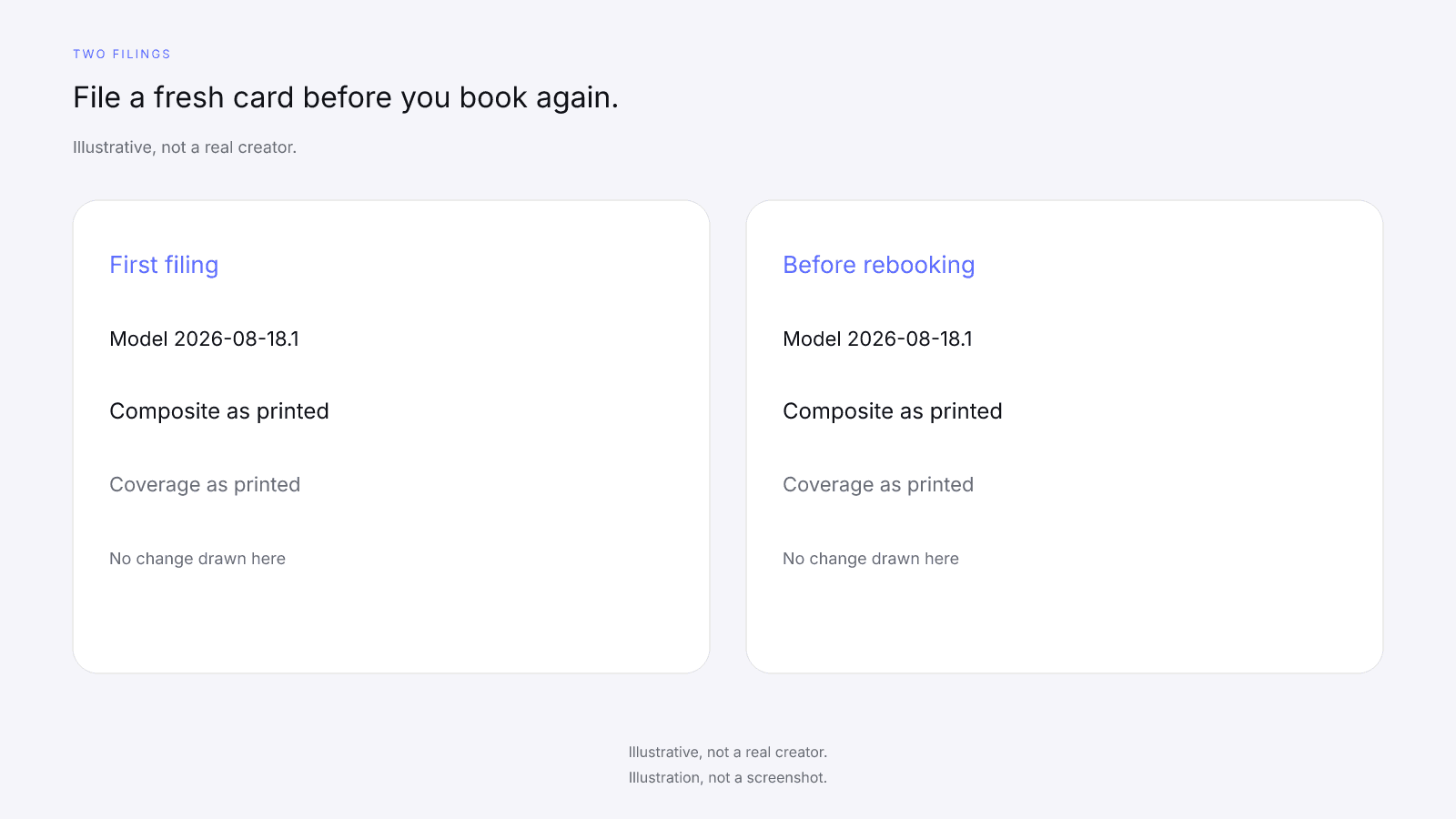
Set the two notes side by side only when both cards show the same model id and the same app. If a row is a dash on either filing, copy the dash and name the row.
The public card doesn't print the 12-month follower growth figure, so there's no growth number to copy into either filing; follower growth explains how that figure feeds Reach & momentum, without new math.
If the model ids differ, stop the comparison. Composites from different model ids are not one scale. File both cards, label each with its model id, and decide the next booking from the brief and the terms.
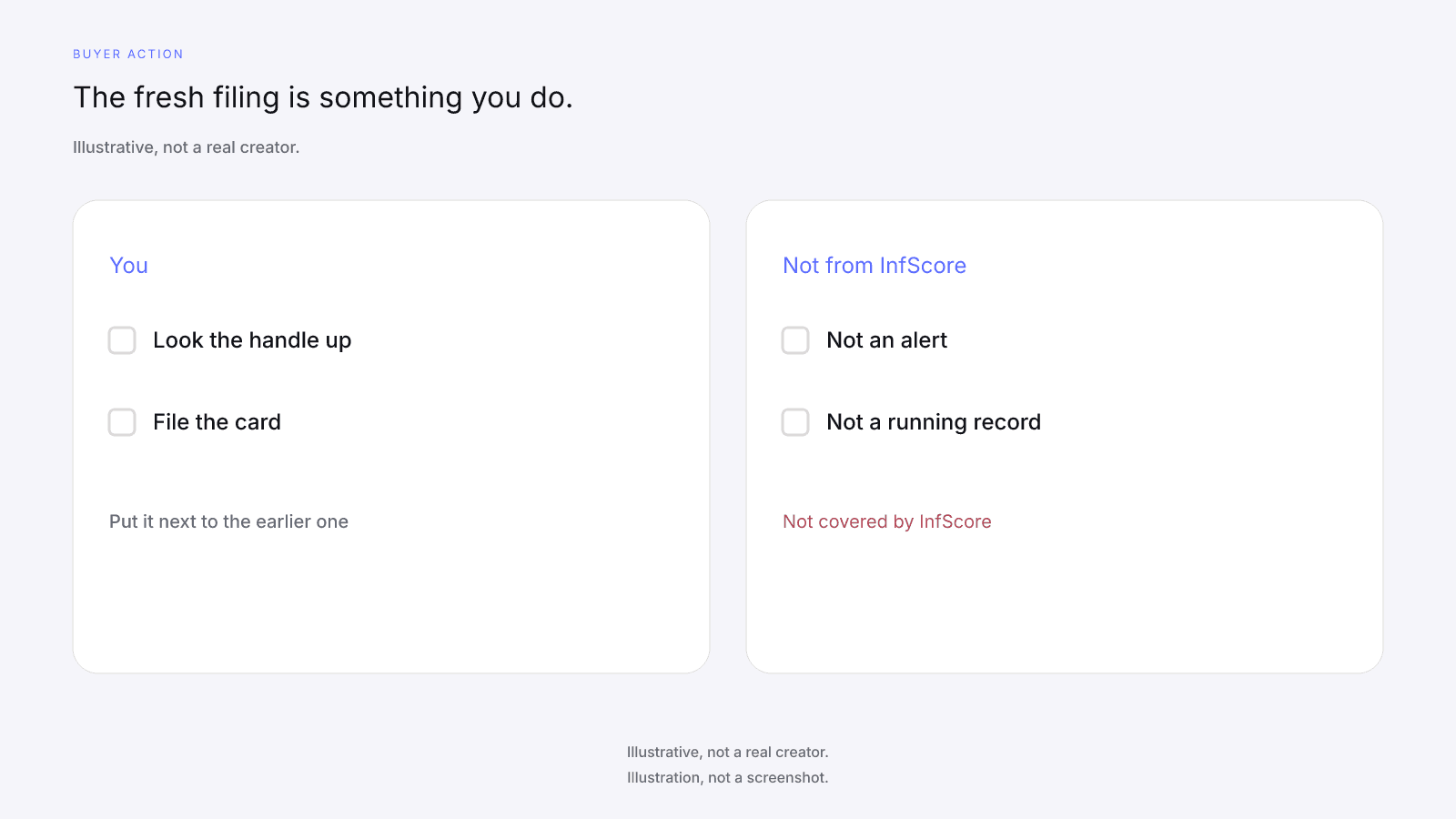
A fresh filing doesn't measure the posts you already ran, and it doesn't grade the arrangement you wrote. Keep what you booked, what was delivered, and what the terms still require in a separate column. A dash on the new filing is still missing data. It isn't a zero for the sheet or a reason to change the fee.
Measurement for a single post vs a stretch of posts
Measurement of results sits with the brand. InfScore does not measure campaign results, and a composite isn't a result of the posts you booked. Tracking links, codes, and the reporting you agree with the creator are yours to set up, per post or across the run. For a single post, write the deliverable and the window, then what you'll record when that window ends.
For a stretch of posts, write which posts are inside the arrangement and which are outside it, what you'll record across that stretch, and when you'll read the note. A longer arrangement doesn't create a combined score. You still have one public card per filing, per handle, and per app, and the stretch lives as a column in your sheet.
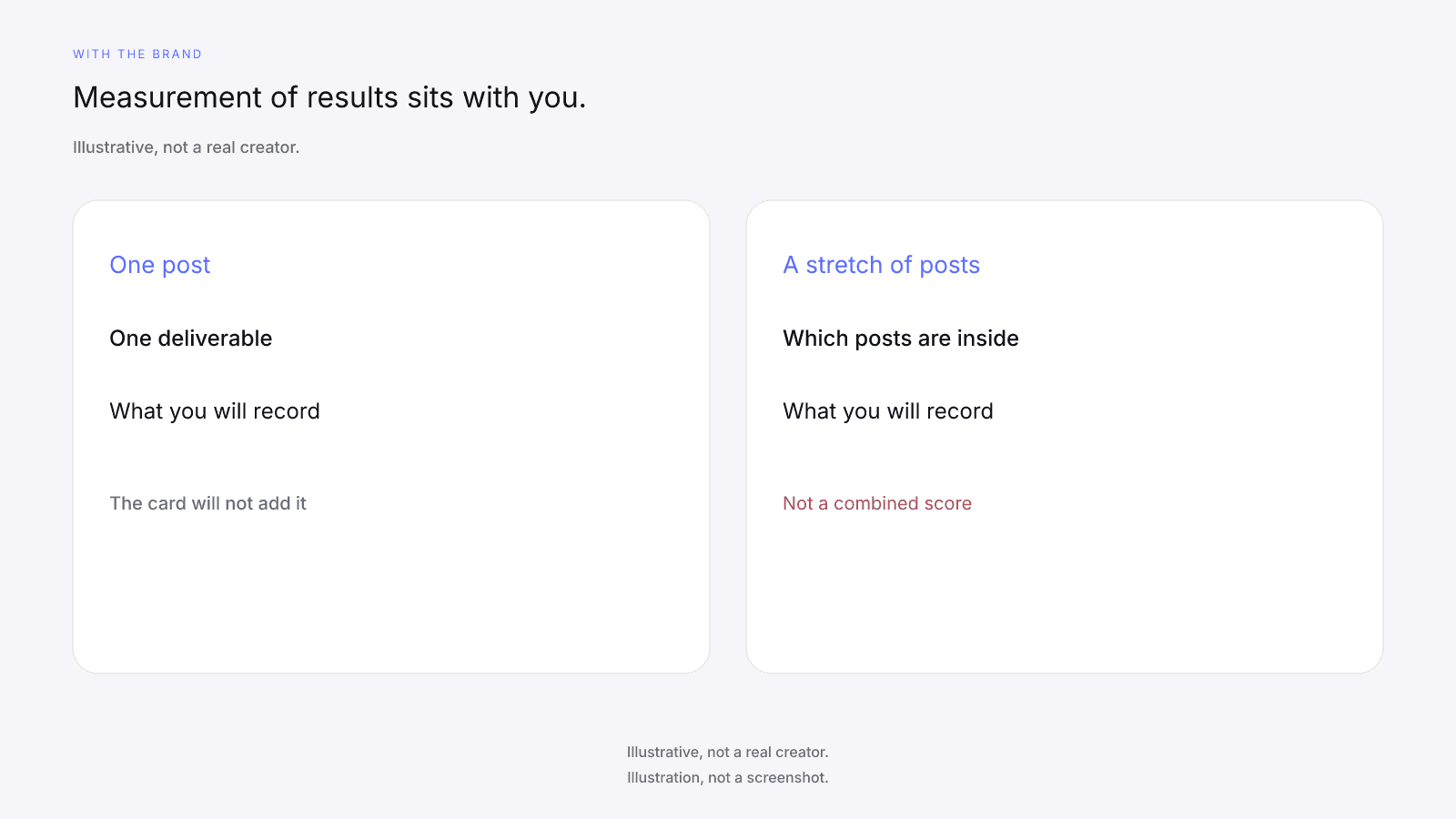
Setting those lines up before the work runs is covered in what a pre-campaign score can't tell you about results. The booking shape stays here: one post, or a stretch you defined in writing. A higher composite isn't a promise that several posts will do more than one, and the card doesn't know which shape you booked.
FAQ and next steps
Look up a creator's free InfScore at infscore.com, then file the public card before you book one post or a longer arrangement.
See what the $0.99 report includes on Pricing. You buy it per creator, from that creator's scored card.
What is the difference between an influencer ambassador and a one-off sponsored post?
A one-off sponsored post is one booked post. You write the app, the deliverable, the window, and the fee. An influencer ambassador arrangement associates the creator with the brand across more than one post, on terms you write down: how the arrangement is named, which posts it covers, whether exclusivity applies, and what the fee covers. The public card is a snapshot of public signals, not a partnership type, and it reads the same either way. InfScore has no ambassador feature and does not classify either shape.
When is one sponsored post enough?
When the brief needs a single appearance, or you want a first test of the terms before you write a longer arrangement. A one-off names one post, one app, one window, and one fee. That is an option the brand weighs, not a rule InfScore sets. There is no score cutoff and no required starting post count. A dash does not require the smaller booking, and a higher 0 to 100 does not mean you should skip the one-off on a first booking.
When does an influencer ambassador arrangement make sense?
When the brief wants the creator associated with the brand across more than one post, and the terms (deliverables, usage, exclusivity, and length) are written down with the creator. The longer name fits that brief. It does not replace the brief, and it does not require a higher composite or a particular tier. InfScore has no ambassador feature, and it does not recommend a length or a post count.
How should you vet a creator before a repeat payment?
Repeat the public read and the manual checks: fit, brand safety, and past work the creator shares. Those checks sit outside the score. InfScore does not check brand safety, review fit, or grade past work. File a fresh public card, then do the same checks you would do before a first booking. A higher 0 to 100 does not close them.
Why file a fresh InfScore card before you book again?
The card is a snapshot of the public signals on the day you file it. Look the handle up on the app you mean to use, and save that card's score URL and figures in your own sheet or notes, with the date viewed written by you. Compare two filings only on the same model id and the same app. If the model ids differ, they are two stamps, not a trend: do not compare the composites. InfScore does not store filings or send a re-score alert.
What does the $0.99 report add?
On a scored locked card, the product unlock button may show $0.99. The optional purchase is the full creator report, which can add audience, growth, and platform deep dives when they exist. It is one-time, per creator, not a subscription. Paying does not fill a dash. No field is guaranteed after paying. That dollar is the product price for one report, not a creator fee.
What can't InfScore tell you about an ambassador deal?
Contracts, exclusivity, rates and fees, brand safety, fit, past results, relationship tracking, and measurement of results are not covered by InfScore. InfScore has no ambassador, retainer, or relationship feature, and it does not track an ambassador's posts, deliverables, or schedule. Scoring a handle is pre-deal context only, before each booking. You write the terms with the creator, outside the score.