How to Negotiate with an Influencer (The Score Is Not Leverage)
How to negotiate with an influencer as a brand: trade deliverables, usage, and timing, know when to walk away, and why a public score is not leverage.
This versioned composite uses only available public signals. Missing factors stay unavailable and their weight is rebalanced across observed factors. It is not a percentile, price estimate, or guarantee of campaign results. Model 2026-08-18.1.
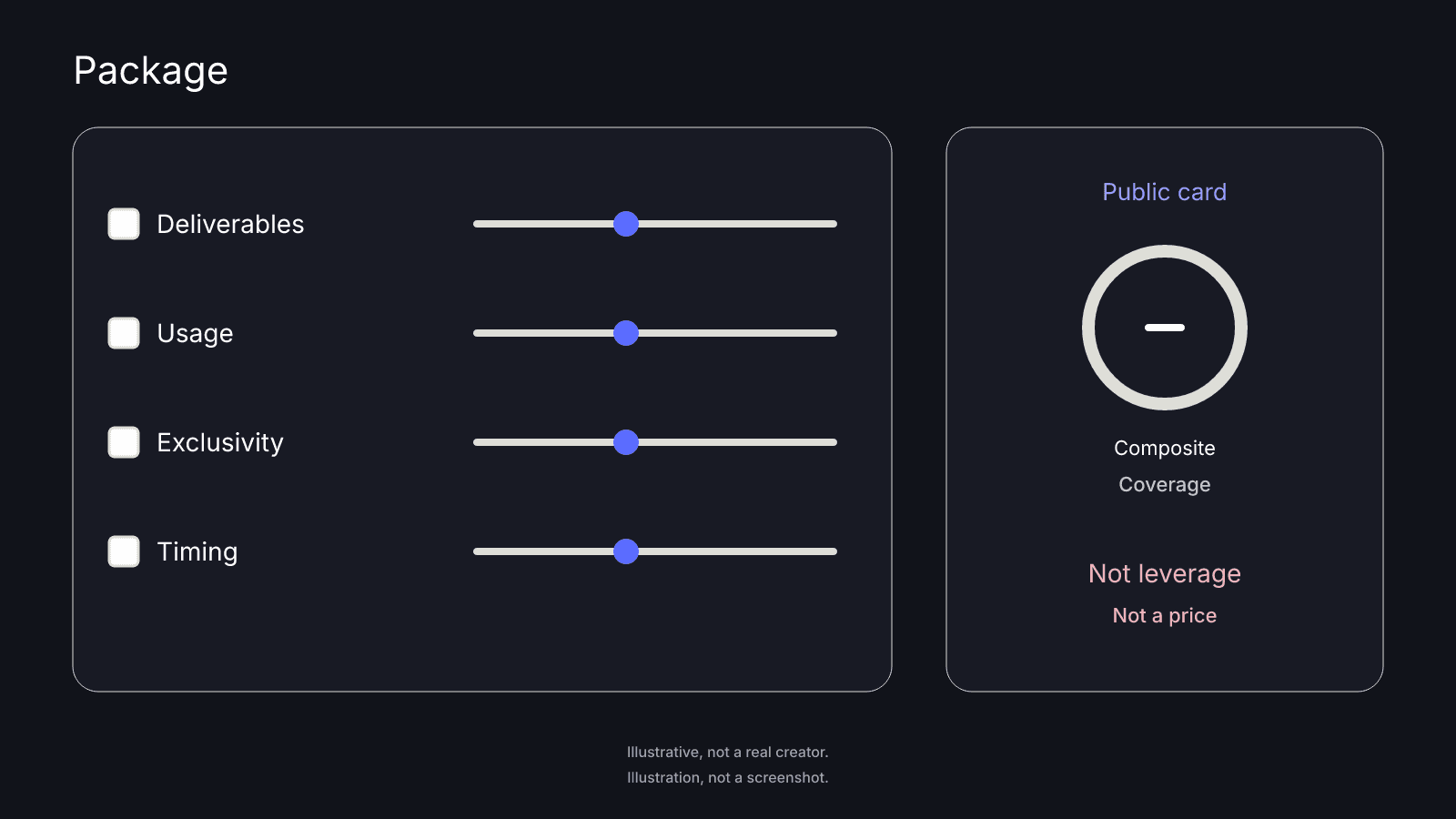
How to negotiate with an influencer as a brand starts from the quote on the table. You're trading a package of deliverables, usage, and timing, written in words both sides accept. The public card can help you decide whether to keep talking to a handle, but it isn't leverage for the fee. If the package can't be scoped to fit the brief, walk away. InfScore does not negotiate, set, or validate a fee.
What you are actually negotiating
The quote is a package. It covers the deliverables, the platforms, where the work can run, whether ads access is included, the timing, and whether the creator agrees to stay away from other brands in your category. Read it as one package. A message that names a fee and leaves the rest unsaid isn't something you can accept or counter yet.
Ask what the quote includes before you answer it. A single image, a carousel, a longer video, and a short story are separate pieces when the creator is making more than one. The same piece on two apps counts as two lines, since each app gets its own post. If one fee covers several pieces, ask whether it covers the set or each piece on its own. Keep the answer in your own notes so the written terms match what you thought you were buying.
Timing belongs in the package as well: when a draft is ready for a look, when the piece goes up, and whether either date depends on product arriving. Revisions are a package item too. Describe another pass on a draft plainly and leave out any count of passes. If a manager sends the invoices, ask who you're actually agreeing with, so the fee and the deliverables end up in the same place.
The public card never prints a creator fee, rate, CPM, or income estimate. Nothing on it is the quote, and it won't tell you what to offer back.
All of this happens before Gate 4, "Put the terms in writing," on the influencer marketing checklist. The checklist names that step, and you and the creator supply the wording.
What the public card may inform, and what it must not be used as
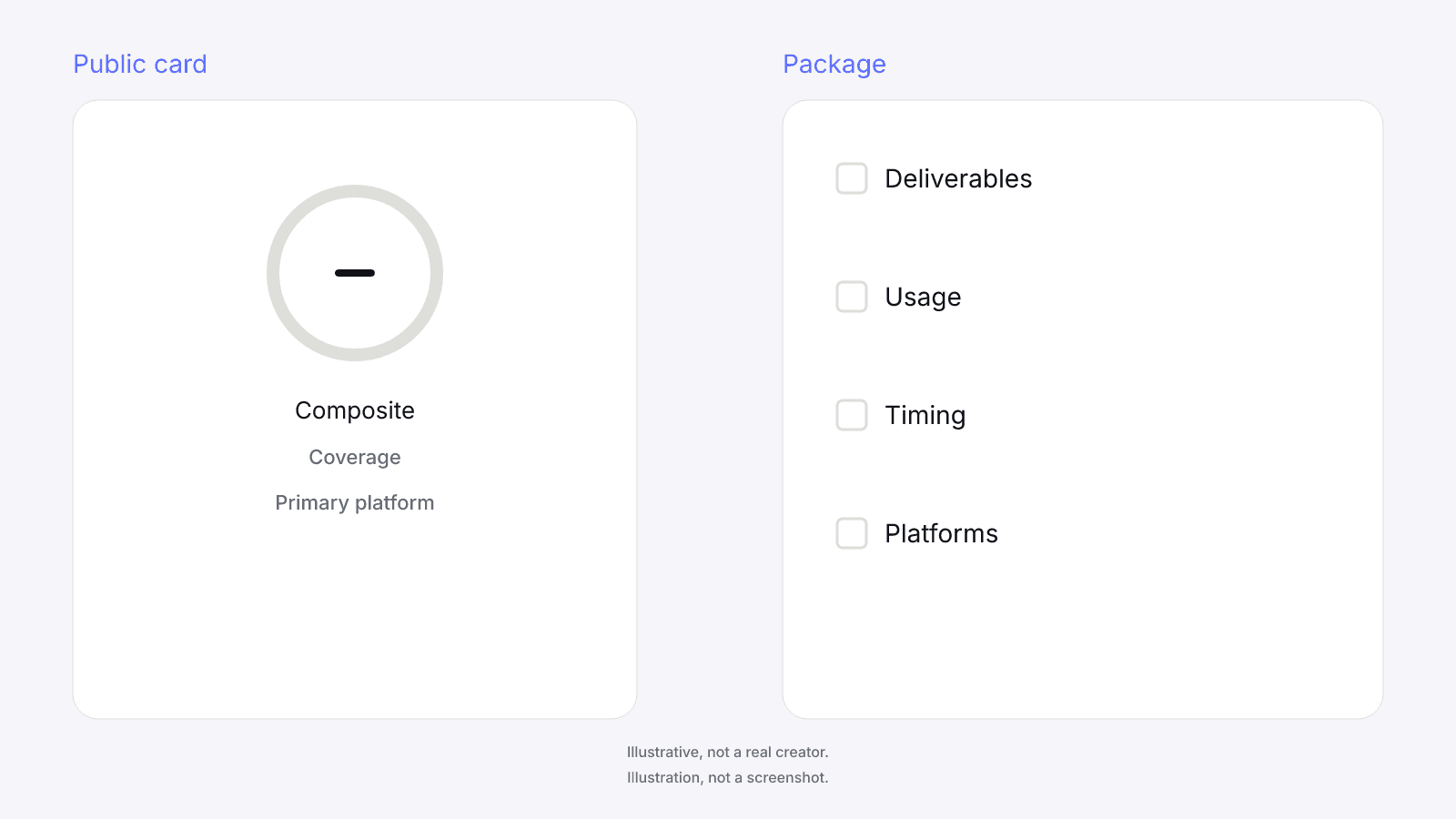
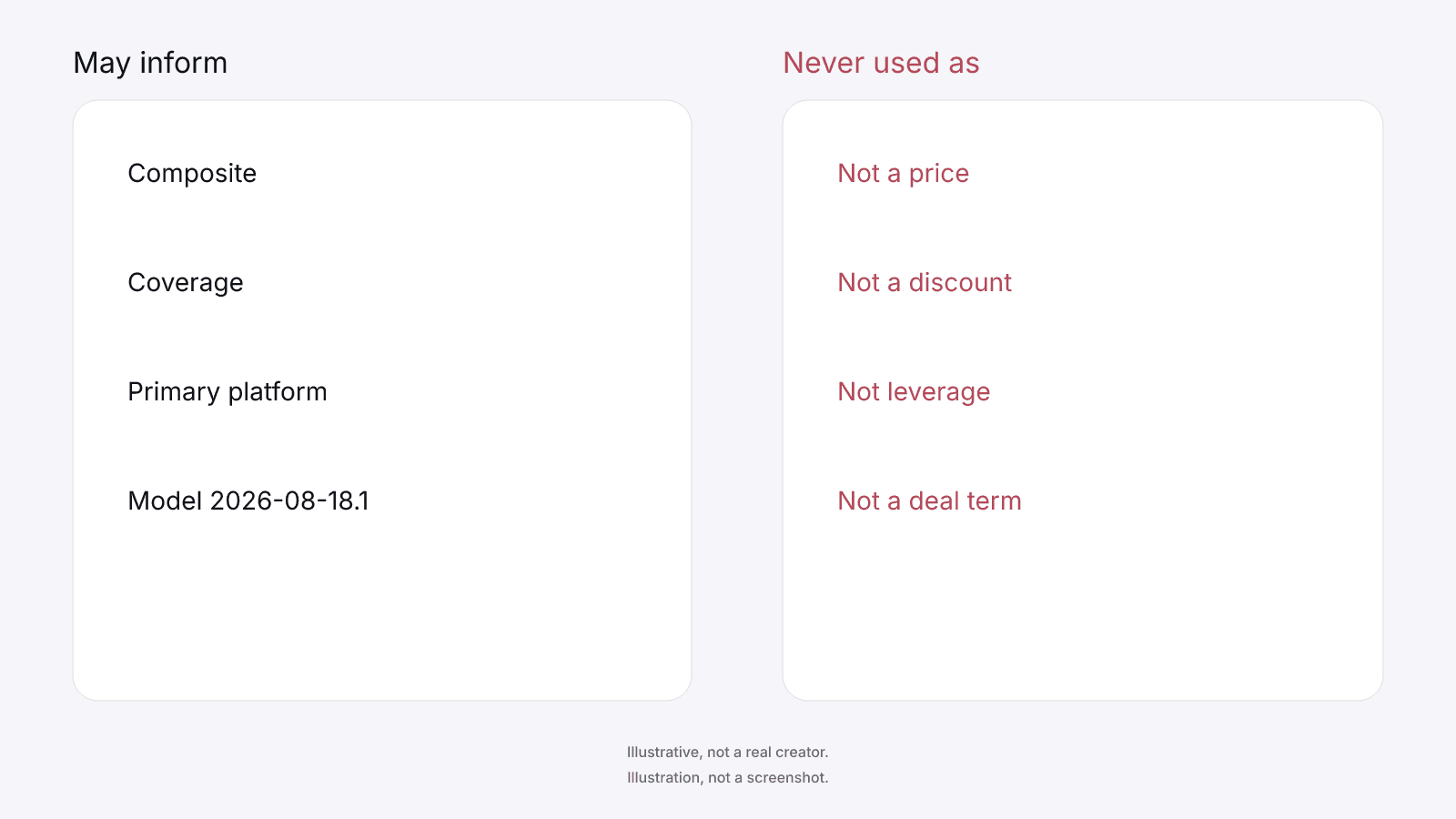
The card can tell you which public handle you're talking about, on which app and model id, and what the composite (or dash) and coverage were when you looked. That's pre-deal context for deciding whether to keep talking. It isn't a price, and the card is not leverage. Don't use it as a reason to pay more or less, as a performance term, or as a deal term.
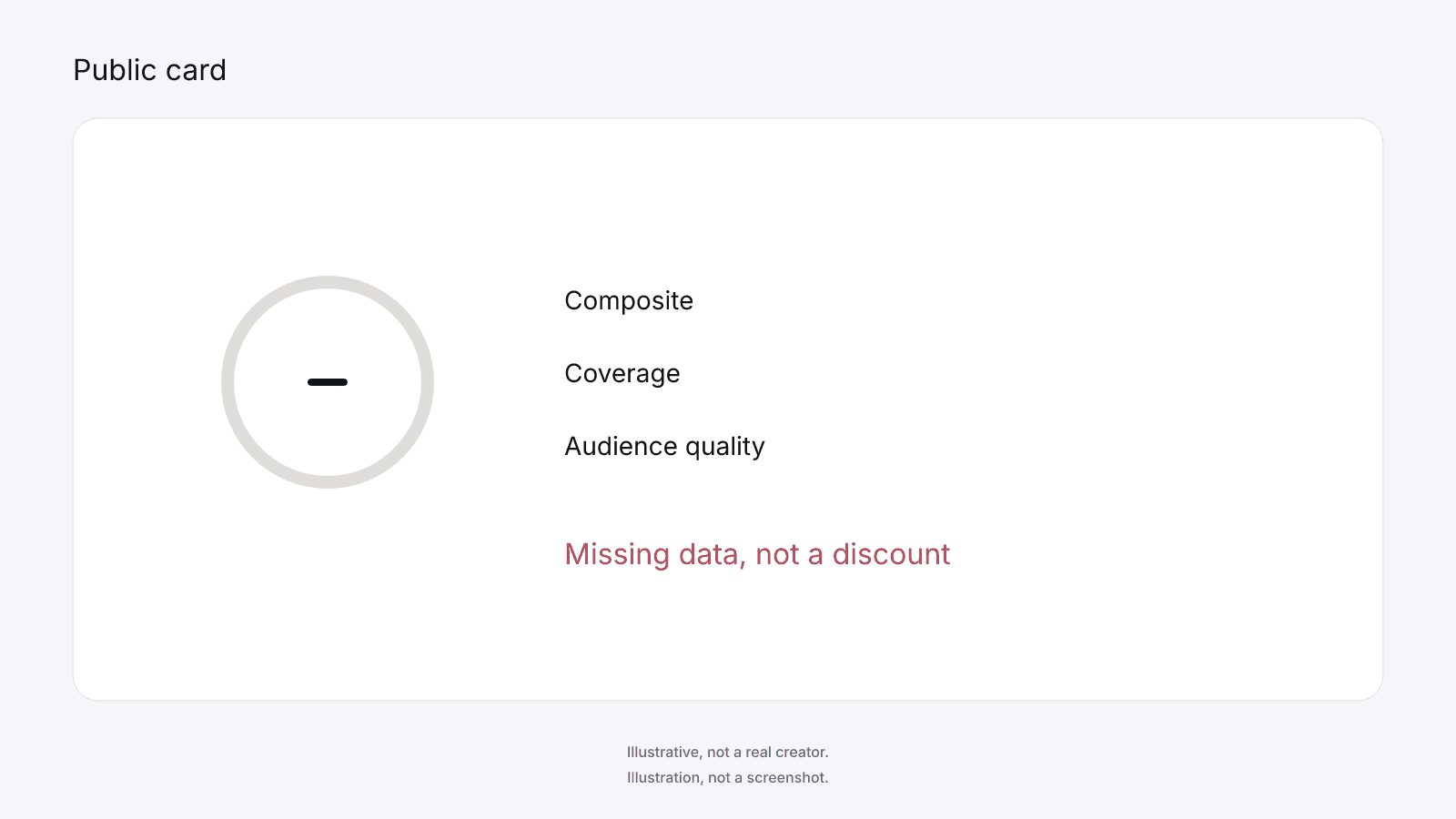
On model 2026-08-18.1 the weights are Audience quality 32%, Engagement 27%, Reach & momentum 23%, and Platform strength 18%. Coverage is the share of model weight that had data, and the composite is the weighted sum over the factors that had data, renormalized. It is not a percentile, price estimate, or guarantee of campaign results. A tier is a label on the card, not a pay threshold. A dash or Unavailable is missing data, never 0, never a penalty, and never a discount.
The score is per handle and per app, so if you looked the handle up on more than one app, keep each card's notes separate. Compare two cards only on the same app and the same model id. Different model ids are two stamps, not a trend. The free card prints no date, so if you want one, write it down yourself. It also has no growth figure, no demographics, and no category label. Total public followers is a sum across the apps the card covers, not a count for one app, and Avg. engagement is the looked-up app's public engagement rate. Audience quality is a row or a dash, and it doesn't describe who the audience is.
On a scored locked card, the InfScore product unlock CTA may show $0.99. That's the InfScore product unlock only, never a creator payment. It buys the full creator report, with audience, growth, and platform deep dives when they exist. No field is guaranteed after paying. Paying does not replace Insights. Paying is never a negotiating step.
A fee in a creator's media kit is the creator's own starting quote, not a public-card field and not an InfScore output. For reading that line in context, see how to read an influencer media kit. Keep the two apart: the kit's fee doesn't belong in your card notes, and card fields don't belong in the quote.
Trade scope, not a score
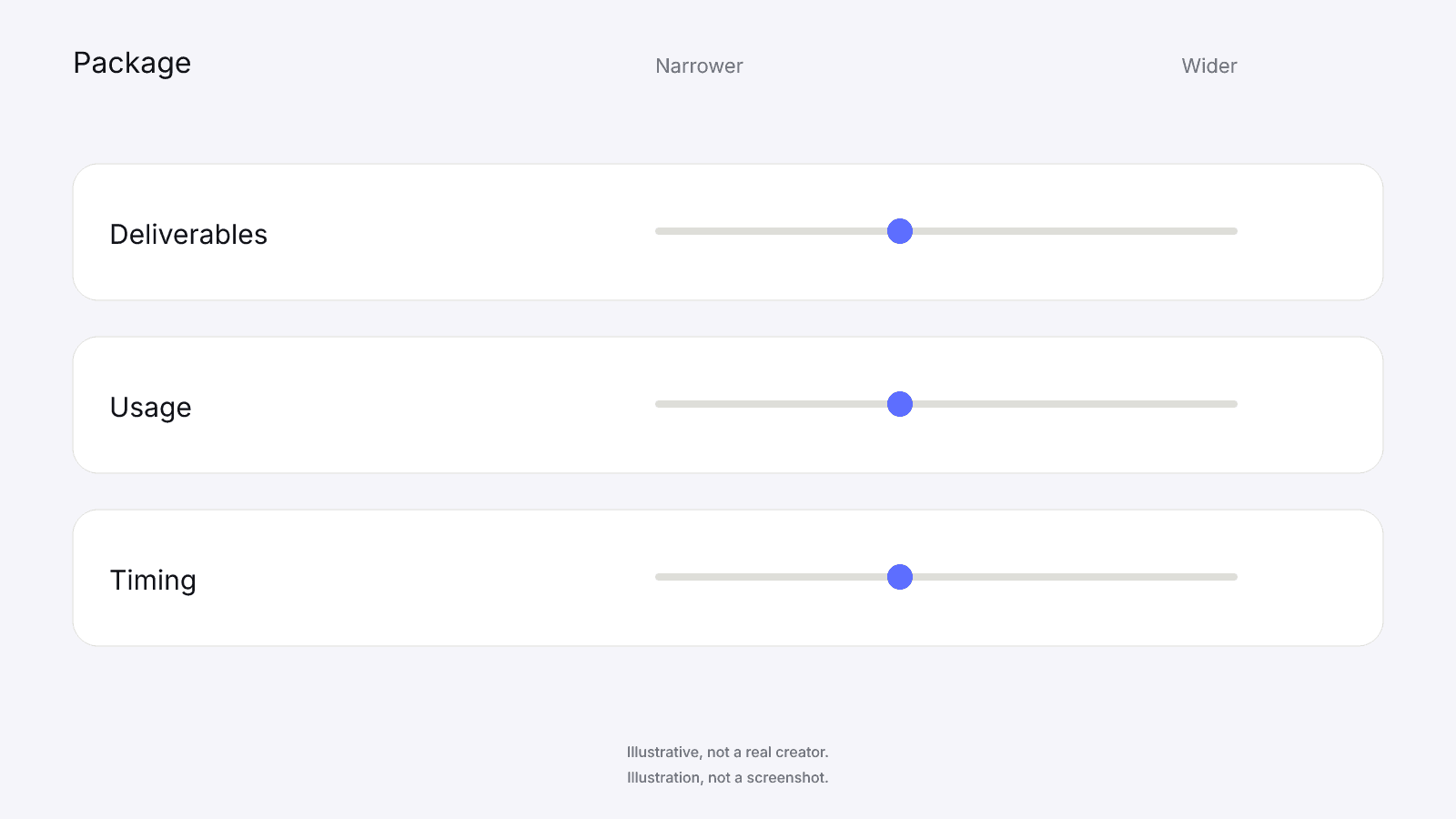
If the quote doesn't fit the brief, change the package. You can cut the number of deliverables, move from two apps to one, or keep the work organic, so it runs on the creator's handle and not as an ad. You can also narrow usage to fewer places the work can run after it's posted, drop the category restriction, or move to a timeline that's less rushed. Ask what each change does to the quote, and ask what the quote includes before you treat any line as fixed.
Two questions to start with: what dropping the second app does to the quote, and what narrower usage does to it. Get the answers in words you can both read back.
Change one line at a time where you can. If you drop an app and narrow usage in the same message, neither of you can tell which change moved the quote. Once a change is agreed, put it into the package right away, so the next question starts from the version you both accepted.
There is no score discount to ask for. Nothing on the card is a reason to move the quote, and the card carries no fee you could point at.
Revisions and approvals are not covered by InfScore. If a draft needs another pass, name that pass as part of the package and leave the count out. Judging the work is up to you. Agree who looks at a draft before it goes up and what counts as ready for both of you.
Usage, exclusivity, and timing as levers
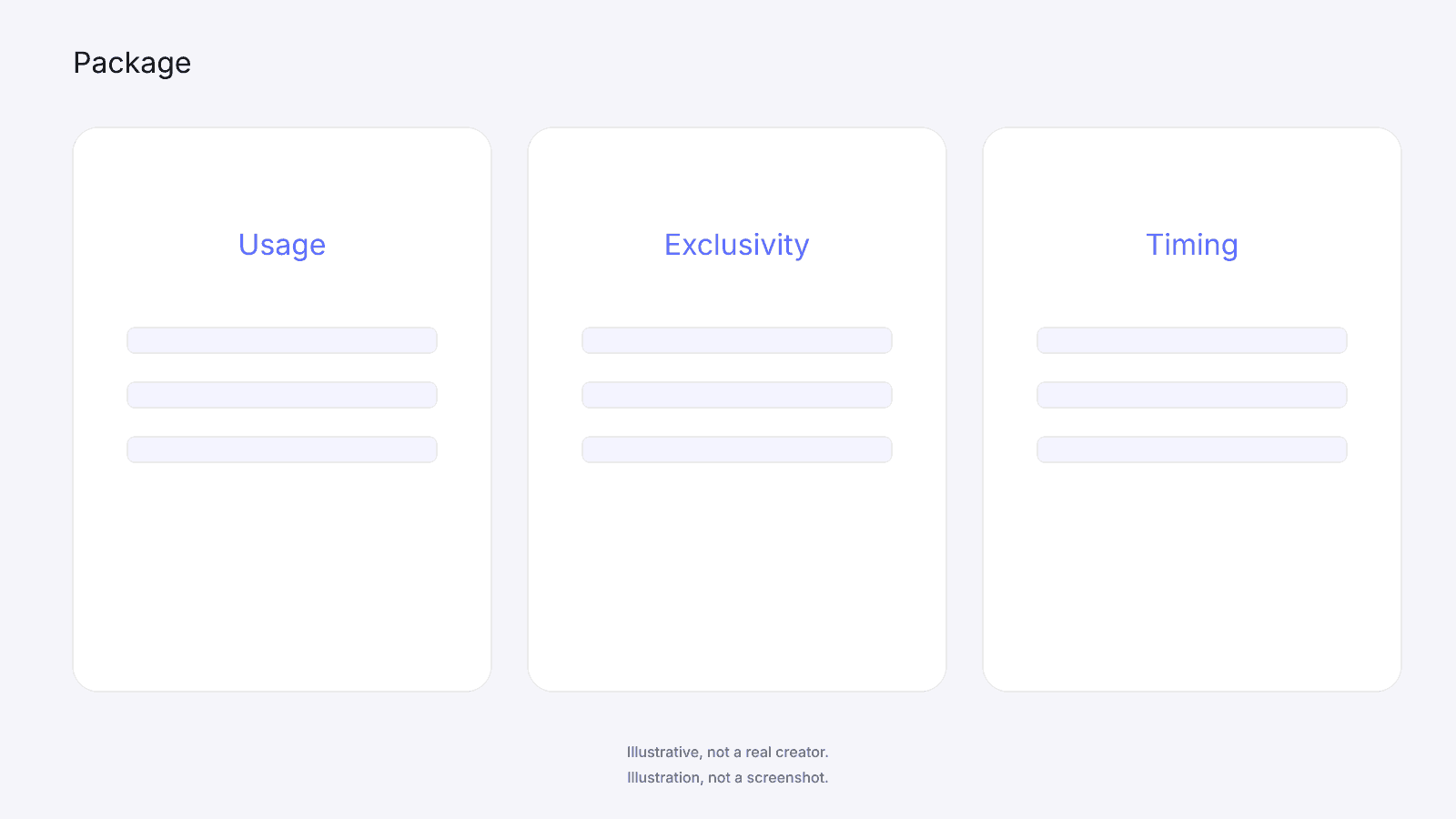
Usage is where the work can run. A post on the creator's handle is one use. Running the same work on your own channels is another, and it needs its own line. Widening or narrowing usage can change the quote, so name each place plainly and leave lengths out. If either side wants the work posted again later, agree that in words on the same line.
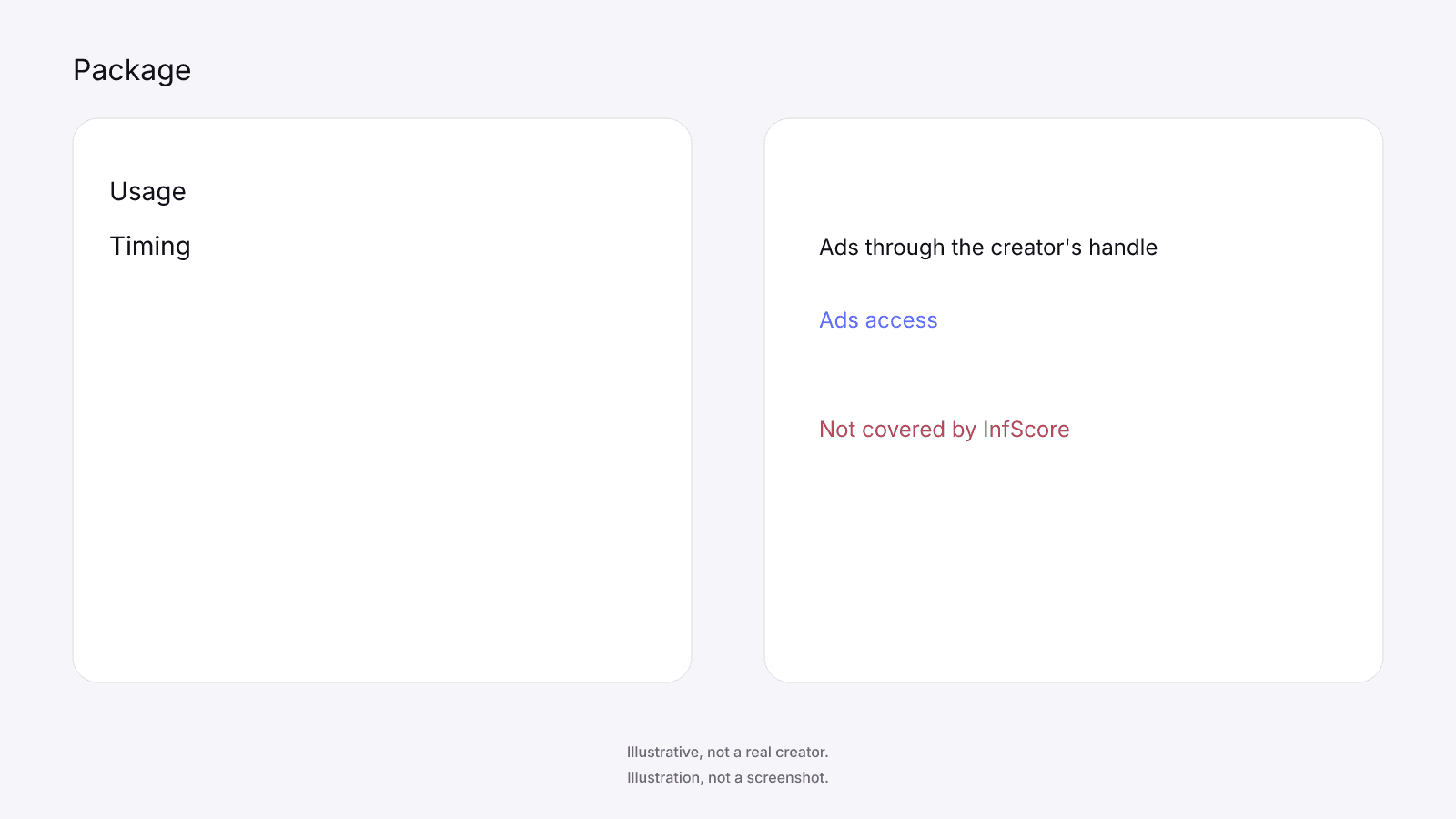
Ads through the creator's own handle are a separate permission, covered in influencer whitelisting, and that permission is not covered by InfScore. A post the creator publishes isn't an ad by itself. If you aren't buying that permission, write that down too, so neither side assumes it later.
Exclusivity can change the quote. Name the category, the platforms, and the window in words both sides accept, and leave lengths out of it.
Timing is when the work posts. A rushed timeline can change the quote. If you need the work sooner, treat that as a change to the package and ask how the quote moves.
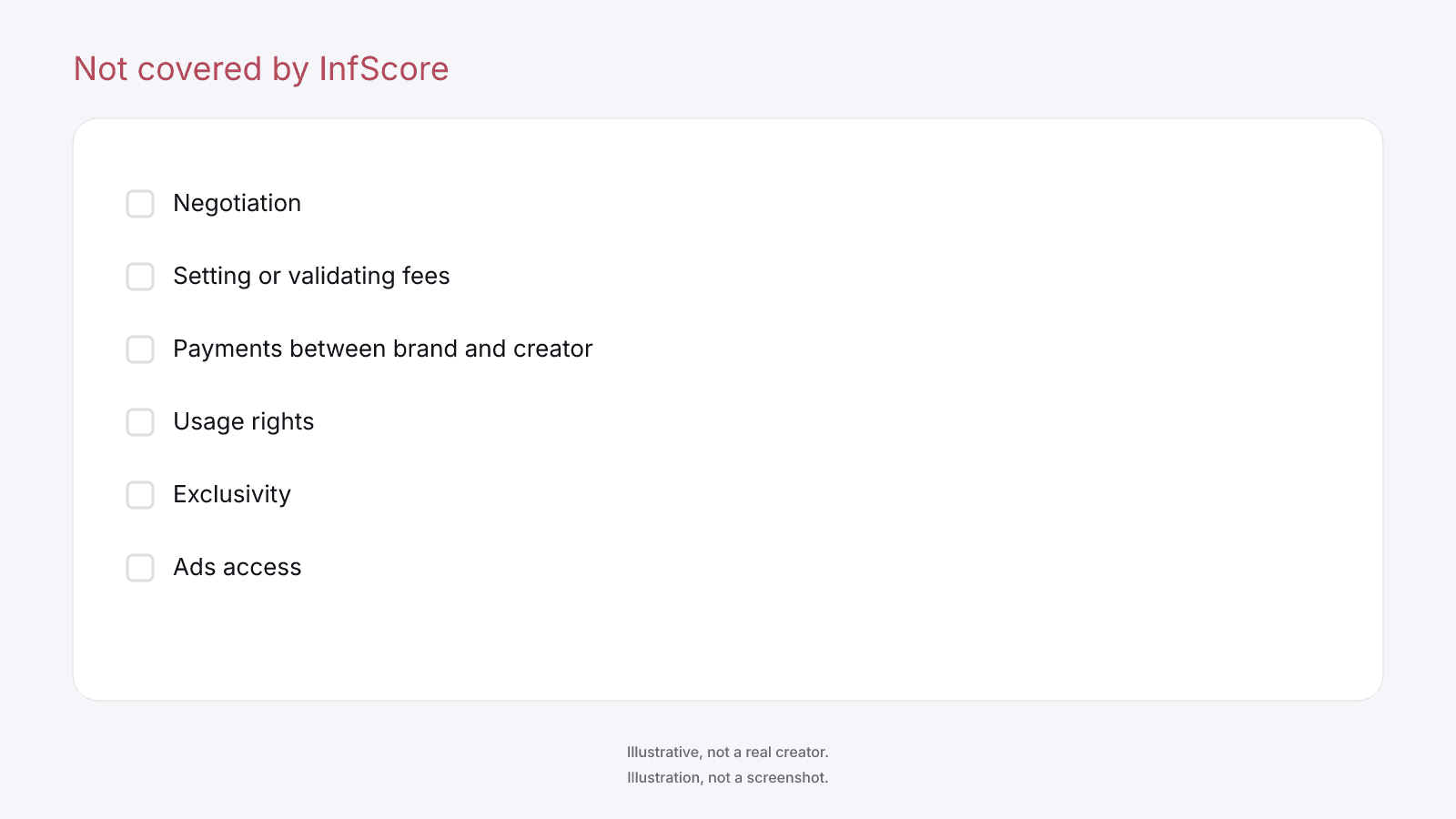
Usage rights, ads access, and exclusivity are not covered by InfScore.
When to walk away from the quote
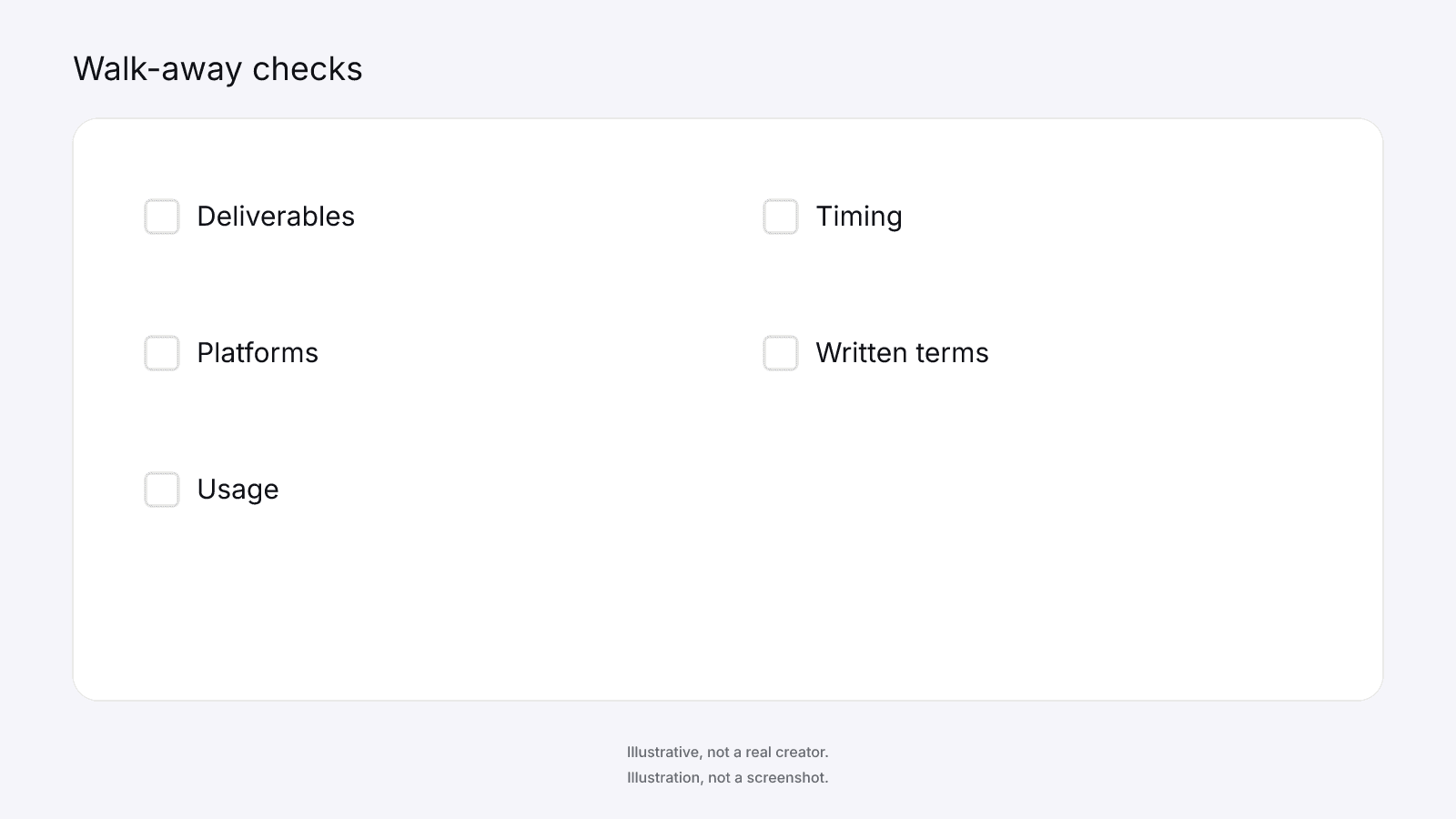
Walk away for reasons that sit on the package and the brief: the package can't be scoped to fit the brief, the creator can't say what the quote includes, the terms can't be written in words both sides accept, the timing can't work, or a manual brand-safety review by the brand raised a concern. Any one of those is enough. Brand safety is not covered by InfScore; any brand-safety review is the brand's own manual check.
A dash, coverage, a tier, or a composite is not a reason by itself. Missing data doesn't end the conversation, and it doesn't keep it going either. Walking away is never a tactic to lower the quote. You stop because the package and the brief don't meet.
If the creator's reply keeps the deliverables vague, ask once more what the quote includes. If the next reply still doesn't name the pieces, the apps, the usage, or the timing, there's no package to trade yet, and that's a reason to walk away. Walking away can be short and polite: tell the creator the package doesn't fit the brief, and leave room to talk again if the brief changes.
What to write down once you agree
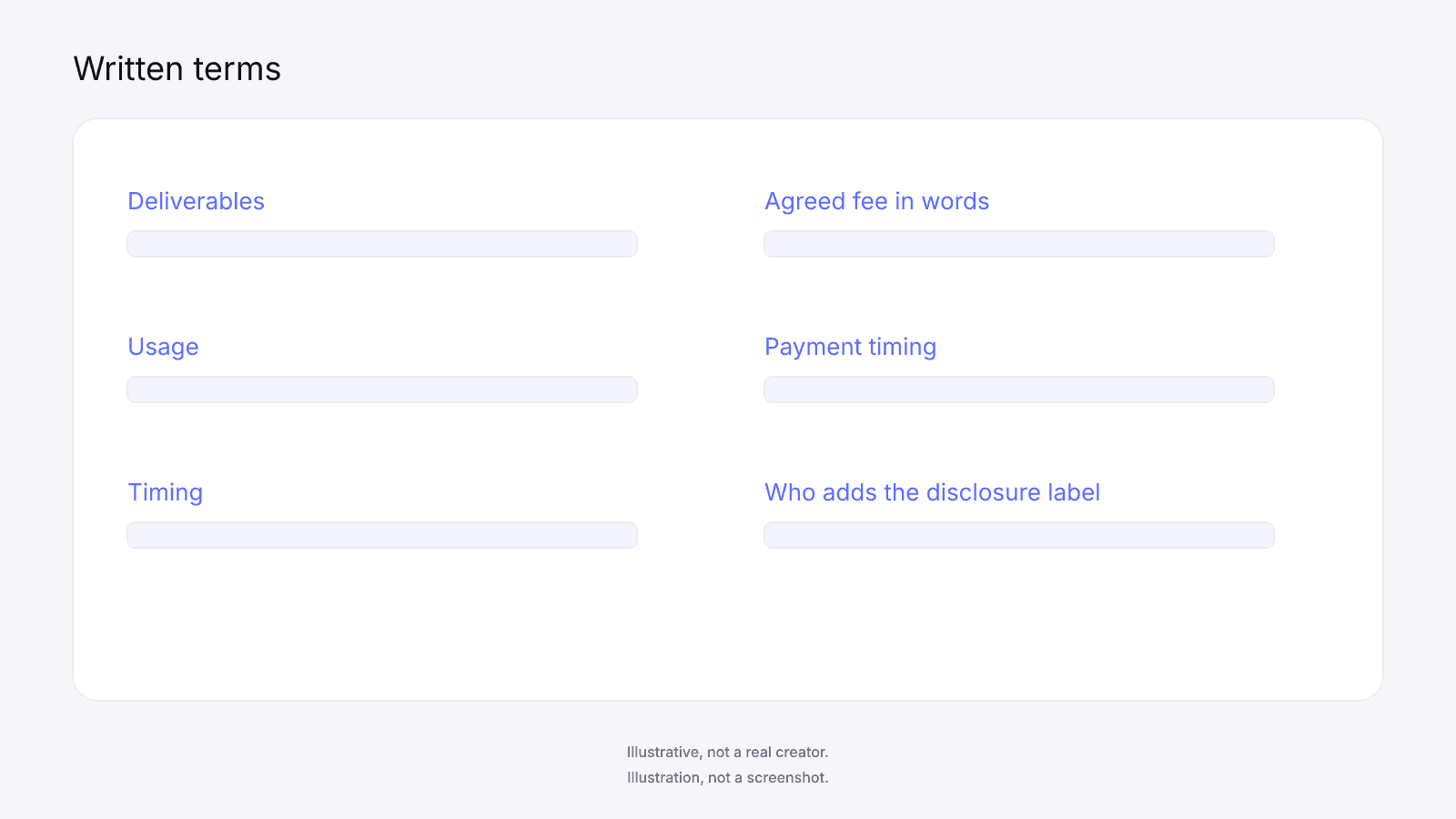
Once you agree, write down a short list: the agreed package, the agreed fee in words and when it's paid, usage, ads access, exclusivity, the timing, and who adds the disclosure label. Keep it short enough that both sides can read it back in one sitting, and fix any line only one side understands before anyone is paid. If the package changed during the talks, write down the final version and not the first quote. For the longer version of what belongs in the terms, see what to agree in writing with an influencer.
InfScore does not set or validate creator fees, and payments between the brand and the creator are not covered by InfScore.
Your own notes from the card can hold the handle and score URL, the app, the model id, the composite or a dash, the coverage, and the date you viewed the card, which you add yourself. Tier, Total public followers, Avg. engagement, and the factor rows stay off that list. Those notes are your pre-deal record. A later card can differ; that is a new lookup, never a term of the deal. No score URL, composite, or coverage figure goes into the terms, and none of them is a condition of payment.
The written terms are for the brand, the creator, and their own counsel.
FAQ and next steps
Before you work out how to negotiate with an influencer on a specific quote, look up the handle on the free public card at infscore.com. It shows which handle you're looking at, not what to pay.
See what the report includes on pricing.
How should a brand negotiate a creator's quote?
Negotiate the package, then write it down. The package is the deliverables, the apps, where the work can run, and the timing, set out in plain words. The public card can tell you which handle you looked up and what it showed, but it isn't a price and it's no reason to change the quote. If the quote doesn't fit the brief, change part of the package and ask what that does to the quote.
Can I use a creator's InfScore to ask for a lower fee?
No. The card is not leverage. Nothing on it, including a dash, a tier, or the coverage, is grounds for a lower fee. Ask about the package instead: what the quote includes, and what happens to it if you drop a deliverable, an app, or a use. Whatever you note from the card stays in your own records and out of the terms.
Does a dash or low coverage mean I should pay less?
No. A dash or low coverage is missing data, never 0, and never a discount. It isn't a penalty, and on its own it doesn't tell you to pay less or more. Keep talking about the package. If the package can't be scoped to the brief, that's your reason to walk away, and the empty slot plays no part in it.
What can I change if the quote does not fit the brief?
Change the package and name each change plainly. You could ask for fewer deliverables, one app instead of two, organic posts only, narrower usage, no category restriction, or a different timeline. Ask what each change does to the quote. Nothing on the card is part of the trade. You should end up with a package both sides can read back before anyone is paid.
When should a brand walk away from a quote?
Walk away when the package can't be scoped to fit the brief, when the creator can't say what the quote includes, when the terms can't be put in words both sides accept, when the timing can't work, or when the brand's own manual brand-safety review raised a concern. Missing data or a low composite isn't a reason on its own. Walking away isn't a way to get a lower quote.
What should both sides write down once they agree?
Write down the agreed package, the agreed fee in words and when it's paid, usage, ads access, any category restriction, the timing, and who adds the disclosure label. Payments between the brand and the creator are not covered by InfScore. Notes from the card, including the date you viewed the card, stay in the brand's own records and don't go into the terms.
Does InfScore negotiate, set, or validate the fee?
No. InfScore does not negotiate, set, or validate a fee. On a scored locked card, the InfScore product unlock CTA may show $0.99. That's the InfScore product unlock only, never a creator payment. Paying is never a negotiating step. The fee you settle with the creator is between the two of you, and the product has no part in it.